Meiji period: Two peasants try to help a woman who is abused by police.Read More »

Originally made for German television, this film chronicles obsessions of a man who will do almost anything to avoid losing a chess game. Thomas Rosenmund (Bruno Ganz) learns how to play chess by watching his father in a friendly game with a neighbor. His competitiveness is keyed to such a high pitch that a series of close calls in matches precipitates a nervous breakdown and he swears off the game. Instead, he turns his skills to computers. When his company calls on him to be part of a team which is pitting a computer’s chess skills against the world champion of chess, he takes it personally when the computer loses. Fired by “his” humiliation, he vows to earn the right to take on the champion himself — and does.Read More »

The life story of the multi-talented German nun Hildegard von Bingen. The film portrays an original woman – best known as a composer and religious visionary – whose grand claims often run counter to the patriarchal world around her.
The monks and nuns at the convent become a kind of family, offering both confidants and enemies. For example Jutta, struggling with her jealousy of Hildegard’s success, and the young Richardis who worships Hildegard both as an intellectual role model and a mother figure.Read More »

Life and loves of a theatre inside and outside the stage. The troup is playing Les noces de Figaro.Read More »
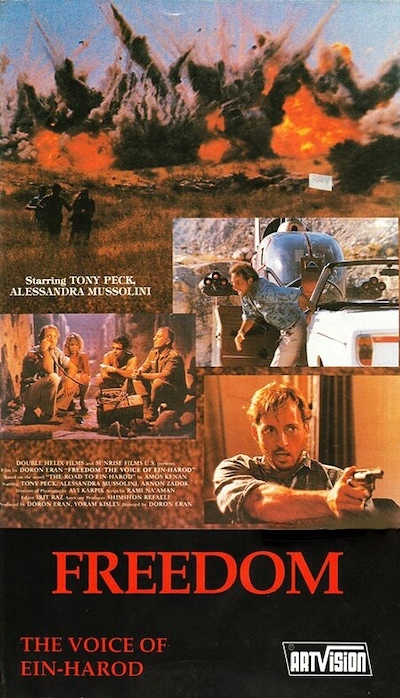
In a dystopian future, the Israeli army keeps the population in check because of water scarcity but Saul Jordan, an activist journalist, finds out that it is an invention and tries with the help of a Palestinian tramp to spread the news from a small radio station improvised in the desert, inciting fellow countrymen to the resistance and the struggle for freedom. Wanted throughout the nation, the two during an escape take hostage to an army colonel and the group of his collaborators, including the sexy Liora (Alessandra Mussolini).Read More »

Quote:
Krsto Skanata approached his subjects in the style of direct cinema. He tried to follow the path of the truth and make films that would reveal the essence of the problem. At the same time, he was smart enough to nuance his approach in such a way that censors would accept and approve the film. One of his first films, In the Shadow of Magic/U senci magije (1955), uncovers the deep backwardness in socialist Yugoslavia. His film First Case-a Man/Prvi padez-covek (1964) addresses the human dignity of a miner who loses his arm and has to struggle on his own. Soldier, At Ease!/Ratnice, voljno! (1966) focuses on the tragedy of a soldier who fought in the war and believed in a certain ideology that he later realised was false.Read More »

Synopsis
Phases of Matter follows living and inanimate residents of a teaching hospital in Istanbul, moving from the operating room to the morgue, between life and other states, the real and the virtual.Read More »