Synopsis: War veteran Frank Enley seems to be a happily married small-town citizen until he realises Joe Parkson is in town. It seems Parkson is out for revenge because of something that happened in a German POW camp, and when a frightened Enley suddenly leaves for a convention in L.A., Parkson is close behind…Read More »
Summary A chronicle of a group of friends in rural France in 1918. Garris and Riton live in Marais, a quiet region along the banks of Loire river. Riton is afflicted with a bad-tempered wife and three unruly children. Garris lives alone with his recollections of World War I trenches. Their daily life consists of seasonal work and visits from their two pals: Tane, the local train conductor and Amédée, a dreamer and voracious reader of classics. Meanwhile, Garris is overwhelmed by an unspoken love for a housemaid in the town, Marie…Read More »
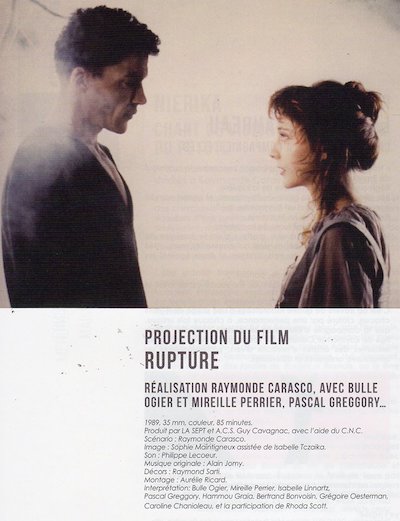
Joa (Bulle Ogier), an archaeologist from Mexico, comes to Paris in search of her sister Anna (Mireille Perrier), of whom she is suddenly without news. Anna, a theater actress, was in the title role in Sade’s “Justine” when she disappeared. The investigation leading Joa to the people who have known her sister, turns into an initiatory quest. Her journey, her stroll through a subterranean marginal Paris, leads also to the emergence of a new woman.Read More »
Fired from his job writing for a weekend magazine, Ted Wilson decides to visit his family in Hobart. He realises his loss could be an opportunity to pursue something more meaningful: “I want to write something beautiful about cricket. A piece of literary non-fiction. It will in some sense be about Tasmanian batsmen and it will be from the heart.” Ted embarks on a search for legendary Australian cricketer and exalted Tasmanian, David Boon. Yet when the search stalls, Ted finds himself reconnecting with his widowed mother and adult siblings now with young children of their own.Read More »
Two isolated families meet for a summertime celebration. Food is abundant and the future seems bright, but Ningiuq, a wise old woman, sees her world as fragile and moves through it with a pervasive sense of dread. Ningiuq and her grandson Maniq are dropped off on a remote island, where, every year, the family dries the catch and stores it for winter. The task is soon finished. As summer turns to fall, they wait in vain for the others to pick them up.Read More »
THE BATTLE OF CHILE (3): The Power of the People (1978) deals with the creation by ordinary workers and peasants of thousands of local groups of “popular power” to distribute food, occupy, guard and run factories and farms, oppose black market profiteering, and link together neighborhood social service organizations. First these local groups of “popular power” acted as a defense against strikes and lock-outs by factory owners, tradesmen and professional bodies opposed to the Allende government, then increasingly as Soviet-type bodies demanding more resolute action by the government against the right.Read More »
THE BATTLE OF CHILE (2): The Coup d’Etat (1976) opens with the attempted military coup of June, 1973 which is put down by troops loyal to the government. It serves as a useful dry run, however, for the final showdown, that everyone now realizes is coming. The film shows a left divided over strategy, while the right methodically lays the groundwork for the military seizure of power. The film’s dramatic concluding sequence documents the coup d’etat, including Allende’s last radio messages to the people of Chile, footage of the military assault on the presidential palace, and that evening’s televised presentation of the new military junta.Read More »
THE BATTLE OF CHILE: The Insurrection of the Bourgeoisie (1975) examines the escalation of rightist opposition following the left’s unexpected victory in Congressional elections held in March, 1973. Finding that democracy would not stop Allende’s socialist policies, the right-wing shifted its tactics from the polls to the streets. The film follows months of activity as a variety of increasingly violent tactics are used by the right to weaken the government and provoke a crisis.Read More »
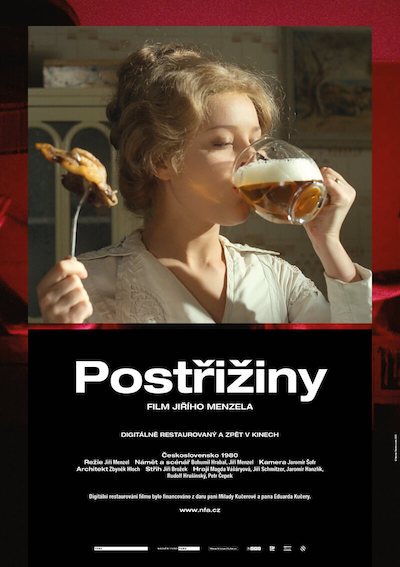
Synopsis wrote: Short Cut is a comedy revealed more in the acting and witty dialogue than in the simple premise of the story itself: how the Czech writer Bohumil Hrabal was born. Actually, the story is, in many ways, the writer’s conception.Read More »