

Narumi Rokuheita and his wife Noriko spend their lives separated. Soon they start looking for love elsewhere.Read More »
Narumi Rokuheita and his wife Noriko spend their lives separated. Soon they start looking for love elsewhere.Read More »
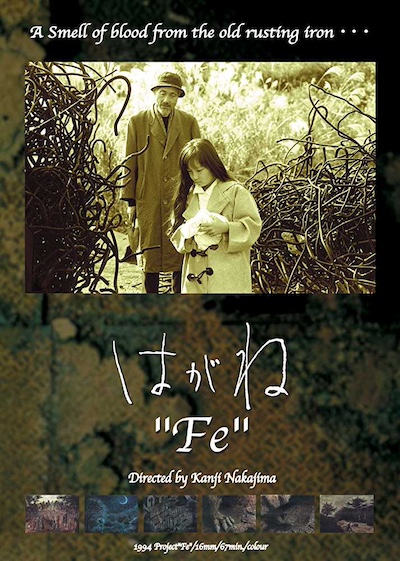
Near the remains of an iron factory, an old painter faces the challenges of creation, as his longtime muse has not appeared in some time. A young girl lends her curiosity to discover what it is that holds the old painter back. Her mother tells her a bedtime story to which brings understanding of the relationship between the abandoned factory and the lonely artist nearby.Read More »

User Reviews:
Outstanding story for the time and place where was written
An excellent social drama that won first prize on the international festival held in Hollywood, California in 1971. It’s displaying real workers life of the social era in seventies Yugoslavia. Remarkable, straight forward, heart touching story, Honestly brave for the time when it was written and shot. Branko Reljic is outstanding writer. He wrote a lot of excellent stories that were unfortunately not published because of his radical democratic criticism of the countries inner politics. They were not suitable for the communist regime at the time. I had pleasure to know this wonderful man that never cared for material things but fought to give the world honest true vision of love and compassion that we are rapidly loosing. Mr. Branko Reljic has dedicated his life to his beliefs, and he stayed true to all the people around him. I had that privilege to read some of his novellas and I can happily recommend them.Read More »

Quote:
Small (though long), quiet (literally – there is no music score, for example), observant (like its lead), nostalgic coming-of-age tale. Not much plot, just a series of daily-life blackout vignettes. It definitely has its boring moments, but also some wonderful ones, like the boy getting his first kiss in a movie theater playing “Pandora And The Flying Dutchman”. Successfully captures both small-town and country atmosphere, thanks in large part to Nestor Almendros’ beautiful cinematography. *** out of 4.Read More »

A sympathetic portrayal of the suffering of a deaf couple at the hands of a shell shocked postwar society that treats them like wayward children to be at turns pitied or exploited.Read More »

Quote:
The image of the fountain returns in Angel (1957; color; 3 min.), one of Cornell’s most poignant films. Dedicated, as Cornell said, to his friend, the painter Pavel Tchelichew, who had recently died, the film offers a rather moving meditation on mortality. Comprised of static shots of a statue of an angel and a fountain in a Flushing cemetery, the films elegant and quiet close-ups against an expanse of blue sky of the statues solid yet partly decaying marble brilliantly capture a sense both of the earthly and time-bound and the unworldly and eternal. The films stylistically innovative dissociation of moving image from moving subject (a technique Cornell also largely deploys in “Centuries of June” from the same year) anticipates by several years the daring cinematic experiments of Andy Warhol’s Sleep (1963) and Empire (1964), foregrounding duration, in contrast to movement, as cinemas true subject.Read More »

One of the last and the best of those infamous Mexican nightclub melodramas (“Películas de Cabareteras”), it features a stunning noirish cinematography, over-the-top acting by half a dozen of wonderfully weird and wicked latina beauties such as Columba Dominguez and Kitty de Hoyos (looking like a drag queen performing Marilyn Monroe!) plus great -if low budget- musical show clips performed by the mesmerizing Esquivel, the “King of Zu-Zu-Zu”! Another masterpiece from the great (beer-drinking?) director Alfonso “Corona” Blake, who began as an assistant to Luis Bunuel and Emilio “Indio” Fernandez and gave the world some of the finest campy horror- and “Il Santo”-classics. Great fun to watch – if you ever get the chance to, for it’s not available on tape or DVD.Read More »

Quote:
Jacques Cournot, a freelance skipper, is hired by Mr Hendrix in Santo Domingo, first of all to advise him regarding the acquisition of a sailing boat. After a thorough inspection of a prospective vessel, the “Dragoon”, Cournot reports his positive appraisal to Mr Hendrix and initiates the negotiations with Mrs Osborne, the owner of the craft. Barely a couple of days later, Cournot finds himself in a bind as the police questions him about the exact kind of cruise he was supposed to organize for his principal. For the “Dragoon” is gone; Mr Hendrix has disappeared; Mrs Osborne is not aware of any deal; and the corpses of mysterious individuals, victims of a violent death, are found on the beaches of Santo Domingo.Read More »

A woman is pushed into prostitution by her violent yakuza boyfriend.Read More »