• Robert Bresson – Notes On Cinematography (1977)

    1971-1980BooksFranceRobert Bresson

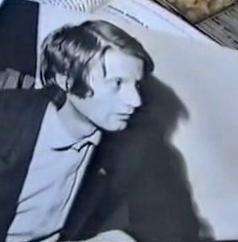
    This is not a book about cinematography. Cinematography is what Bresson regards as valid film making, as opposed to cinema which is just photographing a play, or the theatre, which is just lies told on a stage (or something). This book contains all the little notes, ideas and bon mots that Bresson jotted down over the years. Some are insightful, most are quite arrogant and dismissive, and quite a few are a bit bonkers. Anyway it’s an interesting look into the mind of a master and fairly short (although that didn’t stop it from being a pain in the arse to scan).

    Originally written in French (Notes sur le cinématographe), this is the English translation by Jonathon Griffin.Read More »
  • Tony Pipolo – Robert Bresson: A Passion for Film (2010)

    2001-2010BooksRobert BressonTony Pipolo

    http://ecx.images-amazon.com/images/I/518B1jRqmEL.jpg

    Description:

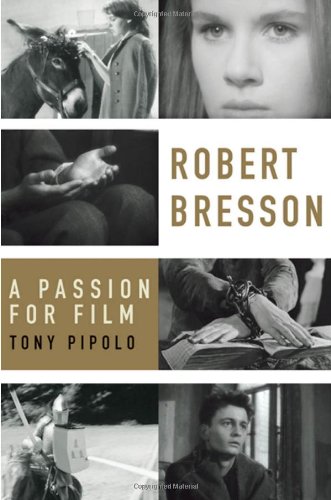
    Perhaps the most highly regarded French filmmaker after Jean Renoir, Robert Bresson created a new kind of cinema through meticulous refinement of the form’s grammatical and expressive possibilities. In thirteen features over a forty-year career, he held to an uncompromising moral vision and aesthetic rigor that remain unmatched. Robert Bresson: A Passion for Film is the first comprehensive study to give equal attention to the films, their literary sources, and psycho-biographical aspects of the work. Concentrating on the films’ cinematographic, imagistic, narrative, and thematic structures, Pipolo provides a nuanced analysis of each film-including nearly 100 illustrations-elucidating Bresson’s unique style as it evolved from the impassioned Les Anges du péche to such disconsolate meditations on the world as The Devil Probably and L’Argent. Special attention is also given to psychosexual aspects of the films that are usually neglected. Bresson has long needed a thoroughgoing treatment by a critic worthy to the task: he gets it here. From it emerges a provocative portrait of an extraordinary artist whose moral engagement and devotion to the craft of filmmaking are without equal.Read More »

  • Robert Bresson – Mouchette (1967)

    1961-1970ArthouseDramaFranceRobert Bresson

    Quote:
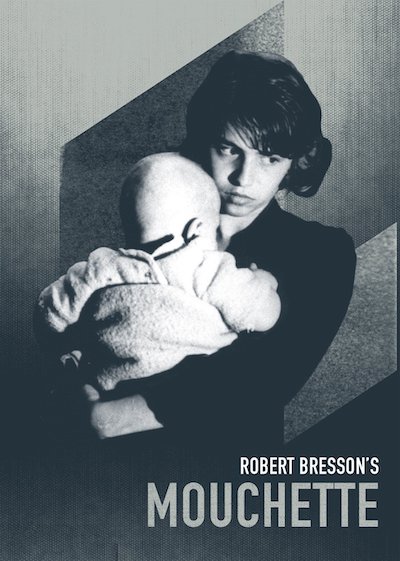
    Robert Bresson plumbs great reservoirs of feeling with Mouchette, one of the most searing portraits of human desperation ever put on film. Faced with a dying mother, an absent, alcoholic father, and a baby brother in need of care, the teenage Mouchette seeks solace in nature and daily routine, a respite from her economic and pubescent turmoil. An essential work of French filmmaking, Bresson’s hugely empathetic drama elevates its trapped protagonist into one of the cinema’s great tragic figures*.Read More »

  • Piero Bargellini – The Lost Cinema (1966)

    1961-1970ExperimentalItalyPiero Bargellini

    Image Hosted by ImageShack.us

    Quote:
    Piero Bargellini was born in Arezzo in 1940. An agronomist, film lover and amateur filmmaker, he joined the “Cinema Indipendente” Cooperative in 1968 and became one of the most important figures of Italian underground cinema. His films are intensely poetic and reflect artisanal wisdom, based on his scientific knowledge of optics and chemistry. He made films like Morte all’orecchio di Van Gogh, Fractions of Temporary Periods, Trasferimento di modulazione, Gasoline, Stricnina, between 1966 and 1973, in a total identity of art and life. These works tell “the history, in its own way exemplary, of one of the secret protagonists, and of the famous victims, of the revolution of 1968.” Ideally conceived as a dialectic interface between the Italian Competition and Detours, this tribute (curated by Fulvio Baglivi with the help of Adriano Aprà) is also the way we have chosen to remember Marco Melani on the tenth anniversary of his death. Marco, who was a friend and collaborator of Bargellini’s, and who continues to be our inspiration and a “hidden” prompter, organized for the first festival in Torino (1982) a commemoration of his friend, who had recently passed away. His intent was to remove the label of “experimental”: “his cinema was cinema tout court, like that of Rossellini, Hawks, Bertolucci, Schifano, Brakhage and all the other filmmakers he loved.”Read More »

  • Robert Bresson – Un metteur en ordre (1966)

    1961-1970DocumentaryFranceRobert Bresson

    Un metteur en ordre: Robert Bresson (62 min.) is from a 1966 French television broadcast of Pour le plaisir, a cultural television program. This episode concentrates on Au Hasard Balthazar and includes interviews with Robert Bresson, Jean-Luc Godard, Louis Malle, Marguerite Duras and members of the film’s cast. Bresson explains the origin of the film’s title, while his contemporaries describe their reactions to the film. Several extensive clips from the film are presented, after which Bresson and his cast members offer their opinions of the meaning or consequences of those scenes.Read More »

  • Amol Palekar – Bangarwadi AKA The Village Had No Walls (1995)

    Drama1991-2000Amol PalekarArthouseIndia

    Quote:
    A young man takes a journey on a cart through jungles to reach the small hamlet of Bangarwadi, inhabited by a few shepherds, peasants and some members of a criminal tribe known as the Ramoshis. The young man goes there as a teacher. After the initial trauma, he finds the milieu and the environment very inspiring and educative. But then he is transferred to some other school. What remains with him is the memory of the simple folk and their pure nature.Read More »

  • Isabel Coixet – Map of the Sounds of Tokyo aka Mapa de los sonidos de Tokio (2009)

    Drama2001-2010Isabel CoixetSpain


    29f7c043f76a2bde437fd0d52a185152

    [SPOILER]

    Ryu is a solitary girl whose fragile appearance is in stark contrast with the double life she leads, working nights at a Tokyo fishmarket and sporadically taking on jobs as a hit-woman.

    Mr Nagara is a powerful impresario mourning the loss of his daughter Midori, who has committed suicide. He blames David, a Spaniard who runs a wine business in Tokyo.

    Mr Nagara’s employee, Ishida, was silently in love with Midori and hires Ryu to murder David.

    A sound engineer, obsessed with the sounds of the Japanese city and fascinated with Ryu, witnesses this love story which searches the shadows of the human soul, reaching deep into places where only silence has the power of eloquence.Read More »

  • Frank V. Ross – Quietly on By (2005)

    2001-2010DramaFrank V. RossMumblecoreUSA


    29f7c043f76a2bde437fd0d52a185152

    “Two months ago, his girlfriend left him. One month ago, he lost both of his jobs after a nervous breakdown. He can’t work in his mom’s flower shop because he’s allergic to pollen and paperwork. Single, lonely, and jobless, Aaron expends his time and energy nurturing a long standing crush on his best friend Sara. Meanwhile, his other best friend, Erik, sells pot to his kid sister Erin (behind his back, naturally). If he manages to get out of bed, Aaron may mow the lawn, or he may reconstruct Stonehenge with a set of encyclopedias. To avoid embarrassing himself, he makes sure to rehearse all of his conversations in advance. Aaron sees something approaching on the horizon. Whether it’s his future or his doom, apparently it drives a white SUV ” Written by Frank V. Ross ( IMDB)Read More »

  • Danièle Huillet & Jean-Marie Straub – Une visite au Louvre (2004)

    2001-2010ArthouseDanièle Huillet and Jean-Marie StraubDocumentaryFrance

    Synopsis:
    A visit to the Louvre in Paris commentated by an actor reading Cézanne.

    Review:
    Une Visite au Louvre (2004) is a companion film to Jean-Marie Straub and Danièle Huillet’s Cézanne (1989). The opening title of the later work indicates that it was inspired by Dominique Païni, then film programmer at the Louvre, in 1990. Like the earlier film, Une Visite au Louvre is also based on Joachim Gasquet’s book, Cézanne, specifically on the chapter entitled “Le Louvre,” which recounts Cézanne’s visit to the Louvre, accompanied by the young Gasquet.Read More »

Back to top button