Kill List – review
4/5 stars
If Ricky Gervais or Mike Leigh made a horror film, it might look something like this unsettlingly strange offering from British director Ben Wheatley
The title, and the fact that this was popularly acclaimed at London’s recent FrightFest event, will tip you off about what kind of film it is. Or will it? Even now, I’m unsure how or whether to describe it generically. It’s partly an occult chiller with shades of Wicker Man and Blair Witch – and be warned right now: there are some ultra-violent and infra-retch scenes that have had people making for the exits. I wondered if director Ben Wheatley considered putting a death metal version of Maxwell’s Silver Hammer over the closing credits.Read More »
-
Ben Wheatley – Kill List (2011)
2011-2020Ben WheatleyHorrorThrillerUnited Kingdom -
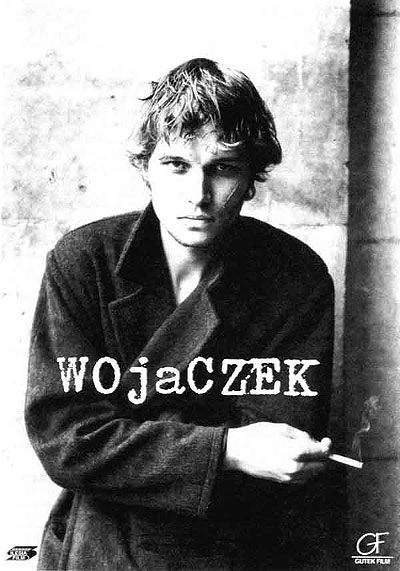
Lech Majewski – Wojaczek (1999)
Drama1991-2000Lech MajewskiPoland

A portrait of socialist Poland circa 1971 that recounts the last years of Polish poet Rafal Wojaczek, a rebel who became a legend.Read More »
-
László Benedek – Affair in Havana (1957)
1951-1960Film NoirLászló BenedekUSAPLOT DESCRIPTION
In this suspenseful crime drama the trouble begins when the healthy wife of a crippled plantation owner prepares to leave with her handsome lover. Just before she does, her ailing husband tells her that he will only live a few months more, and if she remains with him she will inherit $20 million. She then dumps her lover and returns to her husband. Time passes and he is still alive. She grows impatiant and pushes her husband and his wheelchair into the swimming pool and gets her money. Afterward, she murders a snoopy servant, but in the end one of her late husbands’ servants avenges his death and kills the conniving wife. Meanwhile, the lover returns to the piano bar where he met the woman. The film was shot in oppulent Havana, Cuba before Castro came to power. ~ Sandra Brennan, All Movie GuideRead More » -
Andrew Noren – Free to Go (Interlude) (2003)
2001-2010Andrew NorenExperimentalUSAQuote:
2003. USA. Directed by Andrew Noren. “Energy pictures; mindful kinesis. Light and shadow vigorously conjoin, conjuring delusion of depth and duration, fiction of space and time. The fool’s paradise of the illusory window … (remember: flutter of phantoms, trick of the light) … is savored and shattered and seen for what it is” (Andrew Noren). Silent. 62 min.Read More » -
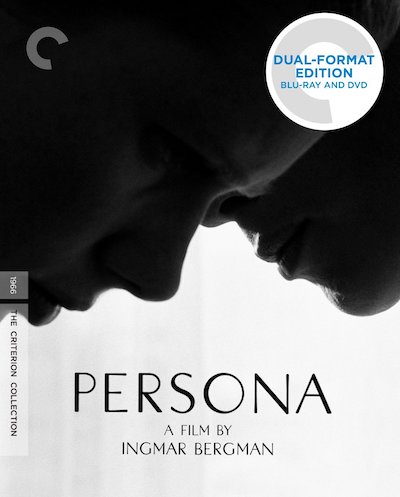
Ingmar Bergman – Persona [+Extras] (1966)
1961-1970ArthouseDramaIngmar BergmanQueer Cinema(s)SwedenQuote:
Persona is arguably Ingmar Bergman’s most challenging and experimental film. Elisabeth Vogler (Liv Ullman) is an accomplished stage actress who, in the middle of performing Elektra, ceases to speak. Sister Alma (Bibi Andersson), the young nurse assigned to care for her, learns that there is nothing physically or even psychologically wrong with Elisabeth – she has simply, consciously decided not to speak. Alma (the name, not accidentally, is the Spanish word for soul) describes her initial impressions of Elisabeth as gentle and childlike, but with strict eyes. She takes Elisabeth to the attending physician’s remote summer house to facilitate her recuperation. At first, the two seem ideally suited: a talkative, candid, and inexperienced nurse, and a sophisticated, enigmatic, and silent patient. They take long walks, bask in the sun, and read together. It is obvious that their isolation has cultivated a sense of intimacy between them, albeit one-sided.Read More » -
Uri Zohar – Hor B’Levana AKA Hole in the Moon (1964)
1961-1970CampExperimentalIsraelUri Zohar
Quote:
I can’t stress enough how wonderful, anarchic and unique is this early Israeli film. It blends lots of genres and pokes
fun at many sacred cows while dealing with connections between cinema, reality and its ideological representations.
There simply isn’t any other film like that, and it’s the first time it’s on the net, with subs.
Not much information in English, so I edited an article I’ve found, but it dosen’t do the movie justice:
A comic and episodic satire, the film uses improvization to ilustrate the clash between fantasy and reality in real life. Although conceived in the style of Mekas’ “Hallelujah the hills” (1962), it’s an authentically Israeli satire, an openly rebellious and individualistic expression that poked fun at the sacred myths of earlier zionist films. The technique of film within the film is used to portray film as reflection of the imagination, a miracle based on dreams and fantasies that take on concrete characteristics- parallel to the miracle of Israel, the dream that has become reality (?). Although not a commercial success, there’s no equal to it in all of the Israeli films made since then.Read More » -
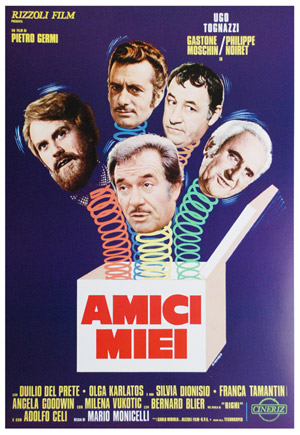
Mario Monicelli – Amici miei aka My Friends (1975)
1971-1980ComedyItalyMario MonicelliSynopsis:
‘Necchi (a bar owner), Perozzi (a journalist), Melandri (an architect) and Mascetti (a broken nobleman) live in Florence. They have been friends since their youngest years and spend every free moment together organizing complex and terrible jokes to all the people they meet, or just wandering around Tuscany. One of these crazy trips ends up in the hospital run by military-like Professor Sassaroli. Melandri falls in love with his wife, and steals her from the husband, much to the delight of Sassaroli himself. The relationship won’t last but the Professor becomes the fifth member of the team of friends, and jokes get even more complicated and powerful.’
– Alessio F. Bragadini
Read More » -
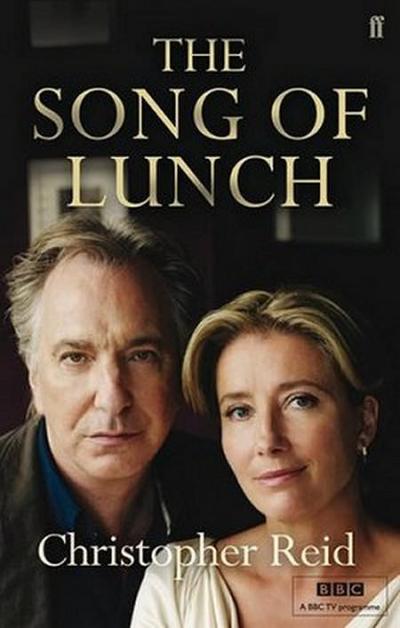
Niall MacCormick – The Song of Lunch (2010)
2001-2010DramaNiall MacCormickTVUnited KingdomQuote:
A publisher leaves a Post-It note on his computer screen bearing the words “Gone to lunch” before heading off to meet an old flame at what was once their favourite London restaurant. But it becomes painfully clear to the publisher (Alan Rickman) that everything has changed. The restaurant isn’t the casual, noisy Italian with Chianti in raffia bottles it once was, and his old flame (Emma Thompson) isn’t the girl he once knew. Both restaurant and ex-lover are sleeker, more sophisticated and emotionally at a remove.
The Song of Lunch is a prose poem by award-winning writer Christopher Reid. It’s an unusual structure for a drama (the poem is Rickman’s interior monologue, though both characters chip in with dialogue), but it works fluidly and beautifully. Reid’s writing is gorgeous, and funny whether he’s articulating the courtesies of a restaurant visit (he describes catching the waiter’s attention as “the demure flutter of restaurant semaphore”) or matters of the heart. Throughout The Song of Lunch wears its cleverness lightly, and Reid’s use of language is a joy.Read More » -
Eric Pauwels – Lettre d’un cinéaste à sa fille (2000)
1991-2000DocumentaryEric PauwelsFranceA girl asks her father: “Daddy, why don’t you make films for children?” The filmic answer is a playful, free and personal film in the form of a letter, a film interwoven with a thousand stories, knit together with different textures, a book of images allowing a filmmaker to elaborate his view on cinema and to show the images and the stories he wants to share.Read More »