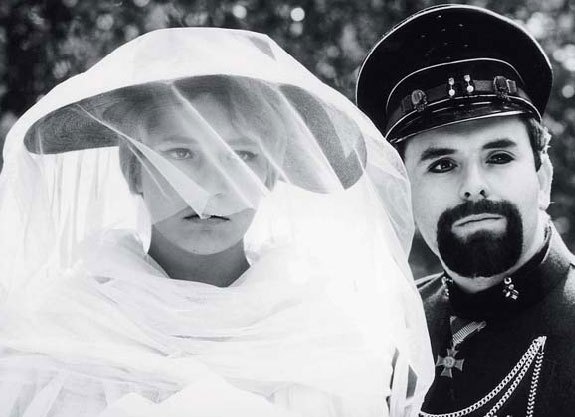
• Jean-François Stévenin – Double messieurs AKA Double gentlemen (1986)

    Arthouse1981-1990FranceJean-François Stévenin

    Synopsis
    In a routine look at what it means to finally leave adolescence behind — even in one’s mature years — this series of mood swings and sequences focuses on two grown men. Francois (Jean Francois Stevenin, the director) and Leo (Yves Alonso) are old friends, and at one point they decide to go out and search for one of their childhood buddies, the brunt of several of their practical jokes. In true form, the men opt for playing yet another practical joke on their friend, but their plans backfire when his wife Helene (Carole Bouquet) comes into the picture instead. Her presence forces them to reconsider their shenanigans in a new light.Read More »
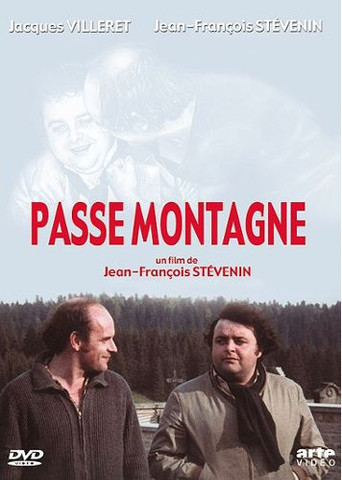
  • Jean-François Stévenin – Le Passe-montagne AKA Mountain Pass (1978)

    1971-1980ArthouseFranceJean-François Stévenin

    29f7c043f76a2bde437fd0d52a185152

    PLOT DESCRIPTION
    This film marks the directorial debut of actor Jean-François Stevenin. Serge (Stevenin) is a dweller in the French provinces who happens upon Georges (Jacques Villeret), a Parisian motorist in distress. Serge arranges for the car to be taken to a nearby garage. Georges’ friends, who were with him in the car, have continued their journeys. Because of that, Serge takes Georges under his wings while he waits for his car to be repaired, and they tour the countryside and party with the local revelers. Nothing much is said between them, but it is clear that they have become friendsRead More »

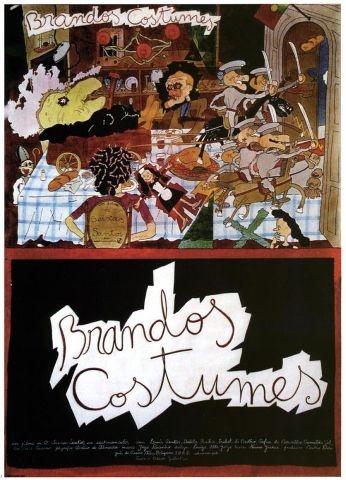
  • Alberto Seixas Santos – Brandos Costumes AKA Gentle Costume AKA Gentle Morals (1975)

    1971-1980Alberto Seixas SantosDramaPortugal

    29f7c043f76a2bde437fd0d52a185152

    Synopsis:
    Portrait of the everyday life of a typical middle-class family in parallel with the fall of the “Estado Novo”, the 48-year dictatorship led by Salazar. The daughters’ conflicts and frustrations with their parents, their grandmother and their maid find an obvious echo in the country’s collective events.Read More »

  • Andrzej Wajda – Zly chlopiec AKA The Bad Boy (1950)

    1941-1950Andrzej WajdaDramaPolandShort Film

    29f7c043f76a2bde437fd0d52a185152

    Synopsis:

    First short film by Wajda, based on the story “A Naughty Boy” by A. Chekhov. Read More »

  • Alexandros Avranas – Miss Violence (2013)

    2011-2020Alexandros AvranasArthouseDramaGreece

    29f7c043f76a2bde437fd0d52a185152

    Synopsis
    On her birthday, 11-year-old Angeliki jumps off the balcony to her death with a smile on her face. An investigation is started as to the reason for this apparent suicide, but the family keeps insisting that it was an accident.
    IMDb.com
    Read More »

  • Vojtech Jasný – Wir (1981)

    1981-1990Czech RepublicSci-FiVojtech Jasný

    29f7c043f76a2bde437fd0d52a185152

    Description

    One of the most famous rare TV films ever, the copy is very good.
    I think Samyatin’s novel Wir on which this film is based is well known enough among sci-fi fans as the predecessor and inspiration for Brave New World and 1984. In 1981 ZDF adapted this film with Dieter Laser and Sabine von Maydell in the main roles and some clever effects despite obvious budget limitations. I’m as puzzled as all other fans why this film was apparently never shown again, maybe rights issues?
    Anyway here it is back for the eyes of the public.Read More »

  • Jan Nemec – Mucedníci lásky aka Martyrs of Love (1966)

    1961-1970ComedyCzech RepublicExperimentalJan Nemec

    29f7c043f76a2bde437fd0d52a185152

    Another brilliant outing from Czech New Wave master Jan Nemec, director of Diamonds of the Night and The Party and the Guests.

    Martyrs of Love is in 3 distinct sections, separated by title cards, connected thematically and formally rather than concretely. Music is probably the most important connection, as all three sections have prominent musical events.Read More »

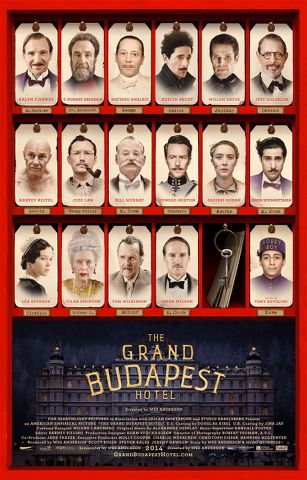
  • Wes Anderson – The Grand Budapest Hotel (2014)

    2011-2020ComedyUSAWes Anderson

    29f7c043f76a2bde437fd0d52a185152

    Quote:
    “The Grand Budapest Hotel” is the movie that Wes Anderson has been hinting at and promising for 15 years. It has wit and yet doesn’t short-circuit emotion, style that’s more than a gesture or attitude, and good scenes that don’t only stand alone but that build and become part of a substantial whole. It is every bit what people think of when they think of a Wes Anderson movie, only this time the gap between the talent and the achievement is gone.

    It’s set primarily in the early 1930s, in a fictional central European city, with shades of Budapest, Prague and Vienna – but not the real Budapest, Prague and Vienna, but rather those cities as imagined and dreamed across a distance of time and space. The hotel of the title is like a hotel in a Greta Garbo movie, except rendered in candy colors, harking back to a time when people really believed that splendor and refinement were states of the soul, not mere acts of display.Read More »

  • Nicolás Pereda – El palacio (2013)

    2011-2020ArthouseDocumentaryMexicoNicolás Pereda

    29f7c043f76a2bde437fd0d52a185152

    Pereda’s films pass through a transitional period; Los mejores temas was probably a conscious farewell to a filmic representation system while Matar extraños turned out to be an enigmatic first test; El palacio is a new attempt at renovation, an experiment. These last two films show a novel element —the shifting of the family and domestic spheres to a public and political space. Whereas Matar extraños used revolution as its focal concept, in this enigmatic film the microphysics of power is the permeating idea.
    The opening wide shot is brilliant; the 17 women who appear in this film are washing their teeth at the same time. Among this group there are little girls, young and old women, and they are not at a bathroom but at a patio filled with large sinks. Their activity unites them, though their experiences and, eventually, their functions differ. Where are they? For several minutes the only thing we will see are the diverse cleaning-related actions performed by these women. Everything happens in an old house, without any indication of its location. Abstraction and routine. Pereda is capable of filming someone hanging clothes to dry or making a bed as if those were aesthetic events.
    A donkey wonders around and imposes a comical tone for a moment; but a donkey is an animal used for servitude. And the title of the film mentions a palace.
    Read More »

Back to top button