Quote:
In the rarefied stratosphere of Eugene Green’s film “Le Pont des Arts,” music, literature, philosophy and aesthetics, and the characters’ engagement with them, are literally matters of life and death. Here and in his other films, Mr. Green, the American-born French filmmaker who founded the Theatre de la Sapience, a group dedicated to revitalizing 17th-century Baroque theater in modern productions, has invented a cinematic vocabulary that radically juxtaposes classical and contemporary themes and characters. … In “Le Pont des Arts,” Mr. Green’s propensity for throwing in academically heavyweight references and concepts may seem intimidating, but it is more than an exercise in name-dropping. The movie is an audacious, mythically slanted inquiry into the place of high art in today’s chaotic culture and an assertion of its primacy. … — NYTimesRead More »
-
Eugène Green – Le pont des Arts AKA The Bridge of Art (2004)
2001-2010ArthouseEugène GreenFrance -
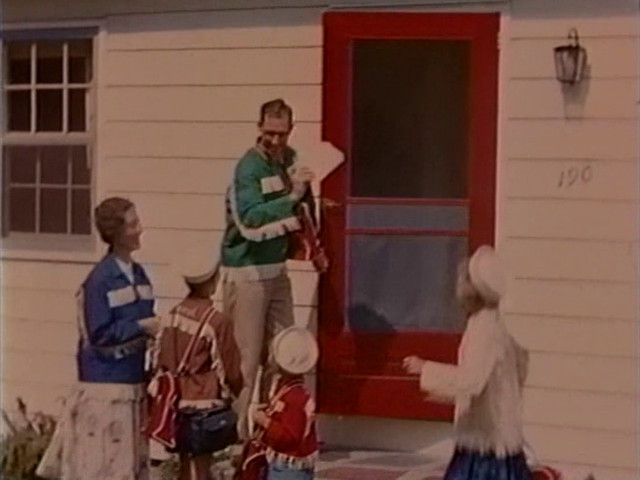
Robbins Barstow – Disneyland Dream (1956)
1951-1960DocumentaryRobbins BarstowShort FilmUSA“The Barstow family films a memorable home movie of their trip to Disneyland. Robbins and Meg Barstow, along with their children Mary, David and Daniel were among 25 families who won a free trip to the newly opened Disneyland in Anaheim, Calif., as part of a ‘Scotch Brand Cellophane Tape’ contest sponsored by 3M. Through vivid color and droll narration , we see a fantastic historical snapshot of Hollywood, Beverly Hills, Catalina Island, Knott’s Berry Farm, Universal Studios and Disneyland in mid-1956. The movie was shot with a 16 mm handheld camera.
Robbins Barstow was a pioneering maker of home movies. Disneyland Dream is one of literally hundreds of films he completed from 1929 (when he first received a camera) until his death in 2010, many of which star his immediate family.Read More »
-
Derek Jarman – The Tempest (1979)
1971-1980ArthouseDerek JarmanQueer Cinema(s)United KingdomQuote:
Prospero, a potent necromancer, lives on a desolate isle with his virginal daughter, Miranda. He’s in exile, banished from his duchy by his usurping brother and the King of Naples. Providence brings these enemies near; aided by his vassal the spirit Ariel, Prospero conjures a tempest to wreck the Italian ship. The king’s son, thinking all others lost, becomes Prospero’s prisoner, falling in love with Miranda and she with him. Prospero’s brother and the king wander the island, as do a drunken cook and sailor, who conspire with Caliban, Prospero’s beastly slave, to murder Prospero. Prospero wants reason to triumph, Ariel wants his freedom, Miranda a husband; the sailors want to dance.Read More » -
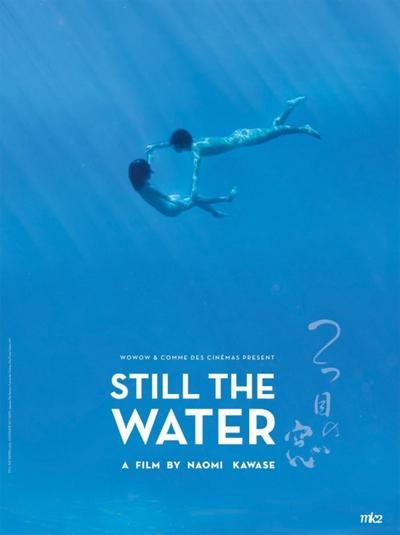
Naomi Kawase – Futatsume no mado AKA Still the Water (2014)
Drama2011-2020ArthouseJapanJapanese Female DirectorsNaomi KawaseOn the subtropical Japanese island of Amami, traditions about nature remain eternal. During the full-moon night of traditional dances in August, 16-year-old Kaito discovers a dead body floating in the sea. His girlfriend Kyoko will attempt to help him understand this mysterious discovery. Together, Kaito and Kyoko will learn to become adults by experiencing the interwoven cycles of life, death and love. (~festival-cannes.fr)Read More »
-
José Luis Guerín – Tren de sombras AKA Train of Shadows (1997)
1991-2000DocumentaryExperimentalJosé Luis GuerínSpainQuote:
Ostensibly framed as a restoration of a degraded found film recovered some 70 years after the sudden and unexplained death of its creator, a Parisian attorney and amateur filmmaker named Gérard Fleury at a lake in the village of Le Thuit in Normandy, Tren de sombras (Train of Shadows) is a dense, sensual, and richly textured exposition of José Luis Guerín’s recurring preoccupations: the nature and subjectivity of the image-gaze, the permeable borders between truth and fiction, the role of architecture (and landscape) as palimpsest of hidden histories. By placing the discovery of Fleury’s last shot footage of his home and family within the context of the ambiguity surrounding the circumstances of his death after a seemingly innocuous scouting trip early one morning to find suitable lighting conditions to incorporate into his home movie, the found film becomes both a curious artifact of the early days of cinema in its informally staged performances that suggest the whimsical, created illusions of Georges Méliès (in a performance of dancing ties and magic tricks), and also a non-fiction, historical record that can be deconstructed, reconstituted, and re-analyzed to glean further information into the real-life mystery.Read More » -
Ange Leccia – Nuit bleue AKA Blue Night (2010)
2011-2020Ange LecciaArthouseFranceQuote:
Following a death, a young woman returns to her island of birth, Corsica. She finds herself in a nationalist male world in the impressive and desolate landscape around Cap Corse. The story in this film without dialogue by the artist Ange Leccia is driven by songs such as Ne dis rien by Serge Gainsbourg. A young woman, Antonia, returns to her island of birth, Corsica, after one of her relatives has disappeared at sea. She is torn back and forth between her old love Ettore and the dumb Alexander. The quest for Antonia’s place in the masculine environment of armed nationalism is an excuse for all kinds of peregrinations in the spectacular landscape of Cap Corse – a landscape that itself becomes a leading character. The plot of this fascinating film, entirely without dialogue, is told in songs such as Ne dis rien by Serge Gainsbourg. With the songs, the maker reveals the psychology of his characters, who seem to be in the grip of an age-old, atavistic melancholy.Read More » -
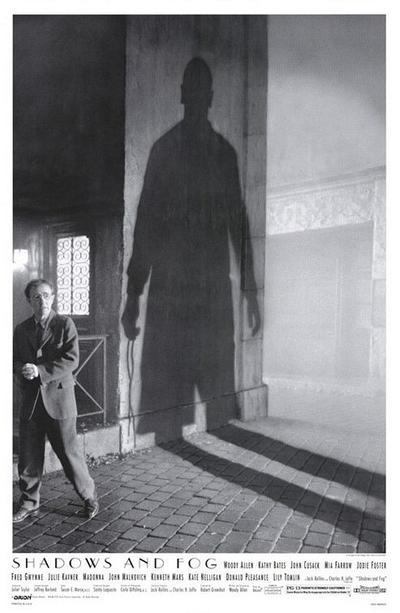
Woody Allen – Shadows and Fog (1991)
Drama1991-2000ComedyUSAWoody AllenQuote:
As Wolcott Gibbs once said to Shakespeare: Kafka, here’s your hat.That’s just one of the deliciously eccentric messages being sent out by Woody Allen in his rich, not easily categorized new black-and-white comedy, “Shadows and Fog.” Among other things, “Shadows and Fog” contemplates life, death, love, literature, movies, American humor in general, the gags of Bob Hope in particular, the music of Kurt Weill and the changing fashions in B.V.D.’s.
Kleinman (Mr. Allen) is a timid clerk in the kind of unidentified Middle European city once so beloved by Kafka, Kafka’s imitators, the masters of the German Expressionist cinema of the 1920’s and their imitators. It is always night in this closed world of miasmic fog, cobbled alleys and street lamps that shed too little light but cast photogenically deep shadows.Read More »
-
Eugène Green – A Religiosa Portuguesa AKA The Portuguese Nun (2009)
2001-2010ArthouseEugène GreenPortugalQuote:
Filmmaker Eugene Green pays homage to Manoel de Oliveira, a Portuguese director whose had a profound influence on his style, with this drama of a woman eager for a new lease on life. Julie (Leonor Baldaque) is a French actress who is still nursing a broken heart after a bad breakup with her boyfriend. Julie travels to Lisbon to begin work on her latest project, in which she’ll play the title role in a screen adaptation of the novel Letters of a Portuguese Nun. Julie is fascinated with Lisbon, and spends much of her spare time exploring the city, and she opens herself up to encounters with a wealthy and prominent man (Diogo Dória) as well as one of her fellow actors (Adrien Michaux). However, Julie learns the most about herself and her heart when she strikes up a friendship with a local boy who has lost his parents (Francisco Mozos), enjoys some long conversations with a nun (Ana Moreira) who is advising the production, and learns to love Portugal’s native fado music. A Religiosa Portuguesa (aka The Portuguese Nun) was an official selection at the 2009 BFI London Film Festival. ~ Mark Deming, RoviRead More » -
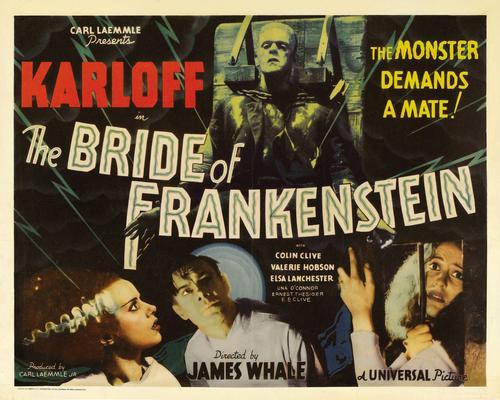
James Whale – Bride of Frankenstein (1935)
1931-1940HorrorJames WhaleQueer Cinema(s)RomanceUSASequel to 1931’s Frankenstein, Bride of Frankenstein was directed by James Whale and stars Boris Karloff as The Monster, Elsa Lanchester in the dual role of his mate and Mary Shelley, Colin Clive as Henry Frankenstein and Ernest Thesiger as Doctor Septimus Pretorius.
The film follows on immediately from the events of the earlier film, and is rooted in a subplot of the original Mary Shelley novel, Frankenstein (1818). In the film, a chastened Henry Frankenstein abandons his plans to create life, only to be tempted and finally coerced by the Monster, encouraged by Henry’s old mentor Dr. Pretorius, into constructing a mate for him.Read More »