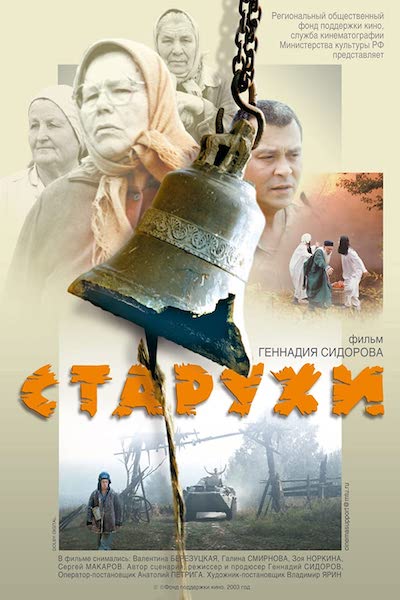

A small village in the Russian campaign is inhabited only by few old women and a boy. When a family of refugees arrives they are at first opposed by the community, but eventually they’ll be accepted and help revive the village.Read More »
A small village in the Russian campaign is inhabited only by few old women and a boy. When a family of refugees arrives they are at first opposed by the community, but eventually they’ll be accepted and help revive the village.Read More »
Quote:
A film made in the emergency room of the traumatic surgery hospital located on Barska Street in Warsaw. Doctors attempt to help the injured in the face of frequent power shortages typical of the Polish People’s Republic. @culture.pl
Read More »
Quote:
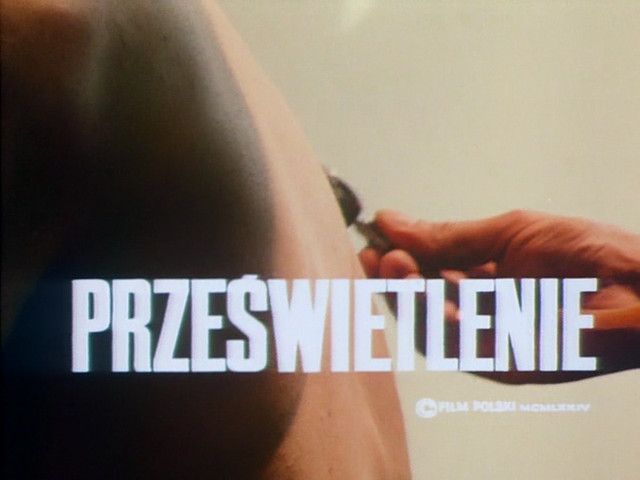
Made at the sanatorium of Sokolowsko in Lower Silesia, this film looks at individuals suffering from pulmonary disease and is a moving portrait of those living with illness. @culture.pl
Quote:
In this short film, Kieslowski tries to penetrate the world of people affected by lung disease. In style, this picture closely resembles a documentary completed four years earlier titled I Was a Soldier which gives voice to veterans who had lost their sight to war, whereas in this picture, it’s the lung disease patients whose stories we hear. The entire movie is composed of their tales. The only binding element of the story is the buckle of the movie’s landscape which places the story at a physical location, indicating its threshold – going home after their stay at the sanatorium. The statements are made directly into the camera; the director uses close up on their faces. He listens.Read More »

Quote:
A short impression composed of outtakes from Krzysztof Kieślowski’s feature film titled The Scar / Blizna (1976). @culture.pl
Quote:
Slate (1976, color, 6 min.): While some of these outtakes (from The Scar) are “bloopers”, other do not appear so. The film becomes something of an editing experiment, unified by the musical rhythm of the clapping slate.
– Joseph G. Kickasola, The Films of Krzysztof Kieslowski, 2006Read More »
Quote:
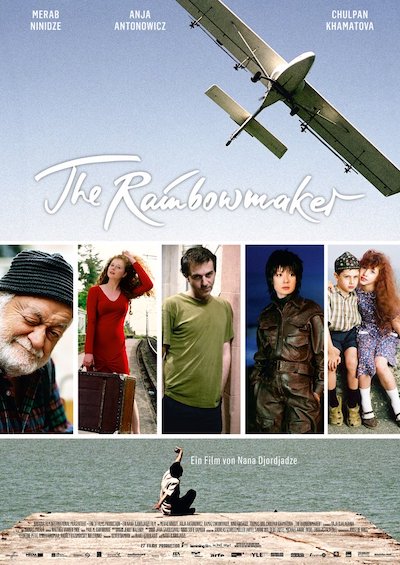
Datho (Merab Ninidze) has been innocent in prison for many years. When he comes home nobody wants him. His angelic wife Elene (Anna Antonowicz) has fun with a fire-eater. The two children imagined the father as a hero, not as a sorrowful knight. But everything changes when Datho can freeze his enemies in the bathtub or he calls for rain so that they remain stuck in the mud.Read More »
An anthology film following different stories around the theme of invisibility in the modern world.Read More »

Farmer Sweetland is a lonely old widower. He is determined to marry again and he enlists the help of his housekeeper Minta to pick a wife from the local single women.Read More »

A successful fashion designer abandons a sado-masochistic relationship with her female assistant in favor of a love affair with a beautiful young woman.Read More »

Synopsis:
Emak-Bakia shows elements of fluid mechanical motion in parts, rotating artifacts showing his ideas of everyday objects being extended and rendered useless. Kiki of Montparnasse (Alice Prin) is shown driving a car in a scene through a town. Towards the middle of the film Jacques Rigaut appears dressed in female clothing and make-up. Later in the film a caption appears: La raison de cette extravagance (The reason for this extravagance)and it cuts to a car arriving and a passenger leaving with briefcase entering a building, opening the case revealing men’s shirt collars which he proceeds to tear in half. The collars are then used as a focus for the film, rotating through double exposures.
When the film was first exhibited, a man in the audience stood up to complain it was giving him a headache and hurting his eyes. Another man told him to shut up, and they both started to fight. The theatre turned into a frenzy, the fighting end up out in the street, and the police were called in to stop the riot.Read More »