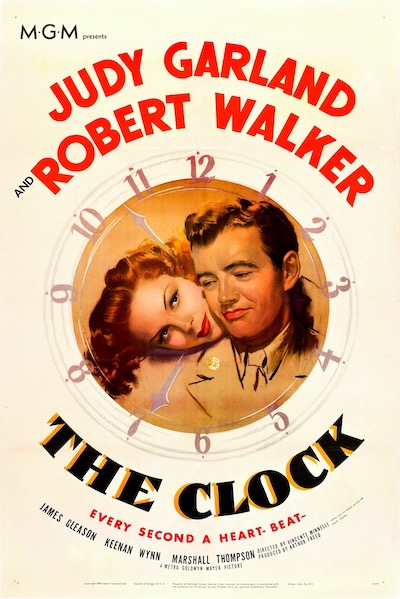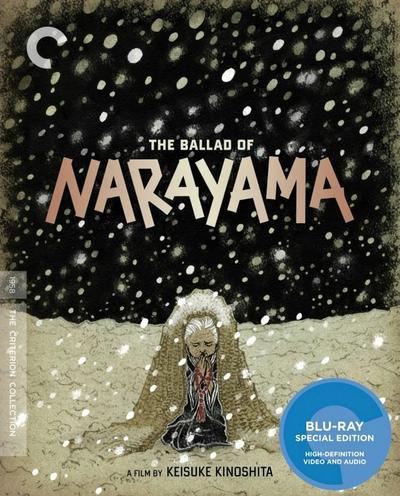
• Keisuke Kinoshita – Narayama bushikô AKA Ballad of Narayama (1958)

    1951-1960ArthouseDramaJapanKeisuke Kinoshita

    29f7c043f76a2bde437fd0d52a185152

    Quote:
    In Kabuki style, the film tells the story of a remote mountain village where the scarcity of food leads to a voluntary but socially-enforced policy in which relatives carry 70-year-old family members up Narayama mountain to die. Granny Orin is approaching 70, content to embrace her fate. Her widowed son Tatsuhei cannot bear losing his mother, even as she arranges his marriage to a widow his age. Her grandson Kesa, whose girlfriend is pregnant, is selfishly happy to see Orin die. Around them, a family of thieves are dealt with severely, and an old man, past 70, whose son has cast him out, scrounges for food. Will Orin’s loving and accepting spirit teach and ennoble her family?Read More »

  • Wim Wenders – Im Lauf der Zeit aka Kings of the Road (1976)

    1971-1980ArthouseDramaGermanyWim Wenders

    http://images-eu.amazon.com/images/P/B000A0JTA2.01.LZZZZZZZ.jpg

    29f7c043f76a2bde437fd0d52a185152

    Dave Kehr of the Chicago Reader wrote:

    The first masterpiece of the New German Cinema. Wim Wenders’s existentialized road movie follows two drifters–an itinerant movie-projector repairman and a child psychologist who has followed his patients by dropping out–in a three-hour ramble through a deflated Germany, touching on their private pasts and their hopes for the future. It’s full of references to Hawks, Ford, and Lang, and one scene has been lovingly lifted in its entirety from Nicholas Ray’s The Lusty Men. As the hommages indicate, one of the subjects is the death of cinema, but this isn’t an insider’s movie. Wenders examines a played-out culture looking for one last move. An engrossing, enveloping film, made with great craft and photographed in highly textured black-and-white by Robby Muller (1976).Read More »

  • Charles Laughton – The Night of the Hunter (1955)

    USA1951-1960Charles LaughtonClassicsFilm NoirRobert Mitchum

    Quote:
    The Night of the Hunter—incredibly, the only film the great actor Charles Laughton ever directed—is truly a stand-alone masterwork. A horror movie with qualities of a Grimm fairy tale, it stars a sublimely sinister Robert Mitchum as a traveling preacher named Harry Powell (he of the tattooed knuckles), whose nefarious motives for marrying a fragile widow, played by Shelley Winters, are uncovered by her terrified young children. Graced by images of eerie beauty and a sneaky sense of humor, this ethereal, expressionistic American classic—also featuring the contributions of actress Lillian Gish and writer James Agee—is cinema’s most eccentric rendering of the battle between good and evil.Read More »

  • Mikio Naruse – Shiroi yajuu aka White Beast (1950)

    1941-1950AsianDramaJapanMikio Naruse

    29f7c043f76a2bde437fd0d52a185152

    Quote:
    The third film that Naruse made in 1950, White Beast (Shiroi yaji, 1950), was described by Kinema Junpo critic Tsumura Hideo three years later as “so indescribably miserable as to haunt me even today.” Tsumura represents the bulk of Japanese critics of the time, who felt that Naruse experienced a terrible slump throughout the 1940s and this film seemed to be the “bottom of the ocean.” The critical establishment was clearly not prepared to accept a woman’s prison film featuring former prostitutes recovering from venereal diseases, unwanted pregnancies, and estranged lovers. With its catfights, hysterical tantrums, film noir lighting, and dramatic music, White Beast is indicative of the new influences of the Hollywood psychological thriller on Naruse. Caged (John Cromwell, 1950) initiated a cycle of women’s prison movies in the United States that may or may not have been shown in Japan, but the stylistics of White Beast draw on the same paranoid woman’s films and film noir conventions that preceded the American cycle.Read More »

  • Rob Van Eyck – The Afterman (1985)

    1981-1990BelgiumRob Van EyckSci-Fi

    29f7c043f76a2bde437fd0d52a185152

    Quote:
    What I have the honor of reviewing here is something totally unique and probably ranks quite high on the worldwide list of obscure Sci-Fi/horror movies. “The Afterman” is a Belgian post-apocalyptic thriller, but even in its own country of release (which is really small) it only received a minimal distribution and finding a decent copy on VHS is about as rare as encountering a salsa-dancing elephant. Fortunately – or unfortunately if you wish – there are not many people on the lookout for this film and that’s mainly either because they don’t know it exists or because the reputation of writer/director Rob Van Eyck isn’t exactly favorable around here. His most famous film “Blue Belgium”, inspired by the infamous Mark Dutroux pedophilia scandal, is generally considered as one of the worst Belgian movies ever and doesn’t really stimulate viewers to check out the director’s other works. Too bad, actually, since “The Afterman” is a truly special and deeply intriguing cinematic experiment, accomplished with an absolute minimum of financial means yet with a massive amount of controversial themes and downright shocking ideas in the screenplay.Read More »

  • Souleymane Cissé – Finye AKA The Wind (1983)

    1981-1990African CinemaDramaMaliSouleymane Cissé

    29f7c043f76a2bde437fd0d52a185152

    Overview
    Finye / Le vent/ The Wind (1982) continues Cisse’s examination of internal African problems. This film examines the sources of student unrest and the relationship between postcolonial and traditional authority under a military regime. It opens with a statement about the wind awakening man’s thoughts. Batrou, the daughter of the governor, Sangare, falls in love with Bah. The students become involved with a protest against the repressive government. Batrou must confront her father, who is both a parental as well as military authority figure. Sangare faces resistance on many fronts in addition to the conflict with his daughter. His third wife confronts his abuse of authority as does Kansaye, Bah’s grandfather and traditional leader who has been overthrown by the governor. While Cisse presents these stories, he is really concerned with the larger concerns of society. This film also won the FESPACO Grand Prize in 1983.
    Sharon A. Russell, Guide to African CinemaRead More »

  • Bille August – Honning måne AKA In My Life (1978)

    1971-1980ArthouseBille AugustDenmarkDrama

    Free Image Hosting at www.ImageShack.us

    29f7c043f76a2bde437fd0d52a185152

    A young man, Jens, gets a job in a Copenhagen factory. He lives with his mother and has been without a job for a while. One day he meets Kirsten, who works at the library, and asks her out. He meets her parents, and soon they are married. They move into a house, Kirsten stops working, and they prepare their lives together. But Kirsten soon starts to feel a discontent that turns into depression and detachment. Jens fights to stay close to her, but eventually he must decide if he is suited for the respectable life he has built for himself. (IMDb)Read More »

  • Vincente Minnelli – The Clock (1945)

    1941-1950ClassicsRomanceUSAVincente Minnelli

    In 1945, during a 48-hour leave, a soldier accidentally meets a girl at Pennsylvania Station and spends his leave with her, eventually falling in love with the lovely New Yorker.Read More »

  • Travis Wilkerson – Machine Gun or Typewriter? (2015)

    2011-2020DocumentaryExperimentalTravis WilkersonUSA

    29f7c043f76a2bde437fd0d52a185152

    Once again, Travis Wilkerson (take a look at the credits) has worked (almost) by himself on his last film. Using the quest for a lost love as an excuse, this extremely generous film casts a wide net over History, from Maïakovsky to a certain L. Schapiro, from Bonnie & Clyde to Ulrike Meinhof, from the 1871 Paris Commune to the here and now. Despite its stunning economy of means, this playful and ironical film with a beautiful soundtrack always remains elegant. FIDMarseille catalogue. Read More »

Back to top button