

Episode of the TV serial “Il était musicien”.
Imaginary adventure of musician Sans Saens. It shows the lack of will of a society. Isabelle Huppert plays a role as a young revolutionnary.Read More »
Episode of the TV serial “Il était musicien”.
Imaginary adventure of musician Sans Saens. It shows the lack of will of a society. Isabelle Huppert plays a role as a young revolutionnary.Read More »

Idealistic young man supports the party and the new Yugoslavia’s communist regime, but soon gets involved in various political and criminal machinations becoming more and more confused about what’s right and what’s wrong.Read More »

Quote:
Filmmaker Ming-liang Tsai sits with Lee Kang-sheng in a house as they have a discussion.
Quote:
This conversation between Taiwanese auteur Tsai Ming-liang and his muse Lee Kang-sheng illuminates one of the great actor-director collaborations in cinema history.Read More »
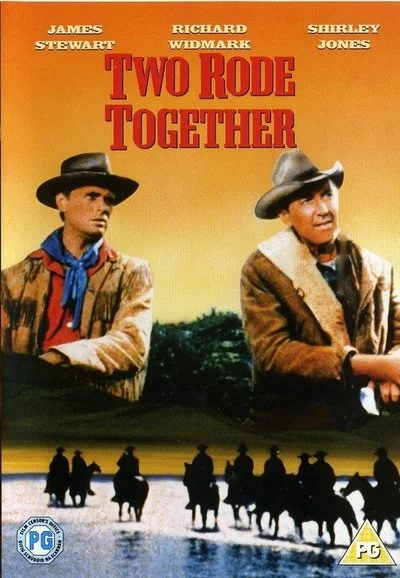
Recycling elements of My Darling Clementine and The Searchers in a bitter, latter-day light, this late Western by John Ford initiates the last, dark phase of the master’s vision of the corrupting influences of the progress of civilization in the wilderness. James Stewart is introduced to the Ford stock company as a thoroughly venal town marshal, Guthrie McCabe, who’s pressed into service by the cavalry to oversee the ransoming of several whites long held captive by the Indians. McCabe is concerned with nothing but making a buck on the enterprise and coming back with his scalp intact, yet against his better judgment he becomes an arbiter of social and personal justice, and a de facto one-man protest against bigotry and hypocrisy. The cinematography is bleaker than anything seen in Ford’s more heroic Westerns, and the stylistic high point is a hilarious one-take conversation between Stewart and cavalryman Richard Widmark at the river’s edge. –Richard T. JamesonRead More »

A Westerner finds refuge with a group of women in a church during Japan’s rape of Nanking in 1937. Posing as a priest, he attempts to lead the women to safety.Read More »

With the breakup of his Tokyo orchestra, a young cellist returns with his adoring wife to his hometown. Searching for work, he responds to a cryptic ad for work in “Departures”, only to find out that the position is in the ritual preparation of corpses.Read More »

Quote:
“Liberally adapted,” per onscreen credits, from Joseph Conrad’s first, same-named novel, helmer Chantal Akerman’s interpretation of “Almayer’s Folly” is as eccentric as “La Captive,” her take on Proust. Unfortunately, it’s not as disciplined as that earlier work, and this tale of a French colonialist’s fraught relationship with his mixed-race daughter seems thrown together on a low budget with a too-breezy disregard for cultural specifics. After a powerful opening scene and reasonably strong first act, the pic slowly leaks air. Helmer’s rep should ensure polite interest from fests and niche distribs with a track record of releasing Akerman’s work.Read More »

Quote:
In the 1950s, housewife Louise walked out on her family whilst her children were still young. She gave no indication of where she was going and hasn’t been heard of since. Her daughter, Martine, stayed in the small coastal town where she grew up and became a doctor. Today, Martine’s daughter Audrey is an independent 30-year-old. On the spur of the moment, Audrey decides to visit her parents. During her stay, she comes across an old note book that belonged to her grandmother and which could explain the reason for the latter’s mysterious disappearance…Read More »

Synopsis:
The narrative is set in the summer of 1945 in a small village outside Leipzig, where the Americans have just pulled back and been replaced by Soviet troops. The film follows the inhabitants as they adjust to the new situation, in particular Joschi, a teenage Hitler Youth member who is fascinated by the Americans. (wikipedia)Read More »