• Lindsay Anderson – Free Cinema, 1956 – ? An Essay on Film by Lindsay Anderson (1985)

    Documentary1981-1990Lindsay AndersonUnited Kingdom


    A documentary about the history of the Free Cinema movement, made by one of it’s greatest proponents, Lindsay Anderson, to commemorate British Film Year in 1985.

    Produced by Kevin Brownlow and David Gill.

    Unlike Richard Attenborough’s celebratory episode of the same series, or Alan Parker’s more aggressive show, which was balanced between celebrating the greats and attacking Parker’s bugbears, Greenaway and Jarman and the BFI, Anderson’s show accentuates the negative, painting an image of a British cinema in terminal artistic decline and trashing the ambitions and approach of British Film Year itself. It’s mordantly funny and very savage.Read More »
  • Abel Ferrara – The Hold Up (1972)

    1971-1980Abel FerraraShort FilmUSA

    Image Hosted by ImageShack.us

    29f7c043f76a2bde437fd0d52a185152

    “IMDb” wrote:

    Johnny gets ready for work as his wife gives him his lunch and stays behind to look after their newborn baby. Johnny drives to a factory where he works. The factory owner happens to be the father of Johnny’s wife. Johnny meets with his co-workers Bob and Joe where they get laid off. But Johnny, thanks to his father-in-law, keeps his job. Desperate for money, Bob and Joe meet with Johnny at a local bar where they decides to rob a gas station to support themselves. Johnny reluctantly joins them out of friendship.Read More »

  • Yilmaz Atadeniz – Kilink uçan adama karsi aka Kilink Vs. Flying Man (1967)

    1961-1970CampCultTurkeyYilmaz Atadeniz

    Superman manages to locate Kilink’s hideout on a remote island in Turkey where his fiancé and her father are being held behind bars. Meanwhile, Kilink’s scientists finally manufacture a lethal destructive canon-like weapon that can blast away mountains. Superman arrives there as an ordinary man but is captured by Kilink and locked up with his woman and his future dad-in-law. Will Superman ever managed to escape and defeat the evil Kilink? Sadly, the second half of this film was destroyed decades ago so we only have various stills left with a narration for the viewers. Still, it is really worth it to see this film.Read More »

  • William Markus – Verta käsissämme AKA Blood on Our Hands (1958)

    1951-1960DramaFinlandThrillerWilliam Markus

    Quote:
    After returning home from being a prisoner of war, Captain Viktor Aaltona (Jussi Jurkka) get a job from his friend, Rolf Bergas (Tauno Palo) with whom he had served. The men trust each other until Viktor meets Rolf’s wife Astrid (Elina Pohjanpää).

    William Markus’s adaptation of a short novel by Mika Waltari, generally considered one of the weakest of the many films based on literary works and original screenplays by Waltari. Like Markus’s previous film, Mirjam (1957), Blood on Their Hands suffers from the near-constant use of overemphatic background, usually without much relation to what’s happening in the scene. Read More »

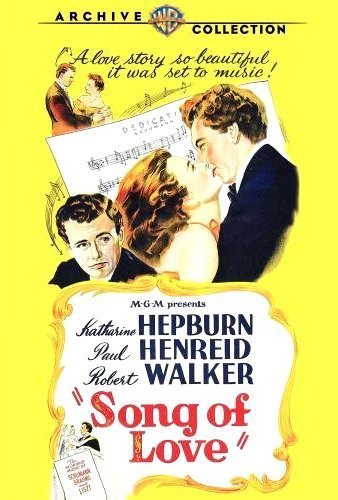
  • Clarence Brown – Song of Love (1947)

    1941-1950Clarence BrownClassicsDramaUSA

    Quote:

    Undeniably one of Hollywood’s greatest actresses, Katharine Hepburn nonetheless only had one voice. She used it to massive effect but anything that really warranted an utterly different accent tended to make her look horribly miscast. Of all the great actors she was the one who seemed to be horribly miscast most often, whether it be as a Chinese peasant girl, a queen of Scotland or a backwoods hillbilly. Here, playing the nineteenth century pianist and composer Clara Schumann, I expected another horrible miscasting, but found that the film’s very human story utterly engaging regardless what accents are brought to bear.Read More »

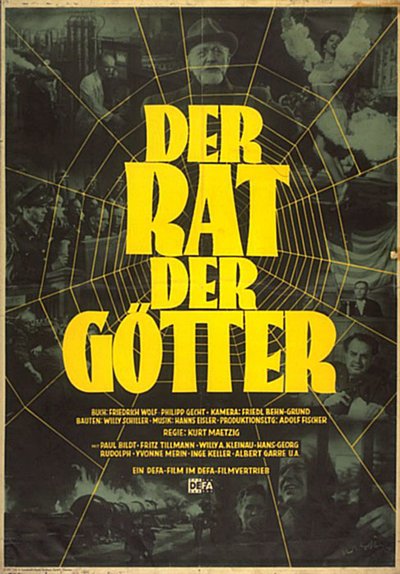
  • Kurt Maetzig – Der Rat der Götter AKA Council of the Gods (1950)

    1941-1950DramaGermanyKurt MaetzigPolitics

    1933, the bosses of a large German chemical concern pave the way for Hitler’s rise to power: Thus begins the story line of the feature film Der Rat der Götter (The Council of the Gods), which deals with the history of I.G. Farben. The film adheres throughout to the Communist theory of fascism. Hitler is largely unidimensional: a creature of capital. Thus the story continues: While the directors assist Germany’s military buildup, they continue to cultivate their business dealings with the U.S. company Standard Oil in order to have joint control of the world market. Some directors now carve out careers with the Nazis, while the engineer Dr. Scholz, who comes from a working-class family, has nothing but scientific progress in mind. Read More »

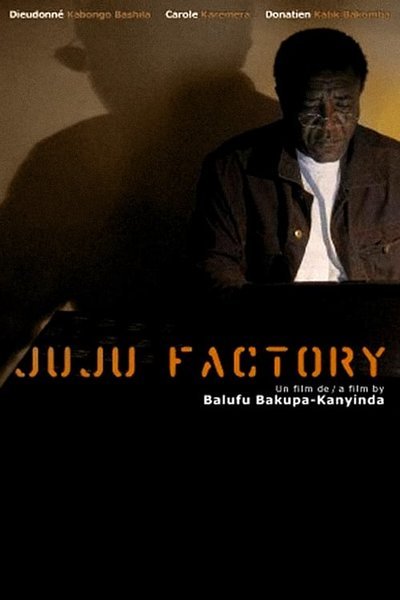
  • Balufu Bakupa-Kanyinda – Juju Factory (2007)

    2001-2010African CinemaArthouseBalufu BakupaCongo - Kinshasa (Zaire)Drama

    Kongo is writing a book on the subject of immigrants but while his editor wants a kind of traveler’s book in which ethnic exotic ingredients are offered to a European audience, Kongo has more ambitious ideas – he conceives of the idea of writing a book that follows the paths of Congolese history and its many ghosts. A brave and powerful film, made with single-mind integrity. Filmed mainly in the Congo, the film also provides a slice of life of the contemporary Congolese community in Brussels.Read More »

  • John Hayes – The Farmer’s Other Daughter (1965)

    1961-1970ComedyJohn HayesUSA

    IMDB wrote:
    Farmer Brown wants to sell his daughter, June, to the dastardly Cyrus P. Barksnapper in order to save his farm. But, Jim Huckleberry would like to to do some plowing with June himself. To help, he applies for financial aid, but the government screws up thinking he requested foreign aid.Read More »

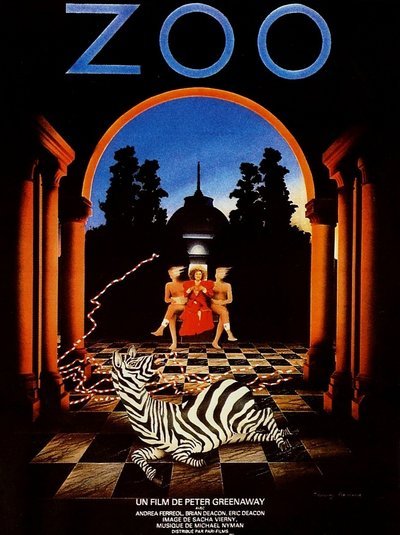
  • Peter Greenaway – A Zed & Two Noughts (1985)

    1981-1990ArthousePeter GreenawayUnited Kingdom

    Quote:
    I know one fact about this didactic director, Peter Greenaway—that he is a painter—and that is all I need to know. Everything falls in to place. He composes every frame, meticulously, based on the fundamentals of classical design and structure as if any frame could be snatched from the reel and hung at the Tate. This is the art of cinematography, and he is a master.

    A summary of A Zed and Two Noughts, or most any Greenaway film would be like briefly describing the Sistine Chapel—and it takes the Big Book to do that. This film is a lesson in dichotomy: life/death, birth/decay, everything and nothing. He reminds us that our own redemption lies in the cyclical aspect of nature and the blending of these universal opposites into the dizzying blur of existence.Read More »

Back to top button