All three documentaries is mainly shot in the home of Ingmar Bergman. This is the first time ever that a film maker has access to Ingmar Bergman in his home at the small island Fårö in the Baltic Sea. Bergman and the Cinema starts with Frenzy from 1944 and ends with Saraband from 2003. It contains unique behind-the-scenes material from Bergman’s private archive. Bergman and the Theatre is about some of Bergman’s 125 theatrical stagings and about his delight with the TV medium with successes as Scenes from a marriage. In Bergman and Fårö Island he talks about the childhood that shaped him. He shows where he shot his film Persona and fell in love – and he lists his worst demons!Read More »
-
Marie Nyreröd – Bergman och filmen, Bergman och teatern, Bergman och Fårö AKA Bergman Island [Extended TV version] (2004)
Documentary2001-2010Marie NyrerödSweden -
Claude Chabrol – Rien ne va plus AKA The Swindle (1997)
1991-2000Claude ChabrolComedyCrimeFranceSynopsis:
Con artists Victor (Michel Serrault) and Betty (Isabelle Huppert) are a perfect team when it comes to cheating gamblers out of their winnings. But Betty, who’s a master of the art of seduction, has a bigger scheme in mind: double-crossing bagman Maurice Biagini (François Cluzet) out of millions of Swiss francs that belong to organized crime. While it sounds like an airtight plan, Victor — no fool when it comes to matters of deception — suspects a double cross.Read More » -
Jamil Dehlavi – The Blood of Hussain (1981)
1981-1990ArthouseJamil DehlaviPakistanPoliticsA dramatic depiction of the life of Hussain, with allegorical references to the history of the Prophet Muhammad and his descendants. It is prophesied that Young Hussain will one day lead the impoverished masses to a better life. It is his brother, Hasan, however who gains in prominence and when the government is overthrown in a military coup, he tries to adapt. Hussain in the meanwhile gets married and leads a small band of rebels in an attempt to fight the military dictatorship.Read More »
-
Ferenc Kósa – Tízezer nap AKA Ten Thousand Days (1967)
1961-1970ArthouseDramaFerenc KósaHungaryFrom filmjournal.net and torinofilmfest.org
One of the most impressive Hungarian directorial debuts, Ten Thousand Days offers clinching proof that Miklós Jancsó wasn’t the only mid-1960s master offering breathtaking widescreen compositions featuring hundreds of men and horses. Shot by Sándor Sára, then well on his way to cementing his reputation as one of Hungarian cinematography’s greatest visual artists, the film routinely throws up stunning shots: mass wheat scything, dozens of horses crossing a bridge to market (followed shortly afterwards by train wagons crossing the same bridge heading in the opposite direction, a neat visual gag on technological progress), prisoners doing hard labour on a rocky hillside, numerous public festivities crammed with local colour. The aesthetic impact alone makes it’s easy to see why this once had a considerable international reputation, even achieving a commercial release in Britain.Read More »
-
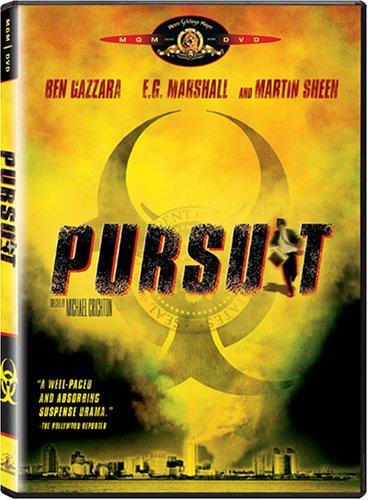
Michael Crichton – Pursuit (1972)
1971-1980DramaMichael CrichtonThrillerUSAA political extremist plans to spread stolen nerve gas in a city where a political convention is being held. Government agents are sent to catch him.Read More »
-
Boris Lehman – Leçon de vie AKA Life Lesson (1995)
1991-2000ArthouseBelgiumBoris LehmanDocumentary -
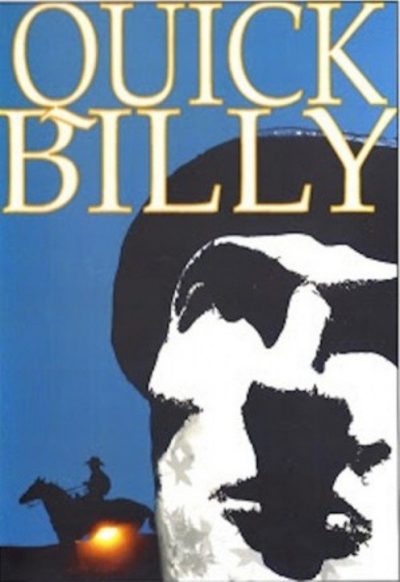
Bruce Baillie – Quick Billy (1971)
USA1971-1980Bruce BaillieExperimental -
Hartmut Bitomsky – Das Kino und der Tod aka Cinema and Death (1988)
1981-1990DocumentaryExperimentalGermanyHartmut Bitomsky

Quote:
“Das Kino und der Tod/Cinema and Death”(1988), is one of his ‘Cinema Anthology’ ,which was made by extraordinary Bitomsky’s voice and movement of his hands that turn over photos of murder in films.It’s ‘a film noir as a film essay which analyzes film noir’. When he analyzes classic films like Hitchkock’s “Torn Curtain”,Lang’s “Hangmen also die”, Siegel’s “The Killers”,Aldrich’s “Kiss me deadly”,etc, each viewer tries to remake the images that always becomes uncertain in the memory,with the movement of Bitomsky’s hands and voice as a detective showing photos of evidence of murders. There is an astonishing moment of new discovery of the image which we remember as a movement of the film.Read More » -
Yesim Ustaoglu – Günese yolculuk aka Journey to the Sun (1999)
1991-2000DramaTurkeyYesim Ustaoglu

Mehmet, a young Turkish man newly migrated from the village Tire, takes a job searching for water leaks below the surface of the streets of Istanbul. Due to a strange set of events, he is mistaken for a Kurd, imprisoned, and brutally beaten. Upon his release a week later, he becomes an outcast marked as a Kurd, losing his apartment, his job, and eventually his girl friend, Arzu. When a Kurdish friend, Berzan is killed in a street protest triggered by a hunger strike, Mehmet takes a trek to return the body to Berzan’s home village near the Iraqi border, and learns why so many Kurds are refugees.Read More »