Synopsis: This character study joins the painter at the height of his fame in 1642, when his adored wife suddenly dies and his work takes a dark, sardonic turn that offends his patrons. By 1656, he is bankrupt but consoles himself with the company of pretty maid Hendrickje, whom he’s unable to marry. Their relationship brings ostracism but also some measure of happiness. The final scenes find him in his last year, 1669, physically enfeebled but his spirit undimmed.Read More »
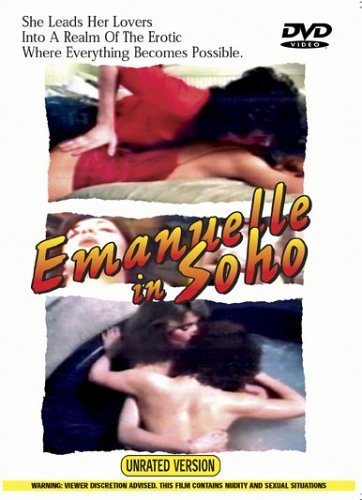
Emanuelle lives in London where almost everything in the realm of erotic is available. Her friend Kate becomes a nude revue show to help her husband pay the bills.Read More »
Quote: Paulo Rocha’s haunting second feature, CHANGE OF LIFE, is a beautifully-told story of a young man who returns from abroad to his small fishing village to discover that much has changed. Inspired by his work with Manoel de Oliveira, Rocha “cast” the local villagers as themselves, interspersed with experienced actors led by the great Isabel Ruth who would go on to become an Oliveira regular and an iconic presence in Pedro Costa’s OSSOS. The poetry of the local vernacular is captured in the textured dialogue written by fellow Portuguese filmmaker Antonio Reis, who met Rocha through Oliveira. The film was a critical and commercial success upon release, though it would effectively be the last film Rocha made for nearly two decades.Read More »
Quote: Fascist Slovakia during WW2. Tono lives a poor life, but the authorities offer him to take over the Jewish widow Lautman’s little shop for sewing material. She is old and confused and thinks that he is only looking for employment and hires him. The odd couple begin to like each other. But some time later the authorities decide that the Jews must leave the city. What should he do with the old lady?Read More »
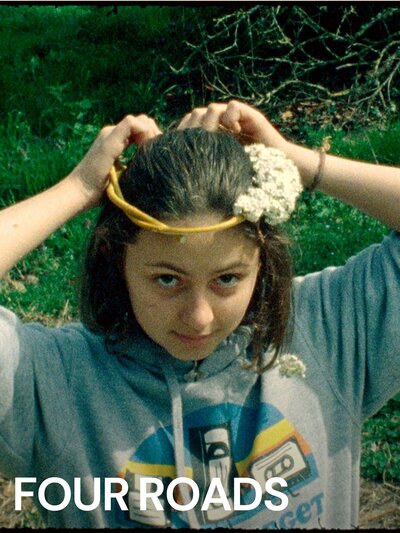
Quote: The COVID-19 pandemic forced many to stay at home, preventing people from meeting each other in real life. In the absence of any physical connection, this short explores alternative forms of contact among neighbors by making use of an old 16mm camera, a zoom lens, and a few meters of expired film.Read More »
Quote: “I survived because they liked my paintings,” says Vann Nath in this unsettling documentary, an affecting and effective film. This placid artist was imprisoned along with 17,000 other Cambodians in a Phnom Penh high school that had been converted into a Khmer Rouge interrogation and torture center. The school was used for this purpose for two years during the Khmer Rouge reign of terror (1975 to 1979), when as many as a million people died. In the film, he returns there to confront the men who worked as guards, really boys doing the Devil’s work: at the time, they ranged from 13 to their early 20’s. At one point the director shows the former guards recreating their grisly everyday tasks as a kind of pantomime. Watching them re-enact their chores in the large, stained and now empty rooms, which look like those in almost any American high school – while piles of the dead prisoners’ abandoned clothes sit heaped nearby – is simply one of the most disorienting moments you’re likely to encounter in a movie. – Elvis MitchellRead More »
The semi-autobiographical film on director Hou Hsiao-Hsien’s childhood and adolescence, when he was growing up in Taiwan, living through the deaths of his father, mother and grandmother.Read More »
In a Chilean little town, the son of an uprooted couple, formed by a rigorous communist father and a loving but weak mother, tries to pave his own path in a society that does not understand their Jewish-Ukrainian origins.Read More »