
Quote:
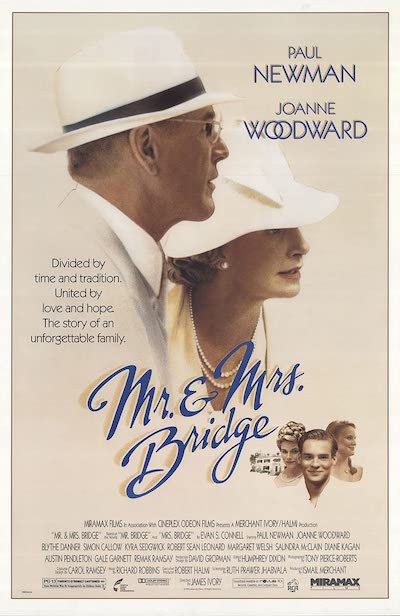
Set during World War II, an upper-class family begins to fall apart due to the conservative nature of the patriarch and the progressive values of his children.Read More »
Quote:
Set during World War II, an upper-class family begins to fall apart due to the conservative nature of the patriarch and the progressive values of his children.Read More »

In a series of films in which we discover the portrait of a woman, Manon de Boer prolongs her experiments during the meeting with Robyn Schulkowsky. In Italy and then Germany, the rotation of the lens leads us in a false loop where the visible is metamorphosed by the audible. The meetings of the musician make up the journey of an instrumentalist confronted with some contemporary composers whose evocation disturbs our appreciation of the pieces performed. The sound portrait animates the vision of performance spaces.
—Gilles GrandRead More »
Quote:
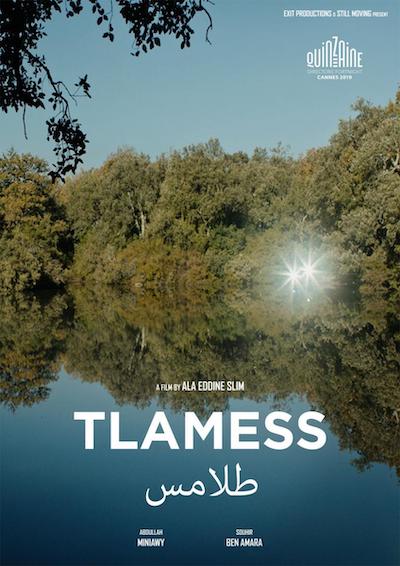
In Tunisian director Ala Eddine Slim’s experimental second feature, a soldier deserts his unit and lives on his instincts in the woods.
An experimental anomaly on the Tunisian film front, writer-director Ala Eddine Slim has won a following with two films that leave logic and realism behind to chart a muddy course through the minefield of experimental-apocalyptic narrative. Although their meaning is hard to grasp (perhaps on purpose?), they have attracted attention. After Eddine Slim’s first feature The Last of Us was shown in New Directors, New Films in New York, his new but cut-from-the-same-cloth Tlamess turned up in Cannes’ Directors’ Fortnight. Wherever these enigmatic, schematic and often pretentious works are shown, their basic lack of dramatic truth haunts them and they run the risk of hearing frustrated audiences demand the emperor put some clothes on.Read More »
SYNOPSIS
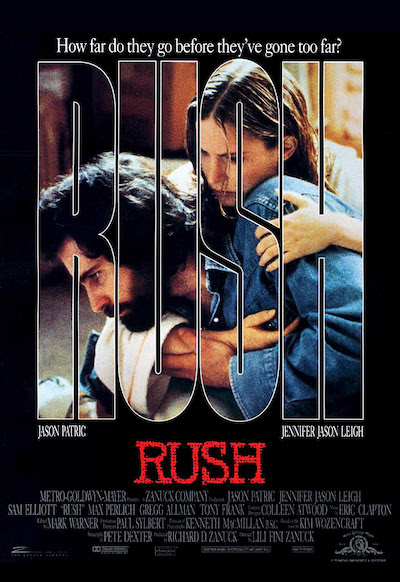
Two small-town Texas cops go undercover to catch a major drug dealer and are sucked into the drug culture, compromising their assignment.Read More »

Stella is an autobiographical 2008 French film directed by Sylvie Verheyde.
Coming-of-age films – particularly those emanating from Hollywood – have a habit of focusing on those in their late teens, coping with the coming of responsibility and, more often than not, sex. But there is arguably a much bigger jump to be made by those just entering their teens, as they make the move from childhood to the nightmare of puberty at the same time as negotiating the social upheaval of switching schools and taking on life lessons.Read More »
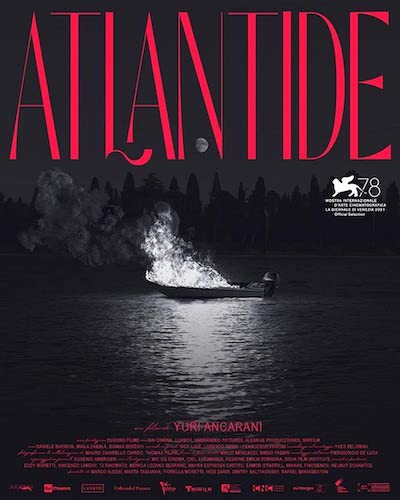
Daniele is a young man from Sant’Erasmo, an island on the edges of the Venice Lagoon. He lives on his wits, isolated even from his peer group who are busy exploring an existence of pleasure-seeking expressed in the cult of the barchino (motorboat). This obsession focuses on the building of ever more powerful engines to transform the little lagoon launches into dangerously fast racing boats. Daniele too dreams of a record-breaking barchino, one that will take him to the top of the leader board, but everything he does to further his dream and win respect from the others turns out to be tragically counterproductive. The decline that erodes the relationships, environment and habits of a rootless generation is observed from the timeless perspective of the Venetian landscape and its island outskirts: the point of no return is a foolish, vestigial tale of male initiation. Violent and destined to fail, it explodes dragging the ghost city along on a psychedelic shipwreck.Read More »

Jonas Mekas:
My film diaries 1970-1979: my marriage, children are born, you see them growing up. Footage of daily life, fragments of happiness and beauty, trips to France, Italy, Spain, Austria. Seasons of the year as they pass through New York. Friends, home life, nature, unending search for moments of beauty and celebration of life friendships, feelings, brief moments of happiness. The film is also my love poem to New York. It’s the ultimate Dogme movie, before the birth of Dogme.Read More »

Carrying on Luc Moullets unfinished screenplay about the theft of la pénélope, a camera created by Aaton and capable of recording equally well in 35 mm and digitally, LA ROUGE ET LA NOIRE is a film in kaleidoscope form. The portrait of Aatons founder, Jean-Pierre Beauviala creator, inter alia, of the time-code and the light cameras used by the New Wave (in particular the bush camera specially designed for Jean Rouch) is centered around the basic plot introduced by two women thieves who talk as voice-overs, and whose identities will only be revealed at the end.Read More »
Synopsis:
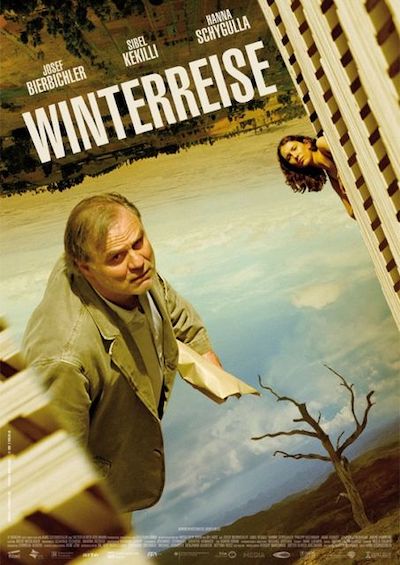
A diagnosed manic-depressive whose impulsive behavior only serves to further isolate him from his increasingly irritated family and friends, Franz Brenninger (Josef Bierbichler) is a once-wealthy businessman who has since fallen on hard times. When Franz receives letter promising a healthy payoff if he simply allows millions of dollars to be transferred through his German bank account, he enlists the aid of Kurdish translator Leyla (Sibel Kekilli) and secures the 50,000 Euros needed to seal the deal, telling his trusting son Xaver (Philipp Hochmair) that he is going to use the cash to pay for his ailing wife Martha (Hanna Schygulla)’s much-needed eye surgery. Upon realizing that he has been scammed and has nothing left to lose, Franz quickly scrounges whatever funds he can gather and travels to Nairobi with Leyla in hopes of confronting the elusive con artist and getting the money back.Read More »