A documentary on five young wannabe stuntmen working in the South Korean film industry.
a great diary style biographical doc on the korean stuntmen industry directed by and starring the guy who went on to direct The Villainess. (he started out as a filmbuff wanting to become a stuntman)Read More »
Synopsis: A writer meets five widows on a train to Puri, one of them played by Sharmila Tagore. As the six lives begin to intertwine, the taboos of widowhood emerge; but so, too, does a philosophy of life and hope for the future. The performers collectively won Best Actress at India’s National Film Awards in 1964. Director Tapan Sinha creates another great film of novelistic complexity.Read More »
Quote: Through her very real subject Edgar Figner, director Nathalie Alonso Casale offers us an intimate sense of the 21st-century Russian zeitgeist. A true alchemist, Mr. Figner has spent his life in Leningrad (St. Petersburg) as a sound-effects artist at Lenfilm Studios, where from the silent era to the present he has used commonplace objects (cabbages, old shoes) to create complex sound effects for films. Under the pressures of contemporary Russian life, Figner begins to retreat into a past comprising his own personal history and the history of Russian cinema. As reality and memory blend with stunning scenes from Soviet films, Figner’s art becomes a soundtrack for the muffled culture created by the repression of the Soviet era. This delicate mix of documentary, reality and cinematic imagination creates a deeply sensitive account of the silences at the heart of the Russian social, political and cinematic experience.Read More »
Plot: The costume drama Die Marquise von O is French director Eric Rohmer’s first feature-length theatrical release after a four-year break from filmmaking. Based on a novella by Henrich von Kleist, the dialogue is spoken in the original German language and the story is set in Italy during the 18th century. Edith Clever plays the widowed Marquise, who is sexually assaulted by Russian soldiers and rescued by a Count (Bruno Ganz). Some time later, she has to explain to her parents (Peter Lühr and Edda Seippel) and brother (Otto Sander) why she’s pregnant. Die Marquise von O won the Grand Jury Prize in the 1976 Cannes Film Festival. At least one of the home video releases and several capsule reviews erroneously state the film (and its parent novella) as unfolding during the Franco-Prussian wars, but both are actually set during the Napoleonic Wars, hence the presence of Russian troops.Read More »
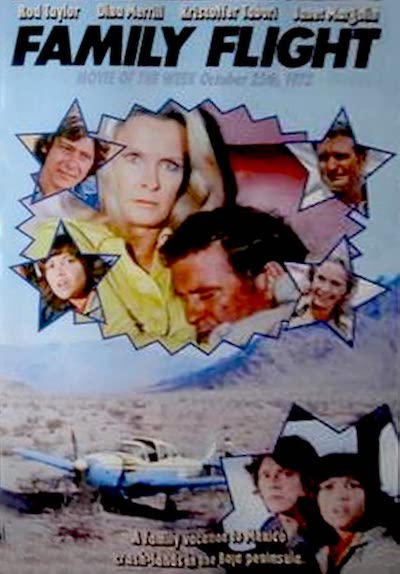
During a flight from San Diego to Guaymas, Mexico, the Carlyle family from Florida is surprised by a weather front in the Rocky Mountains and must do an emergency landing in a Mexican desert with their plane damaged. Latent tensions in the family interfere with the efforts to solve their desperate situation.Read More »
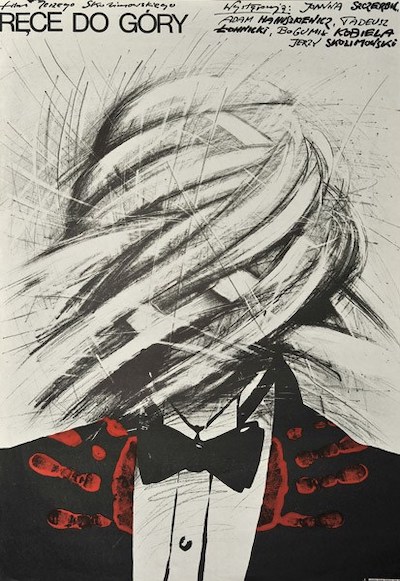
PLOT: HANDS UP! is a Polish drama film directed by Jerzy Skolimowski. It is the fourth of a series of semi-autobiographical films in which Skolimowski himself plays his alter ego, Andrzej Leszczyc. The film was originally made in 1967 in monochrome. In a twenty minute section (filmed in colour) added by Skolimowski in 1981 he explains how the original was withheld by Polish censors of the time, and that this was a principal cause of his leaving his country; however following liberalisation in Poland, he was invited to resuscitate it. The introduction includes, apart from some fictional apocalyptic passages, shots of Beirut ruined by the civil wars of the 1970s, where Skolimowski is working as an actor on Volker Schloendorff’s German film CIRCLE OF DECEIT, and also shots of London featuring demonstrations in favour of Solidarnosc, Speaker’s Corner, and an exhibition of Skolimowski’s own paintings. These sections include cameo roles by Bruno Ganz, David Essex, Mike Sarne and others. Some of the music in this introduction is from the 1970 choral work « Kosmogonia » by the Polish composer Krzysztof Penderecki.Read More »
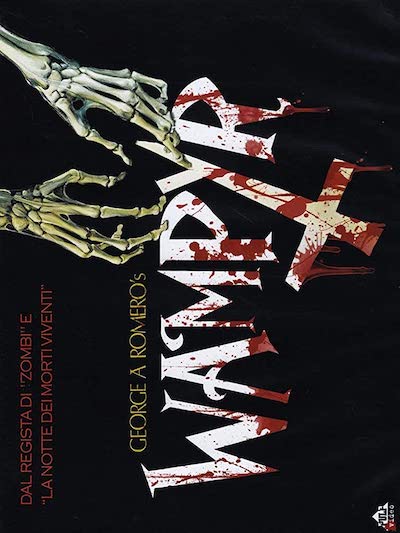
The film “Martin” was shot in the US in the summer of 1976. It premiered at the Cannes Film Festival in May 1977, and was released in cinemas in the US in July 1978. Due to the success of Romero’s “Dawn of the Dead” (1978) in Italy (where it was released as “Zombi”, and scored by Italian prog rock legends Goblin), the producer of that film bought the rights to Romero’s earlier film “Martin” and released it in Italy as “Wampyr” – with a new music score by Goblin (mostly recycling music they had written for the films “Suspiria” and “Zombi”, and also some non-soundtrack material from their album “Roller”). This Italian cut of the film was released with scenes in a different order, and even some of the dialogue was differently dubbed, giving a very different impression and feel to the story compared to the US version.Read More »
SYNOPSIS: A lonely aristocrat Miss Gray has a twin sister who’s in an asylum. They share a strange bond. Miss Gray is rational but frigid while her sister is insane yet feels sexual pleasure for both of them.Read More »