USA

  • Richard Boleslawski – Beauty for Sale (1933)

    1931-1940DramaRichard BoleslawskiRomanceUSA

    A beautiful woman lands a job at an exclusive salon that deals with the wives of wealthy businessmen. Her contact with these men leads to a series of affairs.
    Quote:
    Another delectable sweet-and-sour pre-Code entry of the early 1930s, nimbly skirting the edges of that era’s morality with prodding grown-up material, satirizing the comedic and dramatic possibilities therein. Story concerns three gals who work in a New York City beauty parlor: one is dating a married man, another is pregnant by a no-goodnik, and the third spends her nights with a rich sugar daddy.Read More »

  • Carol Reed – Odd Man Out (1947)

    1941-1950Carol ReedFilm NoirThrillerUSA

    Plot synopsis:
    Johnny McQueen, leader of a clandestine Irish organization, has been hiding in the house of Kathleen and her mother, planning a hold-up that will provide his group with the funds needed to continue its activities. During the hold-up, things go sour…Read More »

  • Penelope Spheeris – The Boys Next Door (1985)

    Drama1981-1990CrimePenelope SpheerisUSA

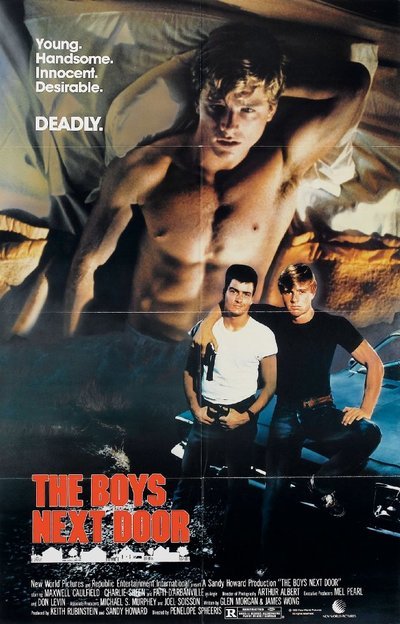
    When Bo and Roy, 18-year-olds fresh from school and seemingly normal, decide to hit LA for one last fling before settling into factory jobs, neither they nor the audience are prepared for their sudden descent into committing a series of brutal, apparently motiveless murders. Whereas Spheeris’ The Wild Side was weakened by sentimentalising its disaffected punk heroes, her second feature presents a tougher and more balanced view of teen violence; while we’re allowed a glimmer of understanding into the murderers’ feelings, we never indulge them with misplaced sympathies: these boys are monsters.Read More »

  • Dan Sallitt – Polly Perverse Strikes Again! (1986)

    1981-1990ArthouseDan SallittUSA

    Quote:
    The movie is produced by EZTV, a production company and exhibition venue founded in Los Angeles in 1979 by John Dorr and other people (including Michael J. Masucci, who plays the cinema manager in Polly Perverse). How did you come in contact with them? How did your project fit into their structure?Read More »

  • Oskar Fischinger – Motion Painting No. 1 (1947)

    1941-1950AnimationExperimentalOskar FischingerUSA

    Quote:
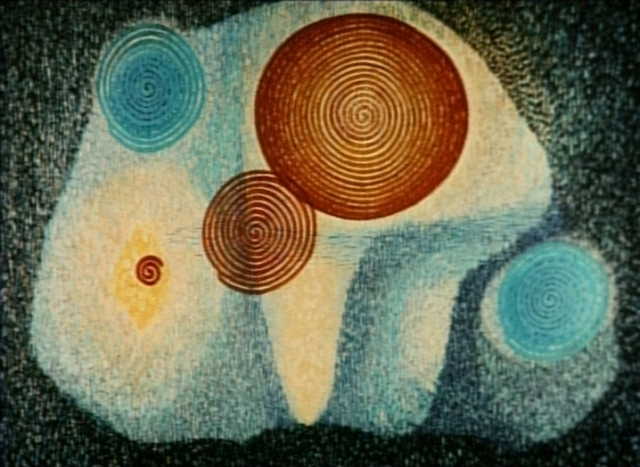
    This experimental film is a study of an abstract painting as it grows out of the mind and soul of the artist and filmmaker. Painstakingly hand-painted in a Impressionist pixel-point style over a period of 9 months (!), and equally laboriously stop-animated, Fischinger captures not only the wonderful decision-making process of the artist at work, but the “life” that the work itself takes on as it changes and grows. Use of color, patterns, and pacing compliment and clash with one another before the viewer’s eyes and lead one into an impossible world that seems none-the-less real, and all the more engaging for seeming to just be made of pure MAGIC!Read More »

  • Robert Smithson – Spiral Jetty (1970)

    USA1961-1970ArchitectureDocumentaryExperimentalRobert Smithson

    Standing apart along the northeast shore of the Great Salt Lake is a huge earthworks project, boulders and potholes, clinging brine and mirrored sky, which the film documents, as it moves back geologically to dinosaur history.Read More »

  • Robert Breer – Jamestown Baloos (1957)

    USA1951-1960Amos Vogel: Film as a Subversive ArtExperimentalRobert BreerShort Film

    An experimental short film from Robert Breer with animated and live-action scenes cut together.Read More »

  • Robert Breer – Time Flies (1997)

    1991-2000ExperimentalRobert BreerShort FilmUSA

    Personal photos are interspersed with fragmentary drawings and flashes of colour, observed and/or remembered everyday events – all of which add to a general sense of reminiscence. Sometimes a hand appears (Breer’s own) on top of a photo, reminding us that the photo is but an object in the film, not the film itself.Read More »

  • Robert Breer – Form Phases IV (1954)

    1951-1960ExperimentalRobert BreerShort FilmUSA

    Form Phases IV is the last film in Form Phases, the first series made by Robert Breer to lend movement to the abstract forms in his paintings. Breer was a self-taught practitioner of animated film, focusing particularly on the demystification of the screen space. This was a theme already touched on in the 1920s by Hans Richter, one of the references for avant-garde European cinema. Richter’s work, specifically his film Rhythmus 21 (also in the Museo Reina Sofía collection), the starting point of abstraction in film, was a decisive influence on Breer’s cinematographic output.
    Here, Breer applied, in a particularly sophisticated way, the principle by which a static screen is animated by the appearance of a moving shape which then changes as another shape appears, and then disappears, leaving the screen blank, to return once more to its static state.Read More »

Back to top button