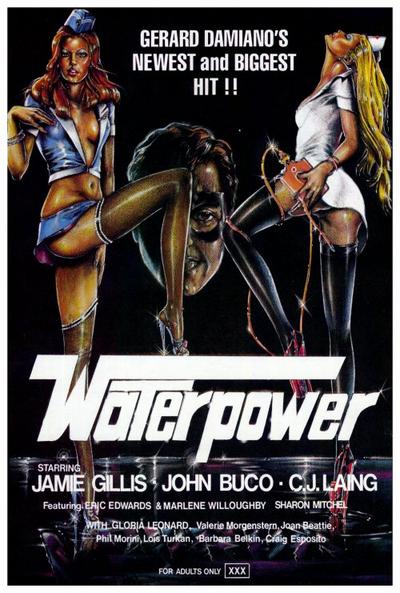

A mentally troubled man becomes a serial rapist and torturer due to the strong shock he suffers after witnessing the performance of an enema in a brothel, plus the bitter discovery that a female neighbor who interests him has a lover.Read More »
A mentally troubled man becomes a serial rapist and torturer due to the strong shock he suffers after witnessing the performance of an enema in a brothel, plus the bitter discovery that a female neighbor who interests him has a lover.Read More »

Storyline
In London, wealthy Margot Mary Wendice had a brief love affair with the American writer Mark Halliday while her husband and professional tennis player Tony Wendice was on a tennis tour. Tony quits playing to dedicate to his wife and finds a regular job. She decides to give him a second chance for their marriage. When Mark arrives from America to visit the couple, Margot tells him that she had destroyed all his letters but one that was stolen. Subsequently she was blackmailed, but she had never retrieved the stolen letter. Tony arrives home, claims that he needs to work and asks Margot to go with Mark to the theater. Meanwhile Tony calls Captain Lesgate (aka Charles Alexander Swann who studied with him at college) and blackmails him to murder his wife, so that he can inherit her fortune. But there is no perfect crime, and things do not work as planned.Read More »
Quote:
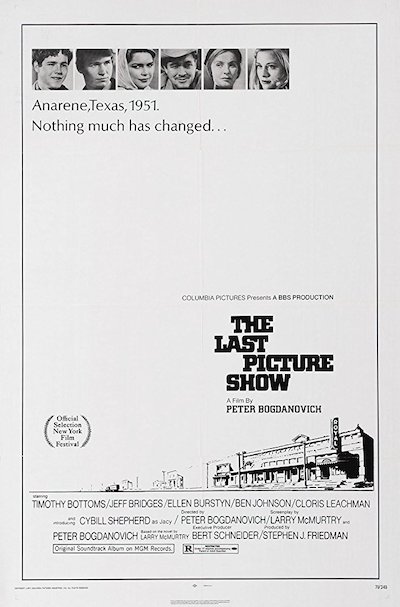
The Last Picture Show is one of the key films of the American cinema renaissance of the seventies. Set during the early fifties, in the loneliest Texas nowheresville to ever dust up a movie screen, this aching portrait of a dying West, adapted from Larry McMurtry’s novel, focuses on the daily shuffles of three futureless teens—the enigmatic Sonny (Timothy Bottoms), the wayward jock Duane (Jeff Bridges), and the desperate-to-be-adored rich girl Jacy (Cybil Shepherd)—and the aging lost souls who bump up against them in the night like drifting tumbleweeds, including Cloris Leachman’s lonely housewife and Ben Johnson’s grizzled movie-house proprietor. Featuring evocative black-and-white imagery and profoundly felt performances, this hushed depiction of crumbling American values remains the pivotal film in the career of the invaluable director and film historian Peter Bogdanovich.Read More »
Quote:
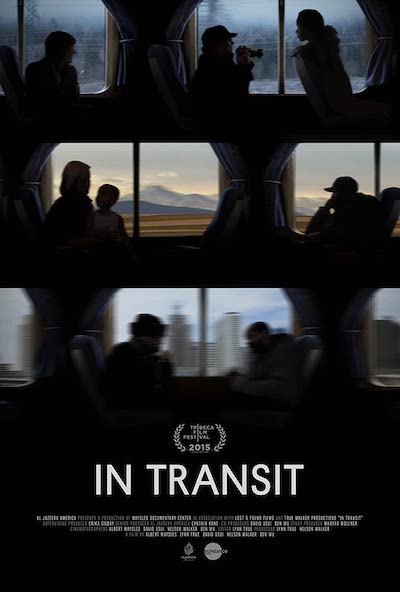
The culmination of Albert Maysles’ lifelong passion for capturing the stories of train passengers, and styled in the tradition of Direct Cinema, In Transit unfolds as a series of interconnected vignettes.
Ranging from overheard conversations to moments of deep intimacy, in which travelers share their fears, hopes and dreams, In Transit takes place entirely aboard Amtrak’s Empire Builder, the country’s busiest long-distance route. A journey into the hearts and minds of these everyday Americans, the directors explore the essence of what it is to be a citizen of America today.Read More »
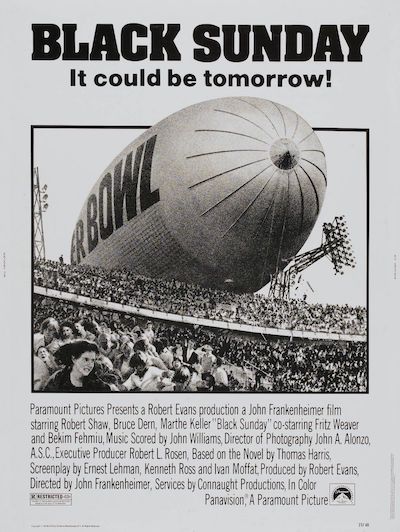
Black Sunday is the powerful story of a Black September terrorist group attempting to blow up a Goodyear blimp hovering over the Super Bowl stadium with 80,000 people and the president of the United States in attendance.Read More »

This two-part TV movie was, of course, sparked by the November 1978 mass suicide of 913 people at the South American religious “colony” of Jonestown. The catalyst for this tragedy was cult-leader Reverend Jim Jones (played by Powers Boothe, who won an Emmy for his performance), head of the so-called People’s Temple. The film traces the life of Jones from his days as an idealistic 1960s activist. He drifts into penny-ante confidence scams and bed-hops from woman to woman, before electing to pass himself off as a modern messiah–eventually believing his own feverish sermons. The climactic scenes are chillingly staged in a near-documentary fashion, with Puerto Rico and Georgia substituting for Guyana. Ned Beatty plays the ill-fated Representative Leo Ryan, while James Earl Jones has a cameo as 1930s religious-leader Father Divine; most of the other main characters are composites of real people. Originally broadcast April 15 and 16, 1980, The Guyana Tragedy was adapted by Ernest Tidyman from the Washington Post and Charles A. Krause’s Guyana Massacre: An Eyewitness Account.Read More »

A killer traps an unarmed police detective and her husband, a former mountaineer with psychic powers, in a Manhattan office building.Read More »

Quote:
Filmed on location in Northwest Washington, Lake Forest Park (un)winds through a coming-of-age tale of a group of friends dealing with the secret of a classmate’s death. The film explores collective and individual grief tinged with existential confusions.Read More »

Plot
Uraz (Omar Sharif), the son of Tursen (Jack Palance), the stable master and retired buzkashi player for a feudal lord, is a master horseman who lives by a primitive code of honor. Uraz’s family honor is damaged when he breaks his leg playing the game, which is the Afghani equivalent of polo. His father, who lost a lot of money betting on his son, will barely speak to him. To regain the family honor (and wealth) he must somehow re-learn how to ride – after his injuries cost him his leg below the knee. In the face of great obstacles, and despite the derision and treachery of others, he gains the chance to play in the games given by the king of Afghanistan.Read More »