TV

  • Roland Joffé – Play for Today: The Spongers (1978)

    1971-1980DramaRoland JofféThe Wednesday Play & Play for TodayTVUnited Kingdom

    Set against the backdrop of Silver Jubilee of Elizabeth II, the play depicts a single mother’s struggles in this highly polemical and unremittingly bleak diatribe against government welfare cuts from the poor and disabled. The derogatory term ‘spongers’ is used by British tabloid press to describe people who are dependent on welfare support, however the play presents the case of a family who desperately need the help.Read More »

  • Maurice Pialat – La maison des bois (1971)

    Maurice Pialat1971-1980FranceTVWorld War One

    Quote:
    Made in 1971 for French TV, the epic LA MAISON DES BOIS
    comes from early in the Pialat’s belated
    feature-filmmaking career. Rather like Loach’s DAYS OF
    HOPE (Cinémathèque 2004) or Edgar Reisz’s HEIMAT
    series, it begins in costume drama and an ethnographic
    view of rural French life during World War One, and in
    an apparently sentimental tale of war orphans. But
    then it irises out from costume drama conventions into
    the transcendental, exploring Pialat*s spiritual
    themes, as well as the social dynamics, trauma and
    collective experiences of war.Read More »

  • Warren Steibel – Firing Line: What have We Learned From the Failure of Socialisim (1977)

    1971-1980TVUSAWarren Steibel

    Taped on July 25, 1977. In Mrs. Thatcher’s second appearance on Firing Line, two years before she would take up the reins of government, the conversation turns to the state of democracy in present-day Britain. We get even more of a feel than in her first appearance (S0199) of why she would become so admired, and so reviled: “For years now in British politics you have needed to use the word ‘consensus.’… It’s a word you didn’t use when I first came into politics. We had convictions, and we tried to persuade people that our convictions were the right ones, and it’s no earthly good having convictions unless you have the will to translate those convictions into action. Read More »

  • Hugh Burnett – Face to Face: Professor Jung (1959)

    1951-1960DocumentaryHugh BurnettTVUnited Kingdom

    Quote:
    Carl Gustav Jung was 84 years old when he was interviewed for the BBC series, “Face to Face”, in October 1959. At the time, he was world’s greatest living psychologist, founder of analytical psychology and originator of the concept of the collective unconscious. So his agreeing to be interviewed was an historic coup. Indeed, he was arguably John Freeman’s most famous guest ever to appear in the series. The program itself didn’t follow the usual studio format. A film team flew to Jung’s Zurich home. And as well as seeing the old man walking by the lakeside, viewers were also given a glimpse of the usually shadowy, somewhat enigmatic, John Freeman himself, whose face, despite the program’s title, rarely appeared on the screen. And another difference: of all the 35 “Face to Face” guests, Jung was the only one to refuse to have his portrait drawn by Feliks Topolski for the program’s opening sequence.Read More »

  • Bo Widerberg – Vildanden AKA The Wild Duck (1989)

    Bo Widerberg1981-1990DramaSwedenTV

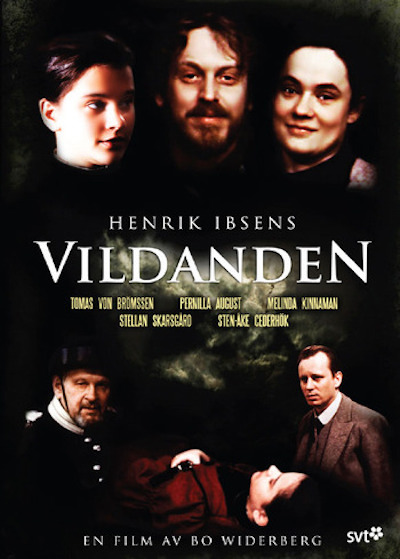
    “Every generation needs Ibsen” says Bo Widerberg and presents his version of the classic drama “The Wild Duck” from 1884. As in a thriller we get to follow how the family happiness of the Ekdahls is driven towards a tragic disintegration.Read More »

  • Alan Clarke – Scum [BBC Version] (1977)

    Alan Clarke1971-1980DramaTVUnited Kingdom

    This is the original version made for the BBC but banned by them and never screened until 15 years later. The BBC said that they banned it because “There was too much incident packed into too short a time and that they doubted the veracity.” So they thought it was pure fiction. But they also said that it “looked too much like a documentary.”

    A brutal depiction of life in the borstal system where order is maintained through violence and intimidation. Carlin’s journey up the pecking order from new boy to ‘Daddy’ earns him the respect of inmates and officers alike.Read More »

  • Peter Watkins – Edvard Munch [TV version] (1974)

    Peter Watkins1971-1980DramaSwedenTV

    Quote:
    The entire point of Peter Watkins’s cinematic career, so he seems to indicate in his interview with himself in the liner notes for New Yorker Video’s Edvard Munch DVD, is to directly challenge the perception deadening (at best) and enslaving (at worst) effects of the hegemony of 20th-century media, the conception of which was arguably the arrival of the moving picture. Strangely enough, two of his most acclaimed films take place decades before the Edison’s kinetoscope, but Watkins seems to use the anachronism of creating a hypothetical “first-person cinema” in the B.C. years to accentuate his impassioned appeal for elevated media consciousness. His recent six-hour millennial masterwork La Commune (Paris, 1871) was blunt about it, framing a rag-tag experimental theater ensemble attempting to reenact a moment of French social resistance with televised coverage from within (two community reporters practically serving as the film’s tour guides) and without (daily reports from the State-suckling network distorting the public’s all-but-assigned opinion).Read More »

  • Georges Franju – En passant par la Lorraine (1950)

    Georges Franju1941-1950DocumentaryFranceTV

    This Government-commissioned documentary was intended to reflect the modernisation of French industry. However, in Franju’s hands it became an ode to fire and a fascinating portrayal of industrial architecture.Read More »

  • Bill Melendez – You’re in Love, Charlie Brown (1967)

    Bill Melendez1961-1970AnimationTVUSA

    With the help of Linus and Peppermint Patty, Charlie Brown tries to pluck up the courage to talk to his crush, the Little Red-Haired Girl.Read More »

Back to top button