Roberto Rossellini

  • Roberto Rossellini – Socrate (1971)

    1971-1980DramaItalyPhilosophy on ScreenRoberto Rossellini

    ‘Socrates’ Mirrors the Platonic Touch of Rossellini
    Something more than wordplay is involved when one describes Roberto Rossellini’s “Socrates,” which opened yesterday at the New Yorker Theater, as the great Italian director’s most Socratic film, in his most Platonic style.

    Although the movie was shot entirely in Spain with lots of correctly costumed extras, who walk around what look to be the freshly painted, spruced-up remains of the sets of Anthony Mann’s unfortunate “Fall of the Roman Empire,” it concedes no more than it absolutely must to the demands of a popular cinema that seeks access to the intellect through visual grandeur and primal emotions.Read More »

  • Roberto Rossellini – Viva l’Italia! (1961)

    Arthouse1961-1970ItalyRoberto RosselliniWar

    1860. Italy is divided in 8 states. But after 60 years of heroic wars, frontiers’ll soon fall, thanks to Giuseppe Garibaldi & the legendary volunteers who fought with him, known as the thousand.

    cinepassion wrote:
    The unification of Italy from Messina to Volturno, the past made flesh by Roberto Rossellini in a commemorative mood. Il Tricolore sways splendidly under the credits and then over a map of fragmented states circa 1860, a orchestral preamble concluding with a skirmish against an electric cobalt sky. Garibaldi (Renzo Ricci) is middle-aged, ginger-bearded, rheumatic, and utterly, serenely determined; before battle, he squats by the meadow to savor some local bread: “Anyone have any salt?” As the Redshirts charge uphill, the camera takes a paradoxically distant and urgent view of the clashing brigades and puffs of gunsmoke dotting the landscape — a study in long shots, a cosmic vantage.Read More »

  • Roberto Rossellini – L’Età di Cosimo de Medici AKA The Age of Medici AKA The Age of Cosimo de Medici (1972)

    1971-1980DramaItalyRoberto RosselliniTV

    Synopsis:
    This three-part saga evokes the social, economic, and religious life of fifteenth-century Florence through two of its leading lights: banker Cosimo de’ Medici and art theorist Leon Battista Alberti. The Age of the Medici is like a Renaissance painting come to life. The three episodes of approximately 90 minutes each, begins as a movie about the shrewd worldliness of the banker Cosimo de’ Medici and ends as a tribute to the scholarly humanism of the author and architect Leon Battista Alberti. “Medicis” leaves us with an impression of Quattrocento Florence as a city of sublime harmony in which art and commerce are in perfect balance, seamlessly interdependent.Read More »

  • Roberto Rossellini – Beaubourg, centre d’art et de culture Georges Pompidou (1977)

    1971-1980DocumentaryFranceRoberto Rossellini

    Rossellini 77
    Last images from Roberto Rossellini filming the Centre Georges Pompidou,
    February-March-April-May 1977.

    Following the steps of Roberto Rossellini on day to day basis, making the film “LE CENTRE GEORGE POMPIDOU” we could not know the issue of his last encounter with the cinéma.

    10 Hours of 16 mm coulour film, 30 hours of sound recordings… More than 2500 slides were produced as he wished :
    “to represent things as they are and stay on the field of the honesty”.
    Unique experience… 30 years after…
    From this story, as promised… a film is being born.Read More »

  • Roberto Rossellini – Anno uno AKA Year One (1974)

    1971-1980DramaItalyPoliticsRoberto Rossellini

    From Channel4.com:
    Rossellini’s indelible career flagged in the late 1950s for a variety of complicated reasons, and after directing commercial films and an episode in Rogopag (1962) he abandoned cinema for television. Twelve years later and near the end of his life he returned to movie-making with this film. It’s a biopic of the postwar Christian Democrat leader, Alcide De Gaspari (Vannucchi), who was responsible for keeping the Communists out of power in the years that followed the fall of fascism. An extension of Rossellini’s documentary and historical reconstruction films, this failed both critically and commercially.Read More »

  • Roberto Rossellini – Il tacchino prepotente (1939)

    1931-1940ArthouseFantasyItalian Cinema under FascismItalyRoberto Rossellini

    This is an anti-Fascist short Rossellini made in 1940.

    Quote:
    La vispa Teresa was rejected and, although Ferrara said that Il tacchino was distributed by Scalera under its working title, “La perfida Albione,” there were no press notices, and no one outside of Scalera is known to have seen it. According to Ferrara, Rossellini told him it was a satire in which “Perfidious Albion,” a big turkey representing England, goes around pecking at the hens representing the nations of Europe, until defied by a rooster representing Italy. “Rossellini detested it,” said Ferrara, “[though his] genius was such that he could achieve extraordinary effects out of nothing. He used to tell me, ‘It’s the only time that, through my weakness, I made a work of propaganda.’”Read More »

  • Roberto Rossellini – Giovanna d’Arco al rogo AKA Joan at the Stake (1954)

    1951-1960ClassicsItalyMusicalRoberto Rossellini

    29f7c043f76a2bde437fd0d52a185152

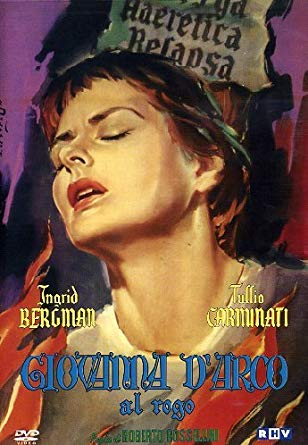
    It was once said of Ingrid Bergman that she’d played Joan of Arc so often that she wouldn’t be satisfied until she was burned at the stake. Actually, nobody ever said that, but someone should have. Directed by Bergman’s then-husband Roberto Rossellini, Joan at the Stake is a nonmusical adaptation of the oratorio by Paul Claudel and Arthur Honegger. Essentially a glorified monologue, the film makes no bones about its theatricality. Bergman is impressive as always, far more so than the presentation. While not nearly as bad as its reputation suggests, Joan at the Stake was a box-office flop, principally because the torrid Bergman-Rossellini romance was old news by 1954.Read More »

  • Roberto Rossellini – Fantasia sottomarina AKA Undersea Fantasy (1940)

    1931-1940ItalyRoberto RosselliniShort Film

    29f7c043f76a2bde437fd0d52a185152

    Synopsis:
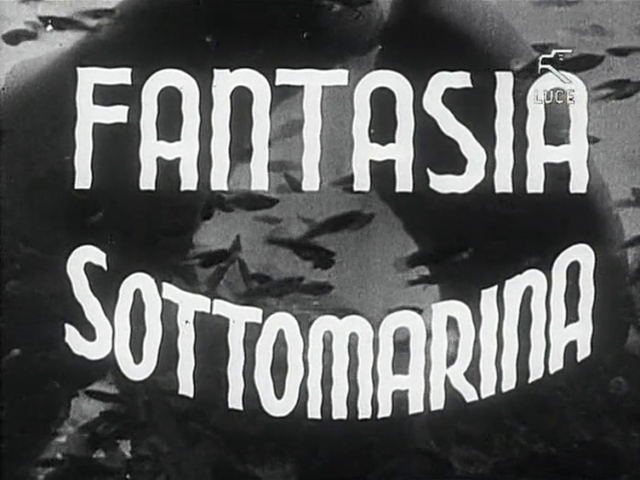
    Roberto Rossellini’s first film is a work of deceptive transparency. In its initial moments the film appears to be a documentary about underwater, even deep-sea, species. But soon after, the narration, in the manner of Cocteau, unleashes a powerful “dual reality” onto the images, imbuing them not only with a narrative logic, but a kind of magic. Read More »

  • Roberto Rossellini – Viaggio in Italia AKA Journey to Italy [+ Extras] (1954)

    1951-1960ArthouseDramaItalian Neo-RealismItalyRoberto Rossellini

    29f7c043f76a2bde437fd0d52a185152

    Quote:
    Among the most influential films of the postwar era, Roberto Rossellini’s Journey to Italy (Viaggio in Italia) charts the declining marriage of a couple from England (Ingrid Bergman and George Sanders) on a trip in the countryside near Naples. More than just the anatomy of a relationship, Rossellini’s masterpiece is a heartrending work of emotion and spirituality. Considered a predecessor to the existentialist works of Michelangelo Antonioni and hailed as a groundbreaking modernist work by the legendary film journal Cahiers du cinéma, Journey to Italy is a breathtaking cinematic benchmark.Read More »

Back to top button