Queer Cinema(s)

  • Alan Ormsby – The Great Masquerade AKA Murder on the Emerald Seas (1974)

    USA1971-1980Alan OrmsbyCampExploitationQueer Cinema(s)

    Quote:
    After a series of mysterious murders, a Miami detective goes undercover to try and solve the crimes, but there’s one small catch: in order to find the killer the detective must infiltrate a drag ball on a cruise ship dressed in full female garb.Read More »

  • Alain Guiraudie – L’inconnu du lac (2013)

    2011-2020Alain GuiraudieDramaFranceQueer Cinema(s)

    Summertime. A cruising spot for men, tucked away on the shores of a lake. Franck falls in love with Michel. An attractive, potent and lethally dangerous man. Franck knows this, but wants to live out his passion anyway.Read More »

  • Isshin Inudô – Mezon do Himiko AKA La maison de Himiko (2005)

    2001-2010DramaIsshin InudôJapanQueer Cinema(s)

    Quote:
    Saori has always disliked her gay father and has lived her life denying his existence. One rainy day she receives a visit at work from a young man called Haruhiko. He tells her that her father is dying of cancer and that the nursing home he operates is in danger of closing. Out of curiosity and debt, Saori goes to visit her father at the House of Himiko, a nursing home for gay old men. It is a sad place but filled with sardonic good cheer. Surprised but pleased, Haruhiko shows her around. The old men who live there are delighted. Saori is at first repelled by the relationship between Haruhiko and Himiko but she soon sees that their feelings are genuine. She begins taking an interest in keeping the nursing home alive…Read More »

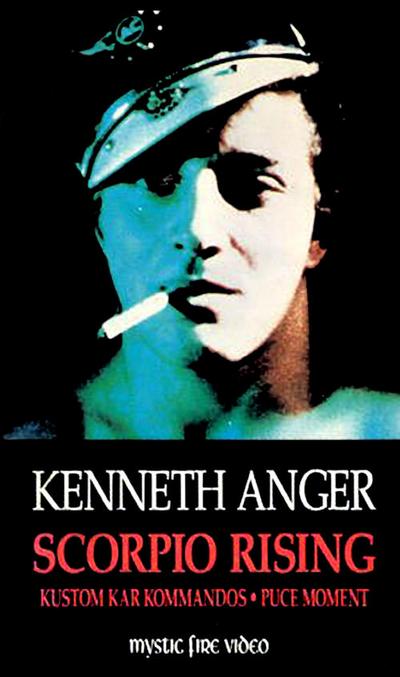
  • Kenneth Anger – Scorpio Rising (1963)

    1961-1970ArthouseKenneth AngerQueer Cinema(s)Short FilmUSA

    Quote:
    Scorpio Rising is a 1964 experimental film by Kenneth Anger, author of the Hollywood Babylon books, starring Bruce Byron as the biker Scorpio. It features themes of leather-clad bikers, the occult, Jesus and Nazis. Its camp appropriation of popular culture included an innovative use of pop music, the erotic cult of James Dean, and Sunday comics. The film was initially shown on the underground film circuit. The film features no lines of dialogue, accompanied instead by music from popular 1950s and 1960s artists including Ricky Nelson, The Angels, The Crystals, Bobby Vinton, Elvis Presley, Ray Charles and Martha Reeves & the Vandellas. It is considered to be one of the first post-modern films and an influence to future directors such as Martin Scorsese and David Lynch.Read More »

  • Kenneth Anger – Invocation of My Demon Brother (1969)

    1961-1970ArthouseKenneth AngerQueer Cinema(s)Short FilmUSA

    Quote:
    Experimental short, featuring strobe-like homoerotic imagery with several shots of the Rolling Stones in performance and an original synthesizer score by Mick Jagger.Read More »

  • Frédéric Mermoud – Complices AKA Accomplices (2009)

    2001-2010CrimeFrédéric MermoudQueer Cinema(s)Switzerland

    Quote:
    Both detectives on a sickening murder case struggle with being alone and childless in their 40s. As they investigate the young man found beaten and strangled to death, platonic friends Karine and Herve unravel a love story between Vincent, and Rebecca a high school girl. The teenage lovers quickly plunged into the kind of amour fou the flics fear to chance for themselves. Rebecca is missing, and unknown to her, the boy was a homosexual Internet hustler. The ordinarily blasé male investigator is appalled to find that on-line dating is a world the sexy Karine knows well. Is Rebecca the killer, another victim or?Read More »

  • Gabriele Muccino – L’estate addosso AKA Summertime (2016)

    2011-2020DramaGabriele MuccinoItalyQueer Cinema(s)

    Quote:
    Gabriele Muccino is an Italian filmmaker (“The Last Kiss,” “Ecco Fatto”) who had a high-profile moment of going Hollywood. He was handed the plum of directing two Will Smith vehicles in a row, “The Pursuit of Happyness” (2006) and “Seven Pounds” (2007), and he was able to bring his earthy intelligence and humanity to at least one of them. (The less said about “Seven Pounds” the better.) One way to talk about Muccino’s new film, “Summertime,” which premiered tonight at the 73rd Venice International Film Festival, is to say that he is once again an “Italian filmmaker.” But that wouldn’t be quite accurate. “Summertime” is more like an American film embedded in an Italian one.Read More »

  • Jacques Baratier – La poupée AKA The Doll (1962)

    1961-1970CampCultFranceJacques BaratierQueer Cinema(s)

    Quote:
    While there is an element of science fiction to this political satire about Latin American dictatorships, that element is primarily used to promote the storyline and the message, and not as a value in itself. In a make-believe Spanish-speaking country of the Americas, a dictator (Zbigniew Cybulski) rules with the usual degree of corruption but as it turns out, his wife is the one who gives most of the orders. Two story strands are then woven together: a scientist has invented a way to replicate objects and, lo and behold, he discovers he can make a robotic duplicate of the dictator’s wife. Meanwhile, an ardent, left-leaning revolutionary who happens to be a dead ringer for the dictator ends up taking over the tyrant’s role when he is assassinated. So one has a robotic wife and a fake dictator now running a country which is none the wiser…Read More »

  • Jacqueline Audry – Olivia AKA The Pit of Loneliness (1951)

    1951-1960DramaFranceJacqueline AudryQueer Cinema(s)Romance

    Quote:
    Olivia captures the awakening passions of an English adolescent sent away for a year to a small finishing school outside Paris. The innocent but watchful Olivia develops an infatuation for her headmistress, Mlle. Julie, and through this screen of love observes the tense romance between Mlle. Julie and the other head of the school, Mlle. Cara, in its final months. Although not strictly autobiographical, Olivia draws on the author’s experiences at finishing schools run by the charismatic Mlle. Marie Souvestre, whose influence lived on through former students like Natalie Barney and Eleanor Roosevelt. Colette wrote the screenplay for the 1951 film adaptation of the novel.Read More »

Back to top button