

Quote:
A fictional account of the life of Japanese author Yukio Mishima, combining dramatizations of three of his novels and a depiction of the events of November 25th, 1970.Read More »
Quote:
A fictional account of the life of Japanese author Yukio Mishima, combining dramatizations of three of his novels and a depiction of the events of November 25th, 1970.Read More »

Synopsis: The siblings Patty and Joe live in an industrial suburb. While Patty’s ambition is their rock band “The Barbusters” only, Joe also cares for the family and the upbringing of Patty’s young son Benji. Their pious mother reproaches them for their way of life, especially when they quit their jobs and go on tour, taking Benji with them.Read More »
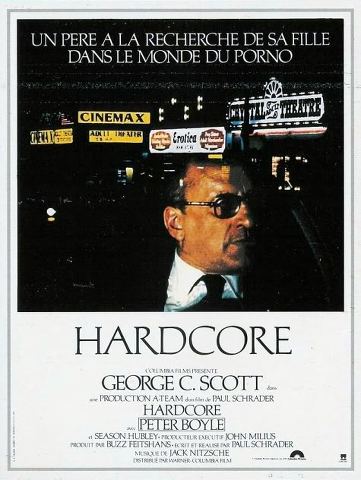
Description: Jake Van Dorn is businessman from American heartland who shares strong Calvinist convictions with most of his countrymen. His teenage daughter is missing from the trip in L.A. and Van Dorn hires private investigator. Result of the investigation is his daughter being spotted in cheap X-rated movie. Van Dorn decides to bring her back personally and during the quest he becomes familiar with the pornographic underworld.Read More »

Quote:
While the Holocaust is certainly a legitimate topic of inquiry for the committed filmmaker, most contemporary treatments of the Nazi camps betray their mission by allowing the viewer to feel altogether too comfortable as they take in the on-screen atrocities. Whether through the establishment of a mitigating historical distance, the adoption of standard genre tropes or the repetition of an established catalog of horrors, films like The Boy in the Striped Pajamas and A Secret tend to overly familiarize the events of World War II, allowing the viewer to safely assimilate that conflict’s genocidal horrors. But whatever the flaws of Adam Resurrected, and despite the fact that no physical violence is perpetrated on screen, Paul Schrader never allows the viewer to get comfortably situated, relying on an absurdist central conceit and a rapidly shifting array of intellectual and moral concerns—whose superficial treatment unfortunately leads to a certain diffuseness in the work—to continually de-familiarize his subject.Read More »