True story of the saga that was hoped to be the long-awaited justice brought to bear upon Augosto Pinochet, Chilean dictator from 1973 to 1990. In September 1998, Pinochet flew to London on a pleasure trip but experienced back pain and underwent an operation in the London Clinic. Upon waking, he was arrested by Scotland Yard. Could it be that this was to become the first Latin American dictator to answer for crimes while serving as Head of State? After 500 days of house arrest, he nevertheless eventually returned unscathed to Chile, despite the compelling case built against him before & during this period by a young Spanish prosecutor, Carlos Castresana.Read More »
Patricio Guzmán
-
Patricio Guzmán – Le Cas Pinochet AKA The Pinochet Case (2001)
2001-2010DocumentaryFrancePatricio Guzmán -
Patricio Guzmán – La cordillère des songes AKA The Cordillera of Dreams (2019)
2011-2020ChileDocumentaryPatricio GuzmánPolitics
Quote:Winner of the Best Documentary award at the Cannes Film Festival, master filmmaker Patricio Guzmán’s The Cordillera of Dreams completes his trilogy (with Nostalgia for the Light and The Pearl Button) investigating the relationship between historical memory, political trauma, and geography in his native country of Chile. It centers on the imposing landscape of the Andes that run the length of the country’s Eastern border. At once protective and isolating, magisterial and indifferent, the Cordillera serves as an enigmatic focal point around which Guzmán contemplates the enduring legacy of the 1973 military coup d’état.Read More »
-
Patricio Guzmán – En nombre de Dios (1987)
Documentary1981-1990ChilePatricio GuzmánPolitics
Documentary that explores the rol of the Chilean Catholic Church in the fight against Augusto Pinochet’s dictatorial regime, giving great emphasis to the creation of the Vicaría of the Solidarity and the protests against the violations to the human rights. The film won festival prizes and was shown on European television.Read More »
-
Patricio Guzmán – La cruz del Sur AKA The Southern Cross (1992)
1991-2000DocumentaryPatricio GuzmánSpain
Quote:
This overview of popular religiosity in Latin America journeys from pre-Colombian myths to liberation theology. “A sure synthesis of fiction and documentary. It’s a voice of voices: a space for an encounter of American diversity, which helps us to recognize ourselves as fingers on the same hand.”Read More » -
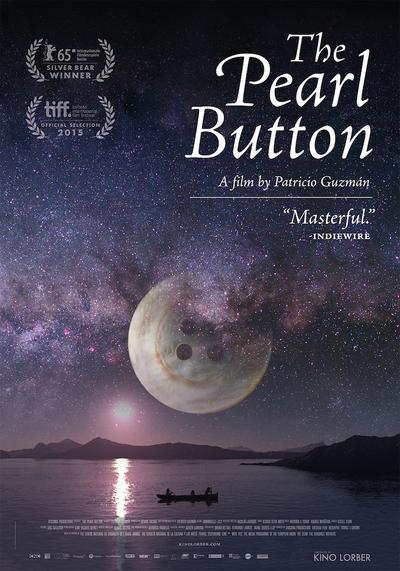
Patricio Guzmán – El Botón de Nácar AKA The Pearl Button (2015)
2011-2020ChileCultDocumentaryPatricio GuzmánSynopsis
The ocean contains the history of all humanity. The sea holds all the voices of the earth and those that come from outer space. Water receives impetus from the stars and transmits it to living creatures. Water, the longest border in Chile, also holds the secret of two mysterious buttons which were found on its ocean floor. Chile, with its 2,670 miles of coastline and the largest archipelago in the world, presents a supernatural landscape. In it are volcanoes, mountains and glaciers. In it are the voices of the Patagonian Indigenous people, the first English sailors and also those of its political prisoners. Some say that water has memory. This film shows that it also has a voice.Read More » -
Patricio Guzmán – Chile, la memoria obstinada AKA Chile, the Obstinate Memory (1997)
1991-2000ChileDocumentaryPatricio GuzmánPolitics(Chicago reader capsule ) :
“Released in three parts, Patricio Guzman’s epic documentary The Battle of Chile (1975-’79) captured such critical events as the bombing of the presidential palace during the 1973 military coup, but it wasn’t screened in Chile until the 1990s. That belated premiere inspired Guzman to make this 1997 documentary, in which clips from the earlier film are threaded among interviews and powerful sequences showing the reactions of Chilean viewers. Whereas The Battle of Chile uses voice-over narration to summarize its on-the-spot footage, manipulated only minimally by editing, Chile, Obstinate Memory is more expansive. Without ignoring or hyperbolizing the way politics affects our sense of the past, it presents many galvanizing moments; at one point a viewer who was a child during the coup shamefacedly recalls his pleasure at being allowed to stay home from school”Read More » -
Patricio Guzmán – The Battle of Chile (3): The Power of the People (1978)
1971-1980ChileDocumentaryPatricio GuzmánPoliticsSynopsis of Part 3:
THE BATTLE OF CHILE (3): The Power of the People (1978) deals with the creation by ordinary workers and peasants of thousands of local groups of “popular power” to distribute food, occupy, guard and run factories and farms, oppose black market profiteering, and link together neighborhood social service organizations. First these local groups of “popular power” acted as a defense against strikes and lock-outs by factory owners, tradesmen and professional bodies opposed to the Allende government, then increasingly as Soviet-type bodies demanding more resolute action by the government against the right.Read More » -
Patricio Guzmán – The Battle of Chile (2): The Coup d’Etat (1976)
1971-1980ChileDocumentaryPatricio GuzmánPoliticsSynopsis of Part 2:
THE BATTLE OF CHILE (2): The Coup d’Etat (1976) opens with the attempted military coup of June, 1973 which is put down by troops loyal to the government. It serves as a useful dry run, however, for the final showdown, that everyone now realizes is coming. The film shows a left divided over strategy, while the right methodically lays the groundwork for the military seizure of power. The film’s dramatic concluding sequence documents the coup d’etat, including Allende’s last radio messages to the people of Chile, footage of the military assault on the presidential palace, and that evening’s televised presentation of the new military junta.Read More » -
Patricio Guzmán – The Battle of Chile (1): The Insurrection of the Bourgeoisie (1975)
1971-1980ChileDocumentaryPatricio GuzmánPoliticsSynopsis of Part 1:
THE BATTLE OF CHILE: The Insurrection of the Bourgeoisie (1975) examines the escalation of rightist opposition following the left’s unexpected victory in Congressional elections held in March, 1973. Finding that democracy would not stop Allende’s socialist policies, the right-wing shifted its tactics from the polls to the streets. The film follows months of activity as a variety of increasingly violent tactics are used by the right to weaken the government and provoke a crisis.Read More »