Larry Gottheim

  • Larry Gottheim – Horizons (1973)

    1971-1980DocumentaryExperimentalLarry GottheimUSA

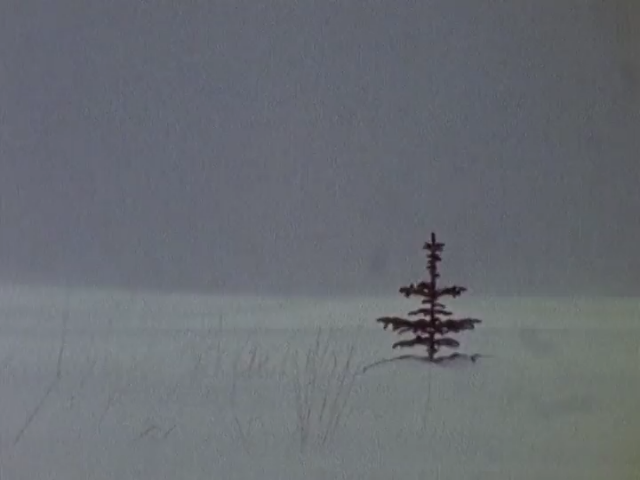
    One of the greatest if all-too-often overlooked landscape films in American cinema, Larry Gottheim’s HORIZONS displays a sensitivity to the seasons that seems more in keeping with Henry David Thoreau’s “Walden” than the typical nature documentary. HORIZONS was not only Gottheim’s first feature-length work, it was also his first film to deploy rhythmic editing after several single-shot works. Working with Virgil’s four-part poem “Georgics” and Antonio Vivaldi’s concertos “The Four Seasons” as models, Gottheim arranged his painterly compositions into four distinct sections, each edited according to its own exacting pattern. The seasonal flux thus informs both the form and content of the image, with the basic elements of trees, sky, hills and the occasional crisscrossing clothesline filmed in every imaginable light. The resulting work is at once rigorous and meditative: a film that demands repeated viewings but captures the eye from the first. – Max GoldbergRead More »

  • Larry Gottheim – Knot/Not (2019)

    2011-2020ExperimentalLarry GottheimUSA

    Quote:
    “Knot” — wrapping things up, tying things up. “Not” – cross out, erasure. Material from a documentary about conductor Wilhelm Fürtwangler, material from a graffiti stencil work on a brick wall near where I live, a stencil of a girl writing something on the wall, what she wrote crossed out by another act of graffiti. These are the main elements. Also footage looking down at the water of Pearl Harbor with the ruins of battleship Arizona beneath. It had turned red with age. And some footage from Manchester the morning after the terrorists struck. All composed against a sound piece, a multiplication table repeated in four languages. Read More »

  • Larry Gottheim – Four Shadows (1978)

    1971-1980DocumentaryExperimentalLarry GottheimUSA

    Like constellations wheeling round, a double chain of four image segments and four sound segments wheel past each other in sixteen combinations (a family of Gibbon apes, a landscape measured, a shadowed diagram after Paul Cézanne, a wintry urban scene, a text by William Wordsworth, a climactic scene from Claude Debussy’s opera “Pelleas et Melisande”). The stately ceremony can generate rich sensuous cinematic pleasure as well as a free-flowing stream of associations. Containment and flowing free, these are some of the issues. The third film in the Elective Affinities cycle.Read More »

Back to top button