Júlio Bressane

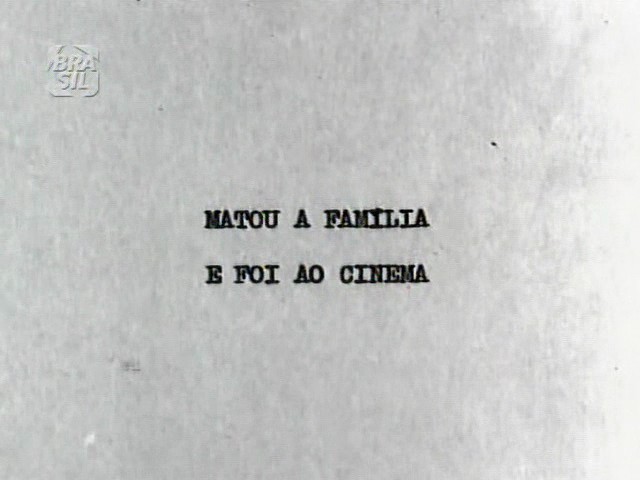
  • Júlio Bressane – Matou a Família e Foi ao Cinema (1969)

    1961-1970BrazilDramaJúlio Bressane

    29f7c043f76a2bde437fd0d52a185152

    Carlos Adriano wrote:
    This film caused controversy in 1969, not just for its content, but above all for its daring and sparse approach to that content. Today, it is regarded as a classic of Brazilian cinema. The title of the film was inspired by the headlines of the ‘gutter’ or yellow press. Right from the start the title is literal: a young, lower middle class man kills his father and mother and goes to the movies… to see Lost in Love. From then on the film-within-a-film takes over. Fiction and fact blend into each other and it is no longer clear on what level of ‘reality’ – or of the imaginary – we are existing. The film gets rid of the usual parameters of representation and the stories overflow their boundaries, that usually circumscribe action. In Lost in Love two upper-middle-class girls hide away in a mansion in the hills. But there is also an affair between two poor girls, there are two tormented young men of different social standing, there are references to the political context of the time. To make matters more uncertain, the same actors play different characters. The actions of social violence correspond to acts of violence against the syntax of the film itself: the discontinued and fragmented development, the daring ellipses, the juxtaposition of disconnected elements, the rupture of the sound space. Bressane works on his dialectics of discomfort. Projected onto the screen is a true ‘impression of reality’ and a ‘suspension of disbelief’ in the cinema.Read More »
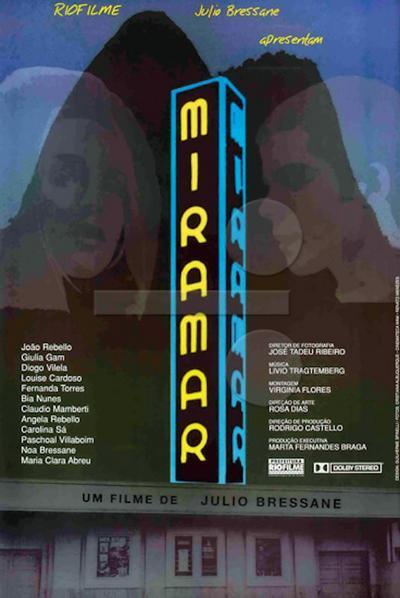

  • Júlio Bressane – Miramar (1997)

    1991-2000ArthouseBrazilJúlio BressaneMusical

    29f7c043f76a2bde437fd0d52a185152

    qUOTE:
    Story with some autobiographical touches taken from director’s life. Miramar is a teenager raised by his parents to be an artist. But a tragedy occurs in his life: both his parents commit suicide. He then discovers the movies, and dreams of being a director.Read More »

  • Júlio Bressane – Barão Olavo, o Horrível (1970)

    1961-1970ArthouseBrazilExperimentalJúlio Bressane

    29f7c043f76a2bde437fd0d52a185152

    Bressane’s first color film, shot in the home of the artist Elyseu Visconti. Part of it is missing sound and final editing because the director was forced to leave Brazil. Horror and humor to deal with the subject of insanity: “In the end everyone leaves the house as though they were laboratory mice escaping, they invade the city and contaminate the world”. “If we talk about horror, this film deals with national horror, with Mojica Marins as an emblem. There might be a few touches of Corman and English horror, but it is another level of horror. What transformed the film was the location where we were shooting, the house of a 19th century painter, a receptacle of light. When I arrived and saw that house, that light, I said: ‘This is the film. This is the horror’. The meaning of the film, its appeal, derives from this laboratory of light” (J. Bressane). — Torino Film FestivalRead More »

  • Júlio Bressane – Garoto (2015)

    2011-2020ArthouseBrazilJúlio BressaneRomance

    29f7c043f76a2bde437fd0d52a185152

    A girl, a boy, a murder, some great landscapes, the sound of wind. Like a young couple on the lam film shot by Straub/Huillet. It achieves a beauty few films can.

    Quote:
    Boy meets girl at the end of the world. Once again, Julio Bressane stages the beginning of life itself as a stylized and dysfunctional yet mysteriously minnellian dance. O Garoto, element of the collective project Telha brilhadora, that comprises also O prefeito by Bruno Safadi, O espelho by Rodrigo Lima and Origem do mundo by Moa Batsow, is a film that has at its core a mischievous insurgent sexual energy that bristles and sparks relentlessly poetic hybris. Those who are not familiar with Bressane’s work may be puzzled by the minimalistic approach and its reiterative patterns, but it is obvious that O Garoto (The Kid) is just a different kind of educaçao sentimentalRead More »

  • Júlio Bressane – Dias de Nietzsche em Turim AKA Nietzsche’s Days in Turin (2001)

    2001-2010ArthouseBrazilJúlio BressanePhilosophyPhilosophy on Screen

    29f7c043f76a2bde437fd0d52a185152

    Plot:A cinematographic essay, without dialogues, about the months Friedrich Nietzsche spent in Turin, Italy, with narration quoted by his original writings. It was there that the philosopher wrote some of his most known books such as Ecce Homo and Twilight of the Idols .Read More »

  • Júlio Bressane – A Agonia (1976)

    1971-1980ArthouseBrazilExperimentalJúlio Bressane

    29f7c043f76a2bde437fd0d52a185152

    A murder and a future teller meet in a desert road. He, driving his chevrolet, a short-cut hair, a rosemary leaf held behind his ear, a yellow shirt of shiny satin. She, walking on the paved road, heavy red lipstick on, a flowery dress with a loose skirt, and red shoes matching the lipstick. He offers her a ride and, after hesitating for a moment, the two of them engage on a bizarr love affair, an outlaw love, where boredom many times gives way to tragedy, raising the agony of a holiday spent in the abyss. Agony originarily means a fighter who fights on the limit of his endurance.
    Read More »

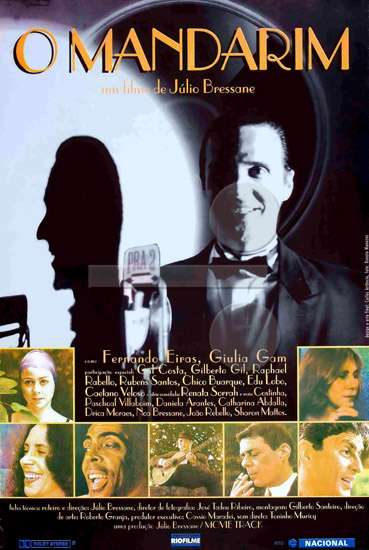
  • Júlio Bressane – O Mandarim aka The Mandarin (1995)

    1991-2000ArthouseBrazilJúlio BressaneMusical

    http://img403.imageshack.us/img403/1147/posteromandarim.jpg

    29f7c043f76a2bde437fd0d52a185152

    Quote:
    The history of Brazilian popular music in the 20th Century, focusing specially on the life and works of intriguing singer Mário Reis, a loner who, with his special way of singing – whispering and softly saying the words – in a time when singers with potent voices ruled, was in a way a forerunner of Bossa Nova style.Read More »

Back to top button