Quote:
Tokyo Drifter stands with Branded to Kill as one of the best-known and most acclaimed films of Seijun Suzuki, one of Japan’s most talented maverick directors. A colorful riot of an action drama, Tokyo Drifter, like many of Suzuki’s films, transforms a standard gangster film plot into a vehicle for his own loopy brand of filmmaking, featuring gorgeous cinematography, unconventional storytelling techniques, and a dark sense of humor. This particular example centers on Tetsu, a yakuza member who, when his gang is disbanded, remains loyal to his boss and attempts to go straight. This is no easy task, however, as the yakuza are determined to get him back into the life — or kill him if he refuses. The pressure soon forces Tetsu to go on the road, becoming the “Tokyo drifter” of the title, but even this is not enough to prevent his past from violently catching up with him. The film’s choreographed action and vibrant color palette make the frequent action sequences, including one of the most raucous barroom brawls ever put on film, seem almost like musical numbers, resulting in a spectacularly entertaining and truly original take on the gangster drama.Read More »
Japan
-
Seijun Suzuki – Tôkyô nagaremono AKA Tokyo Drifter (1966)
1961-1970CrimeDramaJapanSeijun Suzuki -
Hideo Sekigawa – Hiroshima (1953)
1951-1960AsianDramaHideo SekigawaHiroshima at 75Japan“Hiroshima” is a feature film directed by Hideo Sekigawa and was independently produced outside of major studio system in 1953. In fact the film was supported by the Teacher’s Union of Hiroshima who helped finance the production and organized about 90,000 Hiroshima citizens who acted in the film.
The film begins with Hiroshima in the early 1950s and flashes back to scenes of the horrific aftermath following the detonation of an atomic bomb on humans for the first time in history. Read More »
-
Seijun Suzuki – Tantei jimusho 23: Kutabare akuto-domo aka Detective bureau 23 (1963)
1961-1970AsianCrimeJapanSeijun Suzuki
Japanese director Seijun Suzuki solidified his growing cult following with this offbeat adaptation of Haruhiko Ooyabu’s crime novel. Jo Shishido stars as Det. Tajima, a smug investigator who nabs a pair of criminal gangs with flamboyant aplomb while the police remain baffled. Suzuki treats the rather hoary plotline as an excuse for dark-humored camp, and young audiences were delighted with his irreverent approach, which made him one of the few distinctive names in the ’60s assembly-line of Nikkatsu Studios. ~ (Robert Firsching, All Movie Guide)Read More »
-
Masahiro Shinoda – Waga koi no tabiji AKA Epitaph to My Love (1961)
1961-1970DramaJapanMasahiro ShinodaRomanceIshihara Kiyoshi plans to marry the woman he loves, Chiee, a coffee shop girl. After an accident, Chiee loses her memory. A romance movie whose original work by Ayako Sono was made into a melodrama by a combination of Shinoda Masahiro and Terayama Shuji.Read More »
-
Takashi Miike – Dead or Alive 2: Tôbôsha AKA Dead or Alive 2: Birds (2000)
Drama1991-2000AsianJapanTakashi Miike

Quote:
From the ashes of Dead or Alive’s apocalyptic ending comes Dead or Alive 2, both a continuation of the series and a stand-alone film on par with its predecessor. Serving up shockingly graphic violence, sincere character nuance, engaging humor and transcendent magical realism with equal mastery, Dead or Alive 2 offers definitive evidence of why the New York Post hailed director Takashi Miike (Audition, Ichi the Killer) as “one of the most exciting, versatile directors working today.”Read More » -
Akira Kurosawa – Ichiban utsukushiku AKA The Most Beautiful (1944)
1941-1950Akira KurosawaDramaJapanThe Most Beautiful is a wartime propaganda film depicting the efforts of female factory workers in a precision-lens manufacturing plant. It is episodic and anecdotal and very documentary-like. Donald Richie records specific instances of documentary techniques borrowed principally from Russian filmmakers such as the austere and static composition of its scenes. This need not be entertained to any considerable degree: the point is, holistically, the overwhelming impression is one of a document. We see many shots of the lens-making equipment, and through these learn the process of lens manufacture itself. Nearly every scene is segmented with shots of a parade (a military band, a marching platoon of young soldiers, etc.) and the film itself was shot in a real factory, a length to which Kurosawa would rarely go in later work.Read More »
-
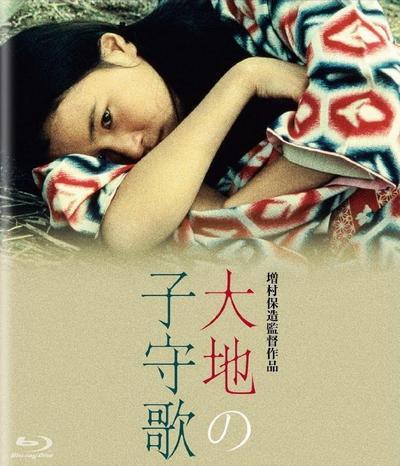
Yasuzô Masumura – Daichi no komoriuta AKA Lullaby of the Earth (1976)
1971-1980DramaJapanYasuzô MasumuraQuote:
The story of an orphan girl, brought up in naive, rustic innocence by an elderly relative, who is suddenly exposed to the brutality, greed and deceptiveness of the outside world when her grandmother dies. Notwithstanding her healthy distrust of all strangers, which her upbringing instilled in her, it is not long before a cunning racketeer finds her weak point, that temptation which she cannot resist, that weakness, different as it may be, that each of us has, and brings her into his power. What follows is a depiction of her cruel descent into the depths of moral decay, as she becomes a collaborator in a system of exploitation, unbridled lust, vanity, and greed, in which she and other victims are always the losers.Read More » -
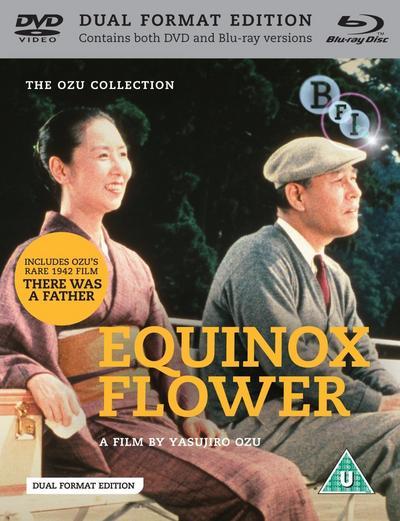
Yasujirô Ozu – Higanbana AKA Equinox Flower (1958)
1951-1960DramaJapanYasujiro OzuQuote:
The first color feature film from Yasujiro Ozu, Equinox Flower is a spare, evocative, and compassionate portrait of aging, transition, and change. The title of the film refers to a red amaryllis flower that blooms near the autumnal equinox, and red imagery pervade the film: the brick train station building, the carpeting of the wedding banquet, Yukiko’s obi, the tea kettle at the Hirayama home. Similar to Ingmar Bergman’s Autumn Sonata and Andre Techine’s Ma Saison Preferee, the season serves as a reflection of Hirayama’s generation, attempting to reconcile with the profound cultural and social changes of postwar Japan. The film opens to the image of the train station and cuts to a shot of the hallway of the wedding reception. It is a reminder of Hirayama’s own transitional passage – an elegy for the quickly vanishing traditions of an irretrievable past, and a celebration of renewed hope and promise.Read More » -
Kôji Wakamatsu – Amai wana AKA Sweet Trap (1963)
1961-1970AsianEroticaJapanKoji WakamatsuAn office worker who dreams of a peaceful happiness with her boyfriend is forced into prostitution by yakuza…
Read More »