After Summer, Ogawa Pro attempted a more epic scale with Winter in Sanrizuka. It was roundly criticised as a failure. In the wake of this criticism, the collective became increasingly militant. They decided to make a quick and dirty report from the front, calling it a “bullet film.” They shot this agit-prop film in three days, when 2,500 protestors battled 6,500 police. Even the school had been let out so children could participate in the action.Read More »
Japan
-
Shinsuke Ogawa – Sanrizuka: Daisanji kyosei sokuryo soshi toso AKA Sanrizuka: The Three-Day War (1970)
Shinsuke Ogawa1961-1970DocumentaryJapan -
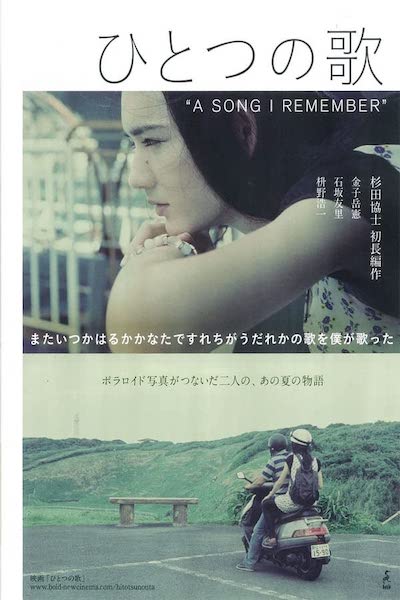
Kyoshi Sugita – Hitotsu no uta AKA A Song I Remember (2011)
2011-2020ArthouseJapanKyoshi SugitaQuote:
Takeshi is a gardener and likes to take pictures of people he passes. One day, on a train platform, he takes a picture of a woman just before she falls on the tracks. Is it murder or suicide? Takeshi gets acquainted with the victim’s daughter.Read More » -
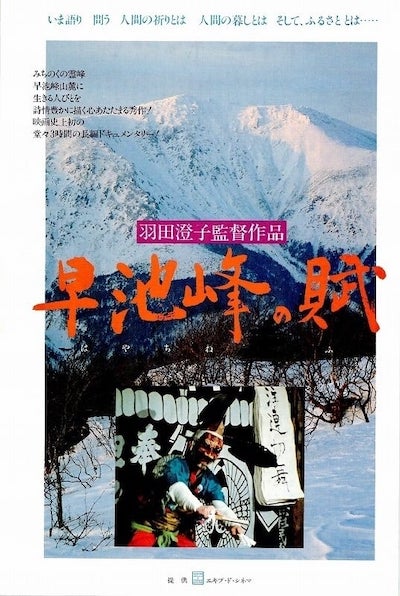
Sumiko Haneda – Hayachine no fu AKA Ode to Mt. Hayachine (1982)
Sumiko Haneda1981-1990DocumentaryJapanQuote:
Shot in the foothills of Iwate Prefecture’s mystical Mt. Hayachine, the film records a year in the life of the area’s villages and villagers as they prepare for kagura performances, a dance-theater form with origins in religious rituals (now mainly performed for tourists). The film can be enjoyed and processed on many levels: a musicologist’s fascinating glimpse into kagura traditions and performances; an ethnographic portrait of rural life and village hierarchies; and most of all, a study of a key moment in Japanese society, when, even as Haneda filmed, rural lifestyles were exposed to modernity: paved roads, cars, and tv sets. Fittingly, the film’s true beauty comes not through its thesis, but in its attunement to the mountain’s own intricate rhythms. (Pacific Film Archive)Read More » -
Shinzô Katayama – Siblings of the Cape (2018)
2011-2020DramaJapanShinzô KatayamaShinzo Katayama has worked as assistant to Bong Joon-ho (TOKYO, Mother) and Nobuhiro Yamashita (My Back Page, Kueki Ressha) but this is actually his debut in the director’s seat. His effort, of depicting a lowlife man who is trying to take care of his mentally disabled sister was a difficult theme to begin with, but Katayama really took it a step further, in the process creating a movie that hits like a punch with its almost grotesque realism. Let us take things from the beginning, though.Read More »
-
Kazuki Ohmori – Keisho sakazuki AKA Succession (1992)
1991-2000DramaJapanKazuki OhmoriStockbroker turned yakuza Shoichi Yoshinari (Hiroyuki Sanada) has been presented with a thankless task. He is to invite an oyabun (don) of a yakuza gang to emcee a succession ceremony — the passing of the baton from the older to the younger generation.Read More »
-
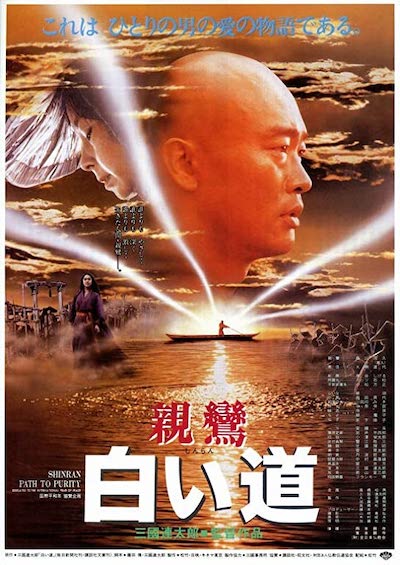
Rentarô Mikuni – Shinran: Shiroi michi AKA Shinran: Path to Purity (1987)
1981-1990AsianDramaJapanRentarô Mikuni

In the early part of the 13th Century in Japan, warring clans turned the country into a bloody playing field. Ritual execution was the order of the day, and expulsion to the far reaches of the empire–to endure extremes of weather on barely fertile land–was the height of mercy.Read More »
-
Satoshi Uemine – Sizuka no Umi AKA Sea of Tranquility (2004)
2001-2010DocumentaryExperimentalJapanSatoshi UemineThe film was made by the Japanese visual artist Satoshi Uemine, and DVD released in 2005. This silent, personal movie bears and reflects the traces of the re-encounter between the director and his girlfriend, who had been hospitalized because of her deteriorating mental condition. Almost all scenes were shot in Hokkaido, the north island of Japan. Although nothing dramatic happens here, Sizuka no Umi builds a series of beautiful images that are raw, honest, and passionate.Read More »
-
Tetsuji Takechi – Ukiyoe zankoku monogatari aka Ukiyo-e Cruel Story (1968)
1961-1970EroticaJapanTetsuji TakechiQuote:
Sayo has just celebrated her sixteenth birthday when she attends a temple festival. On her way back she sees a large cherry tree which is infamous for the legend of dead white horse. When her fiancé returns from war and visits her he comes across a white horse which he takes in.Read More » -
Fumio Kamei – Ikiteite yokatta AKA It Is Good to Live (1956)
Amos Vogel: Film as a Subversive ArtDocumentaryFumio KameiJapanShort FilmFrom Amos Vogel’s Film as a Subversive Art:
This is one of the first documentary films about the survivors of Hiroshima and Nagasaki. It coldly records the lingering effects of the bomb on the victims decades later. In a succession of realistic, shocking sequences, their lives, difficulties, and camaraderie are examined. The very objectivity of incidents, scenes, and faces makes the film the more terrifying.Read More »