Quote:
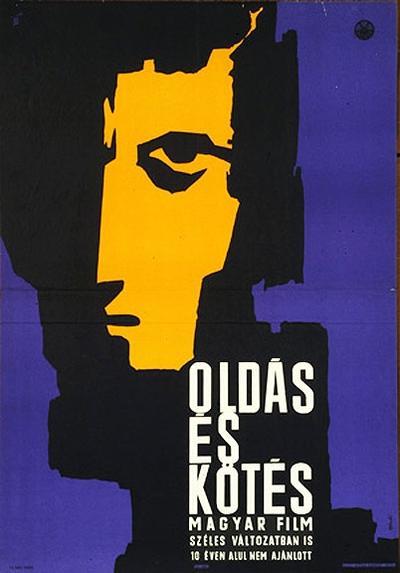
Jancsó’s second feature film, received the Hungarian Critics’ Prize. In this work, influenced by Michelangelo Antonioni, Jancsó created the unique visual style by which he became known – the mesmerizing, sweeping, ballet-like camera movement, which emphasize the relation between the characters and the landscape, the vast Hungarian plain, around them. In considering the latter aspect, Jancsó’s cinematic world has connections with the traditional western, although not on the ideological level. Movement is for Jancsó both a guiding philosophical and aesthetical principle – “Is seems to me that life is a continual movement,” he once summarized. “It’s physical and it’s also philosophical: the contradiction is founded on movement, the movement of ideas, the movement of masses.”Read More »
Hungary
-
Miklós Jancsó – Oldás és kötés AKA Cantata (1963)
1961-1970ArthouseDramaHungaryMiklós Jancsó -
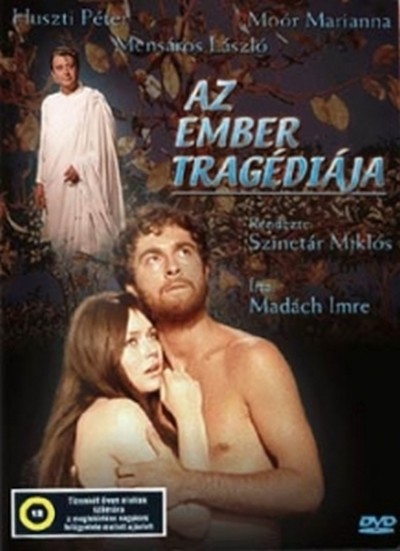
Miklós Szinetár – Az ember tragédiája AKA The Tragedy of Man (1969)
2011-2020AnimationDramaHungaryMarcell JankovicsQuote:
“The Tragedy of Man (Hungarian: Az ember tragédiája) written by Imre Madách was first published in 1861. The play is considered one of the major works in Hungarian literature and has earned a place in the national consciousness in that it is not only performed regularly in Hungary today but dialogue from the piece is often quoted and referred to.Starting with the expulsion from the Garden of Eden, the three main characters; Adam, Eve and Lucifer travels through history, playing their roles, from Ancient Egypt through the nineteenth century, into a distant and uncertain future. In each era the merits of the human race are presented by Adam, who believes in mankind and human achievement. But it is Lucifer, as the role of his servant or confidant, who exposes his dreams as ones built on injustice and misery.
Eve appears often as a temporary restorative for Adams disappointment in the failures of mankind.Read More » -
György Pálfi – Szabadesés AKA Free Fall (2014)
2011-2020ExperimentalGyörgy PálfiHungaryMysterySeven floors, seven identically built apartments yet completely different worlds. Seven situations, seven different stories that are nevertheless tied together by thousand strings. They are absurd, often times mysterious mocking glasses of reality as we know it. Like images of an exhibition, these stories are authentic per se, created in different styles and genres, thus told in different ways. It is exactly this diversity that organizes these stories into one peculiar tale.Read More »
-
Kristina Grozeva & Petar Valchanov – Urok AKA The Lesson (2014)
2011-2020DramaHungaryKristina Grozeva and Petar ValchanovIn a small Bulgarian town, Nade is an honest, hard-working elementary school teacher and devoted mother, struggling to keep her life together. Her unemployed, alcoholic husband has secretly spent their mortgage payments on booze, the agency where she translates legal documents for extra cash is going under, and a thief in her class has stolen the last of her money out of her purse. With few options left, Nade turns to a local loan shark for help, but with the reposession of her home looming, she finds herself with little hope. Resorting to measures her former self would have found depraved, Nade attempts one last desperate act to get the money she needs.Read More »
-
Miklós Jancsó – Szegénylegények AKA The Round-Up (1966)
1961-1970ArthouseDramaHungaryMiklós JancsóSet in a detention camp in Hungary 1869, at a time of guerrilla campaigns against the ruling Austrians, Jancsó deliberately avoids conventional heroics to focus on the persecution and dehumanization manifest in a time of conflict. Filmed in Hungary’s desolate and burning landscape, Jancsó uses his formidable technique to create a remarkable and terrifying picture of war and the abuse of power that still speaks to audiences today.Read More »
-
Pál Sándor – Szabadíts meg a gonosztól aka Deliver Us from the Devil (1979)
1971-1980ArthouseClassicsHungaryPál SándorA Hungarian masterpiece from Sándor Pál.
The film’s story take place in Budapest, in 1944 in the very end of the 2nd WW. The film’s photographer, Elemér Ragályi won prize in Montreal in 1979. Montreal, 1979.
PLOT DESCRIPTION
In this very dark comedy, the loss of a coat from a dance hall cloakroom sets off a frantic search which results in widespread death and mayhem. It is 1944, and the loss of the coat represents the family’s loss of social standing, even during a time when everyone is suffering from the Nazi occupation. The whole family is called in to search for it, and a cross-section of the social chaos of the times is exposed during their search, which involves murders and more. ~ Clarke Fountain, All Movie GuideRead More » -
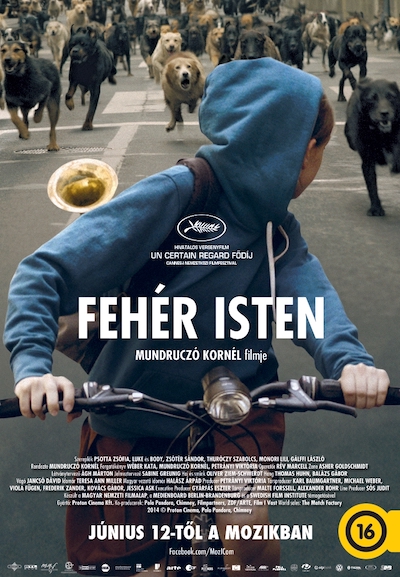
Kornél Mundruczó – Fehér Isten AKA White God (2014)
2011-2020DramaHungaryKornél MundruczóQuote:
The film follows the mixed-breed dog Hagen who moves, along with his guardian Lili, in with Lili’s father. Unwilling to pay a harsh “mongrel” fine imposed by the government, Lili’s father abandons him. Determined to find Lili again, Hagen soon attracts a large pack of half-breed followers who start a seemingly organised uprising against their human oppressors.Read More » -
Szabolcs Hajdu – Délibáb AKA Mirage (2014)
2011-2020ArthouseHungarySzabolcs HajduWesternSynopsis: “Mirage tells the story of an African football player in a small Hungarian town, who commits a crime and has to flee. He finds refuge on a farm deep in the Hungarian flatland. Soon he realizes that the farm is a modern slave camp where he is forced to fight for his freedom and ultimately his life.”
Quote:
The Hungarian plains might as well be Sergio Leone’s American West in Szabolcs Hajdu’s Mirage, an atmospheric fable whose setting feels like no place, any time. Isaach De Bankolé, as the loner who shows up here for reasons we never learn and contends with a gang of slave-driving farmers, carries a film that is philosophically related to but more satisfying than Jim Jarmusch’s The Limits of Control. The picture should draw well at fests, but is willfully obscure enough that, sans an auteur whose name is known in the States, it may be a hard sell here. – John Defore, VarietyRead More » -
Béla Tarr – Öszi almanach aka Almanac of the Fall (1984)
1981-1990Béla TarrDramaHungaryFrom New York Times Magazine:
Possibly inspired by the existential play No Exit by Jean-Paul Sartre, this story about five people living in close quarters in a small apartment conveys the same angst as Sartre’s well-known story about the nature of hell. Like the 1962 movie version of the play, Oszi Almanach is also garishly lighted, with scenes red-tinted on one side and blue-tinted on the other. Close-ups show a dermatologist’s interest in skin, an example of the kind of bizarre abstraction that underscores the alienation in this film. A single, older mother owns the apartment, where she is tended by a nurse who has brought along a presumed lover. The sick woman’s son lives there too, constantly thinking about how to get his hands on his mother’s money. The last member of this unhappy family is a former teacher now down on his luck and out of work. The three men and the nurse are dependent on the sick woman, on her money and her apartment, just as she is dependent on them. Yet these individuals are two-faced, scheming, and prone to anger. Unable to break away and leave, at the same time they find no solace in staying — making a difficult two hours of misery for the average viewer to take on without a therapist.
by Eleanor MannikkaRead More »