Hungary

  • Ferenc Kósa – Tízezer nap AKA Ten Thousand Days (1967)

    1961-1970ArthouseDramaFerenc KósaHungary

    From filmjournal.net and torinofilmfest.org

    One of the most impressive Hungarian directorial debuts, Ten Thousand Days offers clinching proof that Miklós Jancsó wasn’t the only mid-1960s master offering breathtaking widescreen compositions featuring hundreds of men and horses. Shot by Sándor Sára, then well on his way to cementing his reputation as one of Hungarian cinematography’s greatest visual artists, the film routinely throws up stunning shots: mass wheat scything, dozens of horses crossing a bridge to market (followed shortly afterwards by train wagons crossing the same bridge heading in the opposite direction, a neat visual gag on technological progress), prisoners doing hard labour on a rocky hillside, numerous public festivities crammed with local colour. The aesthetic impact alone makes it’s easy to see why this once had a considerable international reputation, even achieving a commercial release in Britain.Read More »

  • Károly Makk – Elveszett paradicsom AKA Lost Paradise (1962)

    1961-1970DramaHungaryKároly Makk

    Hungarian filmmaker Károly Makk was an important figure in the development of Hungarian cinema after WWII. He made his directorial debut in 1954. Prior to that, he attended the Budapest Academy of Film Art and then was an assistant director on Geza von Radvanyi’s Somewhere in Europe. While his films of the ‘60s were well respected in Hungary, Makk’s work did not receive international recognition until 1971, when his Love won the Special Jury Prize at Cannes. Since then, he has gained an international reputation. His 1982 film Another Way was the first Eastern European film to deal directly with gay and lesbian concerns. (Mubi)Read More »

  • Károly Makk – Szerelem AKA Love [+Extras] (1971)

    1971-1980ArthouseDramaHungaryKároly Makk

    Makk’s haunting, atmospheric and beautifully performed film, brilliantly shot by Janos Toth, captures exactly the fear and uncertainty of the time. It is, above all, a treatise on how such times affect fidelity, faith, illusion, love. It deals specifically with Hungary but has an absolutely universal appeal… completely unsentimental, but catches precisely what its characters face and how they feel…an outstanding film.Read More »

  • István Szöts – Melyiket a kilenc közül? AKA Which of the Nine? (1956)

    1951-1960DramaHungaryIstván SzötsShort Film

    Istvan Szőts’s short, Christmas-themed film starring József Bihari and Andor Ajtay, based on Mór Jókai’s novel of the same title. The premier of the film was in the Venice Film Festival in 1957, where it received recognition.

    Only a TV-rip is available at the moment.Read More »

  • János Szász – A hentes, a kurva és a félszemü AKA The Butcher, the Whore and the One-Eyed Man (2017)

    Drama2011-2020HungaryJános Szász

    Depicts the slow decline of three individuals as they are sucked into a world of sinful existence. It is the story of a wild and voracious love triangleRead More »

  • János Xantus – Eszkimó asszony fázik AKA Eskimo Woman Feel Cold (1984)

    1981-1990DramaHungaryJános Xantus

    Eskimo Woman Feel Cold is the debut feature film of director János Xantus. It won best newcomer director and best male actor awards on the Magyar Filmszemle, Hungary’s national film awards and many other international awards.

    The film is about a piano player who falls in love with Mari, a beautiful blond woman, who happens to be the wife of a deaf-mute animal caretaker. Both men adore Mari, as she loves both of them. Albeit all of them know this way won’t stand.Read More »

  • Márta Mészáros – Kilenc hónap AKA Nine Months (1976)

    1971-1980DramaHungaryMárta Mészáros

    IMDB description:
    A village-girl (Juli Kovács) arrives in the city to work in a factory. The work manager (János Bodnár) sets his eye on her, but at first the girl refuses his advance.Read More »

  • Miklós Jancsó – Égi bárány AKA Agnus Dei (1971)

    1971-1980DramaHungaryMiklós Jancsó

    Quote:
    Alegory of the suppression of the 1919 revolution and the advent of fascism in Hungary; in the countryside, a unit of the revolutionary army spares the life of father Vargha, a fanatical priest. He comes back and leads massacres. A new force, represented by Feher, apparently avanges the people, but only to impose a different, more refined and effective kind of repression. Written by Francisco BaezRead More »

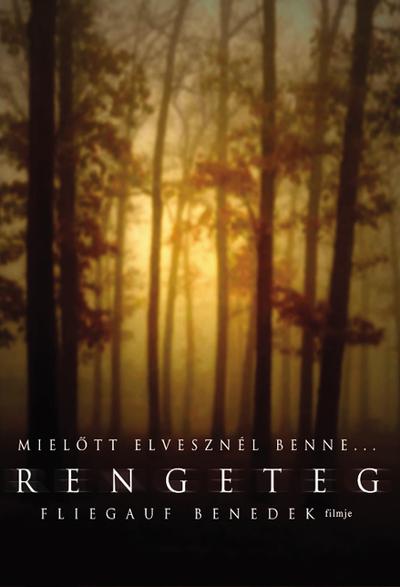
  • Benedek Fliegauf – Rengeteg AKA Forest (2003)

    2001-2010ArthouseBenedek FliegaufDramaHungary

    Hungarian director Benedek Fliegauf makes his feature-length debut with Rengeteg (Forest). Shot on digital video, the episodic film is composed of a series of seven different intimate parts bookended by footage of the same people in a large public space. These characters aren’t given an introduction, context, or even character names. Cinematographer Zoltan Lovasi shoots the ensemble cast of non-actors exclusively in close-ups, so the larger situation is never made completely clear. Each segment involves a small group of people in some kind of intense and possibly disturbing conversation. ~ Andrea LeVasseur, All Movie GuideRead More »

Back to top button