

Based on the book by German writer W.G. Sebald, examines the perception and processing of the phenomenon of mass destruction of the German civilian population in European post-war literature.Read More »
Based on the book by German writer W.G. Sebald, examines the perception and processing of the phenomenon of mass destruction of the German civilian population in European post-war literature.Read More »

Spain, salt gathering in a large salt works on the Mediterranean. In this atmosphere, the film makes the impression of an existential allegory in which the workers are damned to an endless, Sisyphean labor in a salt desert.Read More »
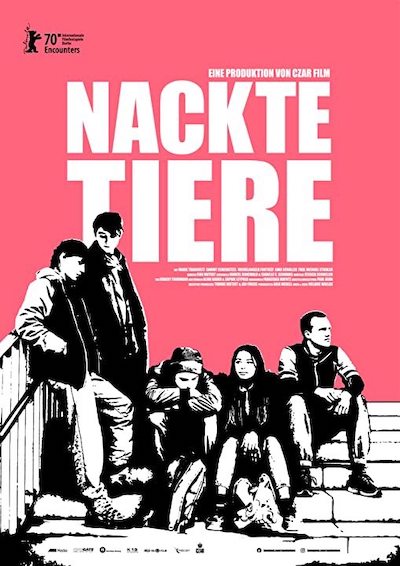
Quote:
Katja, Sascha, Benni, Laila and Schöller. These five young people have more in common than just the fact that they are living in provincial Germany free of parental interference. They have one last winter together before they finish school, then they are supposed to know what they want to do: stay or leave. In between homework and smoking dope, martial arts training and gossiping about deflowering people, they explore their feelings in all kinds of different relationships, searching for each other, hiding, kissing and fighting. They want to live, to conquer the world and find out who they really are. They are young and exude an enviable naturalness when it comes to gender identities and roles, above all Katja, played by Marie Tragousti with a lot of new female power. Melanie Waelde’s feature debut is tremendously intense and vibrant. Going beyond cuteness, she draws these “naked animals” with a raw, sensual and sensitive openness rarely seen in German cinema. On the cusp between the end of childhood and burgeoning maturity, body and soul are still more or less united. Just like loneliness and intimacy. We are vulnerable – and that’s a good thing.Read More »

In a small German village in the middle of large moors, there is an old legend of a young woman having sunk in the wetland after being raped by a Swedish intruder of the Thirty Years’ war. Now young Dorothee, falling in love with the architect Ludwig, is harassed by an obnoxious, rich farmer Eschmann. The brutal man is ready to do anything to get the maiden. The history is repeating itself, as Eschmann follows Dorothee to the moors after his crime.Read More »
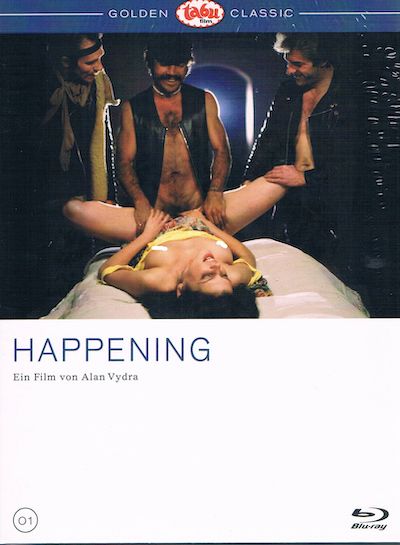
Carolyn Grace has an older husband who insists she wear very old-fashioned night clothes and is obviously unexciting in bed. She has lots of fantasies, triggered by chance events and encounters.Read More »

This rare documentary, simply called “John Cage”, was made in 1966 for the German TV station NDR and is one of the earliest films devoted entirely to the work of Cage and his collaborators. It was made on the occasion of the Cage and Cunningham European tour in that year, and instead of fully explaining the music and philosophy of the composer, we get a fascinating glimpse at the work process of the dance troupe and of Cage himself. Most of the film is concerned with showing us how they set up a performance for the Nuits de la Fondation Maeght, and there is a lot of interview and everyday material with Cage, Merce Cunningham, David Tudor, Gordon Mumma and Carolyn Brown, to name just the best known artists here. It’s also nice to see a rather youthful looking Cage (though he was 54 at the time!), still wearing the famous tie that had been cut off by Nam June Paik a few years earlier. There’s also some archival footage from Tudor’s and Cage’s very first German performance in Darmstadt in 1954.Read More »

When the misanthropic tile salesman Lothar is diagnosed with a terminal disease, he sells his business and gives his dog and all his money to an animal shelter and checks into a hospice, where it turns out that he was misdiagnosed.Read More »

In 1914, Germany is arming itself for war. Karl Liebknecht, left-wing revolutionary Social Democrat and workers’ leader, a virulent antimilitarist, is one among 110 SPD members of Parliament who vote against approving war loans. From then on, he is considered un-German and a traitor to the fatherland, and his own party’s leadership turns against him. Despite threats, Liebknecht speaks up against the war and writes the manifesto “The Main Enemy Is at Home.” Even when he is arrested and charged with treason, he does not surrender.Read More »

The traditional and modest life in deep rural Crete. A film on the verge of traditional documentary film and an attempt to find a new direction in terms of what documentary film could be. An envious look at contemporary works by his fellow filmmakers from the British Free Cinema, obviously spurred on director Pitt Koch’s ambition.Read More »