

You left your home to move far away. You were struck by a wind of change and were unfaithful to yourself. You reinvented yourself and you are now feeling free. But suddenly pressure arises in you.Read More »
You left your home to move far away. You were struck by a wind of change and were unfaithful to yourself. You reinvented yourself and you are now feeling free. But suddenly pressure arises in you.Read More »
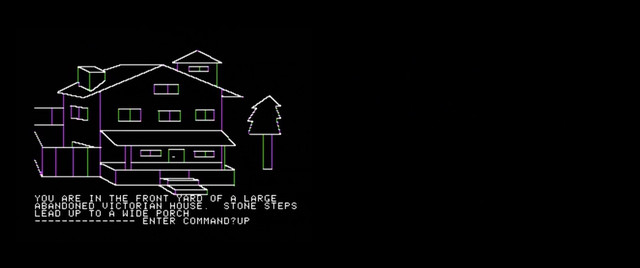
Parallel I opens up a history of styles in computer graphics. The first games of the 1980s consisted of only horizontal and vertical lines. This abstraction was seen as a failing, and today representations are oriented towards photo‐realism.
“For over one hundred years photography and film were the leading media. From the start, they served not only to inform and entertain, but were also media of scientific research and documentation. That’s also why these reproduction techniques were associated with notions of objectivity and contemporaneity — whereas images created by drawing and painting indicated subjectivity and the transrational.Read More »
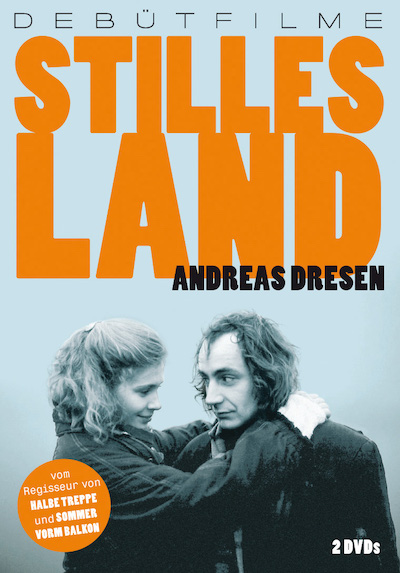
A young, naive and enthusiastic theater director named Kai comes to a grim provincial town to put on Beckett’s Waiting for Godot. Although the lethargic theater company shows no interest in the play, his spirit remains undaunted. Meanwhile, it is fall 1989. The world is changing and somewhere, far away in the capital, a revolution is taking place and it seems that wishes might come true. Great hopes emerge in the little town and unexpected events overtake Kai’s mutating production.
—DEFA Film LibraryRead More »
Quote:
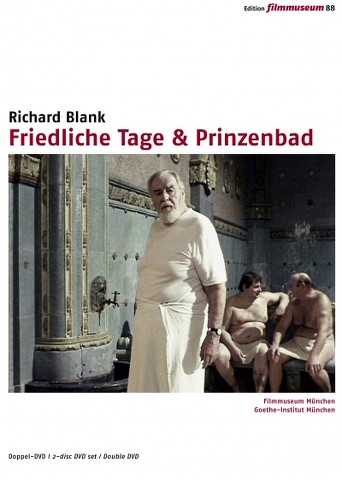
The dramatic arc of Friedliche Tage was developed from images and the people who sustained those images. As long as the film is set in the building where the executions are carried out and the delinquents await their end, the tale is told with “classic” suspense. After Hanna leaves there with Robert, her potential executioner played by Branko Samarowski the traditional, linear narrative form dissolves into individual motifs; images that taken together show that these two, as a couple, can’t manage in the “normal” world. And in the end, some viewers are happy that the executioner returns to his old domain. He knows his way around there, he admits to being guilty of leaving. His career is advancing there. Happy ending?Read More »
Synopsis:
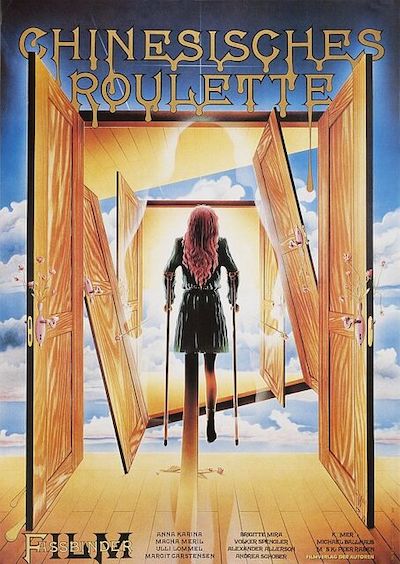
A wealthy couple, with a daughter Angela, a young teen who walks with crutches, tells each other they are off for the weekend on business (he to Oslo, she to Milan). Actually, both are meeting their lovers, and both go to the family’s county home, Traunitz castle. Surprising each other, there’s sophisticated laughter; they decide to continue as planned. Dinner, however, is interrupted by the arrival of Angela and her mute attendant, also named Traunitz. The next day, the child initiates a game of “Chinese roulette,” in which one team tries to guess which of them the other team is thinking of by asking questions. The game has an edge of cruelty and the results are explosive.Read More »

Richard III
by William Shakespeare
Direction: Thomas Ostermeier
Translation and version by Marius von Mayenburg
Richard is hideous. Born prematurely, he is a deformed, hobbling, hunchbacked cripple who, on the battlefields of the Wars of the Roses – which flared up after the death of Henry V – served his family and above all his brother, Edward, well. Now Edward is king, thanks to a number of murders carried out on his crippled brother’s own initiative. But the end of war brings Richard no peace. His hatred for the rest of the world, to which he will never belong, lies too deep. And so he does what he does best and kills some more, clearing away every obstacle that lies in his path to becoming king. If fate prevents him from being part of a society of those blessed by good fortune, he will at least lord over them. He plays off his rivals against each other with political cunning, unscrupulously exploits the ambitions of others for his own ends and strides spotless through an immense bloodbath until there is no one left above him and the crown is his.Read More »

Quote:
Ali (Salem), is a young Moroccan Gastarbeiter (guest worker) in his late thirties, and Emmi (Mira), a 60-year-old widowed cleaning woman. They meet when Emmi ducks inside a bar, driven by the rain and drawn by the exotic Arabic music. A woman in the bar (Katharina Herberg) suggests Ali ask Emmi to dance, and she accepts. A strange and unlikely friendship develops, then a romance and finally they decide to marry.
What follows is a bitter and noxious reaction over their relationship. Gossipy neighbors treat them with contempt, complaining their (already noticeably dilapidated) tenement building has now become filthy. Emmi is shunned by her coworkers, and Ali faces discrimination at every turn. Emmi tells her son-in-law Eugen and daughter Krista (Fassbinder himself and Irm Hermann) that she is in love with Ali; Eugen thinks she is screwy.Read More »

Quote:
For his feature debut, Rainer Werner Fassbinder fashioned an acerbic, unorthodox crime drama about a love triangle involving the small-time pimp Franz (Fassbinder), his prostitute girlfriend, Joanna (future Fassbinder mainstay Hanna Schygulla), and his gangster friend Bruno (Ulli Lommel). With its minimalist tableaux and catalog of New Wave and Hollywood references, this is a stylishly nihilistic cinematic statement of intent.Read More »

from German Postwar Films: Life and Love in the Ruins by Wilfried Wilms & William Rasch
Quote:
(…) By the time Liebeneiner’s film appeared in theaters, the genre of the “returnee film” (Heimkehrerfilm) and the “rubble film” (Trümmerfilm) had become the stuff of ironic commentary. In Robert Stemmle’s Berliner Ballade (1948), the imaginary Berlin of 2048 is juxtaposed with “archival material from 1948” and a voiceover expresses the likely dismay of many in the audience: “not another Heimkehrerfilm!” And in Rudolf Jugert’s Film ohne Titel, a screenwriter, an actor, and a director debate what kind of film will attract audiences. If anti-Nazi films that explored questions of guilt were unpopular, they agreed, then the “rubble film” and the “returnee” film would certainly not fill movie houses. Once tragedy, these genres were now the subject of satire; their time had come and gone.Read More »