Germany

  • Nicolette Krebitz – Wild (2016)

    2011-2020DramaGermanyNicolette Krebitz

    29f7c043f76a2bde437fd0d52a185152

    After an encounter with a wolf, a young woman (Lilith Stangenberg) casts off societal conventions to live a life free of hypocrisy.

    Wild is a 2016 German drama film directed by Nicolette Krebitz. It was shown in the World Cinema Dramatic Competition section at the 2016 Sundance Film Festival.

    caught this one in theatres last year. entire row of old ladies behind me walked out after complaining pretty loudly for a good half hourRead More »

  • Ulrike Ottinger – Freak Orlando (1981)

    1981-1990ArthouseExperimentalGermanyQueer Cinema(s)Ulrike Ottinger

    29f7c043f76a2bde437fd0d52a185152

    As Orlando (Magdalena Montezuma) enters the world of “freaks,” the movie develops scenes from a mythological netherworld, the Spanish Inquisition, the Middle Ages, and a few other settings to focus on unusual characters with physical or mental oddities. By the time the various vignettes that take place in these separate periods are completed, each with their own points and counterpoints, the “freaks” seem much less odd than their physically normal contemporaries. After Orlando has revealed much about the human condition through glimpses of a P.T. Barnum side-show, Siamese twins, as well as modern sexual morés, her journey with the viewer is completed. The device of Orlando, the time-traveler and liberated bisexual is based on Virginia Woolf’s “Orlando: A Biography.” The same set of actors play different roles in each of the five chronological segments. ~ Eleanor Mannikka, RoviRead More »

  • Kurt Hoffmann – Das fliegende Klassenzimmer AKA The Flying Classroom (1954)

    1951-1960ComedyDramaGermanyKurt Hoffmann

    29f7c043f76a2bde437fd0d52a185152

    Synopsis:
    All is not really well between the boys of Gymnasium and the boys of the six-form High School: sparks fly when they get within 100m of each other! The continuous feud between the pupils is only one of the pleasant alternations, which life brings into the everyday school life. In addition, there are the rehearsals for the school theatre; and there are the secrets around a teacher called ‘Justus’ and a man called ‘Nichtraucher’ or the “non-smoker” since he lives in an abandoned non-smoking railway carriage. Moreover, in between all the exciting surprises, a few serious things remain to be done…Read More »

  • Christoph Girardet & Matthias Müller – Cut (2013)

    2011-2020Christoph Girardet and Matthias MüllerExperimentalGermany

    29f7c043f76a2bde437fd0d52a185152

    Quote:
    The body as a wound that never heals.Read More »

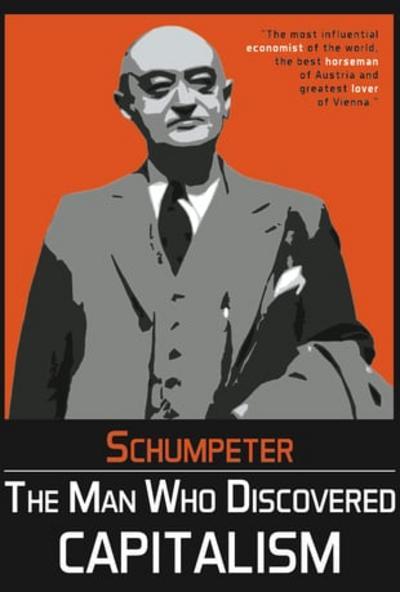
  • Detlef Siebert – The Man Who Discovered Capitalism (2016)

    2011-2020Detlef SiebertDocumentaryGermany

    29f7c043f76a2bde437fd0d52a185152

    The Film has three narratives:

    the story of Schumpeter’s life,

    the development of his ideas,

    and how the digital revolution illustrates these ideas.
    Stylized drama sequences, in combination with Monthy Python inspired cut out animations, illustrate key aspects of Schumpeter’s life and theory.Successful entrepreneurs such as Simon Woodroffe (Yo!Sushi), Eric Wahlforss (Soundcloud), Stefan Smalle (Westwing) and Renaud Visage (Eventbrite) share the secrets of their success and offer insights into what it takes to be the innovative entrepreneur who Schumpeter identified as the key actor in the capitalist drama.Read More »

  • Harun Farocki – Bilder der Welt und Inschrift des Krieges AKA Images of the World and the Inscription of War (1989)

    1981-1990DocumentaryGermanyHarun FarockiWar

    29f7c043f76a2bde437fd0d52a185152

    Quote:
    The vanishing point of is the conceptual image of the ‘blind spot’ of the evaluators of aerial footage of the IG Farben industrial plant taken by the Americans in 1944. Commentaries and notes on the photographs show that it was only decades later that the CIA noticed what the Allies hadn’t wanted to see: that the Auschwitz concentration camp is depicted next to the industrial bombing target. (At one point during this later investigation, the image of an experimental wave pool – already visible at the beginning of the film – flashes across the screen, recognizably referring to the biding of the gaze: for one’s gaze and thoughts are not free when machines, in league with science and the military, dictate what is to be investigated.Read More »

  • Klaus Wyborny – Studien zum Untergang des Abendlands AKA Studies for the Decay of the West (Song of the Earth, Appendix) (1979–2010)

    ExperimentalGermanyKlaus Wyborny

    29f7c043f76a2bde437fd0d52a185152

    Quote:
    In Wyborny’s ‘musical film’, every new sound triggers a new image: 6,299 shots, all directly edited within his Super-8 camera. An intoxicating, stroboscopic trip to industrial, natural and urban landscapes in East Africa, New York, the Ruhr district and Rimini.

    This experimental music film refers to Oswald Spengler’s world-famous philosophical work Der Untergang des Abendslandes (The Decay of the West, 1918). Culture pessimist Spengler argues that progress is an illusion and that the modern era brings little good. People are no longer able to understand the rationality of the world. Wyborny did not set out to make a film version of Spengler’s theories, but rather a visual reflection on the modern age; a stroboscopic journey in five parts to industrial, natural and urban landscapes. He uses 6,299 shots, edited directly in a Super8 camera. Each piano note and violin vibrato evokes a new image: demolished buildings, rubble, destruction and nature, all shot between 1979 and 2010 in locations such as New York, the Ruhr, Hamburg, East Africa and Rimini. This film forms a counterpart to Wyborny’s previous films series Eine andere Welt. Lieder der Erde II (2004/2005).Read More »

  • Rainer Werner Fassbinder – Fontane Effi Briest (1974)

    1971-1980ArthouseDramaGermanyRainer Werner Fassbinder

    29f7c043f76a2bde437fd0d52a185152

    Quote:
    It’s a non-traditional black and white film based on the 1894 novel by Theodor Fontane. It’s for an audience that is more aware and welcomes something addressed to the intellect, rather than the way the average casual moviegoer sees a film expecting a story handed to him on a silver platter with a beginning, a middle and an end (usually a happy ending). This is not a film for the casual moviegoer or the critic chasing down blockbusters. Director-writer Rainer Werner Fassbinder has said “It’s a film that really only works in the German language.” What makes the film so difficult for an outsider, is that much of Fontane is nuanced only for the German and therefore someone unfamiliar with the finer cultural points or historical facts will have a tough time of it. Fassbinder based the film on the parts of the novel by Theodor Fontane he agreed with (discarding the parts of the book he disagreed with) and did not make it into a topic about a woman as the title would suggest (a debate grew between the film’s star Hanna Schygulla, who wanted to play it as a story about the titular character; thankfully she couldn’t budge Fassbinder off his intended aim to keep it as a societal moral play and as a result we have a film that is full of conviction and as faithful to a book as you can possibly be).Read More »

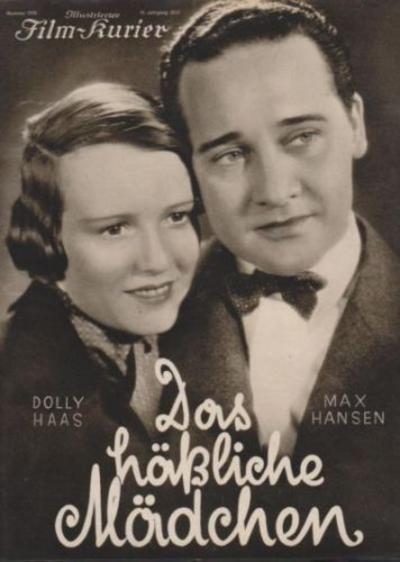
  • Henry Koster – Das häßliche Mädchen AKA The Ugly Girl (1933)

    1931-1940ComedyGermanyHenry KosterRomance

    29f7c043f76a2bde437fd0d52a185152

    Quote:
    “Das hässliche Mädchen” (The ugly girl) of the title is young Lotte (Dolly Haas), who is hired as a secretary by an insurance company precisely for her supposed ugliness, as the director (Otto Wallburg) hopes to avoid amorous affairs in his company this way. But as these things go, not only does one of his employees, Fritz (Max Hansen), fall for her, but unsurprisngly the ugly duckling soon transforms into a lovely lady. Fritz realises a little too late that he’s in love with Lotte, however, and meanwhile establishes an affair with the company director’s girlfriend. And obviously, this leads to all sorts of problems and funny situations…Read More »

Back to top button