Quote:
Costa-Gavras might be the European filmmaker most influential on American directors of the 1970s. Although this honor often goes to Jean-Luc Godard and other compatriots of the Nouvelle Vague, films like The French Connection, The Parallax View, or Blow Out are most clearly engaged with a clamorous mode of political cinema that’s as fundamentally enraged as it is delicately assembled. Typically, Costa-Gavras’s Z is credited as the key film in this regard, not simply for its humanistic, injustice-as-thriller construction, but also for the way it “opened up critical perceptions,” as Armond White states it, for filmmaking’s lasting cultural effects. Such an assessment is backed by historical fact, but one would be remiss to overstate the terrain for Costa-Gavras, since none of the director’s subsequent films received a similar degree of accolades, either from filmmakers or critics. The neglect is easier to ascertain once it’s understood just how different The Confession is from its predecessor, a nearly two-and-a-half-hour film that shirks the frantic chase sequences of Z by dialing back its proceedings to a nearly singular setting, literally within the confines of Czechoslovakian torture camp, but more figuratively within the mind and body of Anton Ludvik (Yves Montand), a high-ranking communist official held prisoner by Stalinist extremists.Read More »
France
-
Costa-Gavras – L’aveu AKA The Confession (1970)
1961-1970Costa-GavrasDramaFrancePolitics -
Bertrand Tavernier – Une semaine de vacances AKA A Week’s Vacation (1980)
1971-1980Bertrand TavernierDramaFranceQuote:
Here are some ways that Bettrand Tavernier, in production notes for his new film ”A Week’s Vacation,” describes his film: ”A portrait of a woman against the background of almost murmured questions that concern us all, approached without didacticism.” ”A laughing fit before you realize it’s going to snow.” ”An old man who knows a lot.” ”A motorcycle engine more familiar than a Moliere play.” ”A letter you read at the end of summer.”Read More » -
John Ford – The Black Watch (1929)
1921-1930AdventureDramaFranceJohn FordQuote:
August 1914. As his regiment sets sail for France, an army captain is sent back to India on a secret mission. He averts a tribal revolt by winning the love of a girl whom the tribe regard as a goddess.Read More » -
Marguerite Duras – L’homme atlantique (1981)
1981-1990ArthouseFranceMarguerite DurasShort FilmQuote:
“In this avant-garde short, Duras uses outtakes from Agatha et les lectures illimitées, removing Agatha and leaving only the voice and likeness of her brother (Yann Andréa). Duras scholar Leslie Hill contends that for the first time in her work, “the gap between image and sound is now aligned with the fissure of sexual difference itself.”” (filmlinc.org)Read More » -
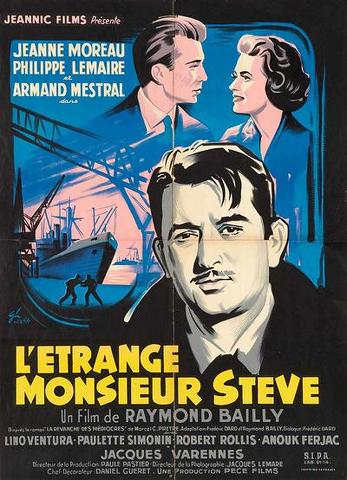
Raymond Bailly – L’étrange Monsieur Steve AKA Mr. Steve (1957)
France1951-1960Film NoirRaymond BaillyThrillerSynopsis:
‘Georges Villard is a modest bank employee who dreams of earning more money so that he can live more comfortably. When Monsieur Steve offers him a chance to do just that he accepts without a moment’s hesitation, partly because he wants to be near to Steve’s woman, Florence. However, Georges knows there will be a catch: what Steve wants is help to rob the bank where he works. When Georges refuses, he realises that his life is now in danger…’
– James Travers, Willems HenriRead More » -
Marguerite Duras – Jaune le soleil (1971)
1971-1980ArthouseCultFranceMarguerite DurasQuote:
Adapted from Duras’ Abahn Sabana David.Jaune le soleil est un film de Marguerite Duras sorti en 1972, adapté de son roman Abahn Sabana David.
Tout le film se passe dans une seule pièce où sont réunis les représentants des deux forces politiques et leur ennemi “le juif”. Un personnage féminin établit le dialogue entre ces individus et commente l’idéologie de chacun ; ceci jusqu’à la scène finale où chacun semble se rallier à une idée commune.
Note de tournage :
“Il faudrait que le film donne l’impression d’avoir été tourné sans électricité, que tout effet de lumière en soit complètement banni. Que tout le film baigne dans une lumière uniforme qui n’avantage aucun personnage. Que ce soit la même lumière pour tous. C’est un film sur la parole, l’image ici sert à porter la parole. .(…) Ici c’est la parole qui tient lieu de contact corporel, ainsi que les bruits, les cris des chiens, le bruit des mots….” Cahiers du cinéma n° 400 Octobre 1987Read More » -
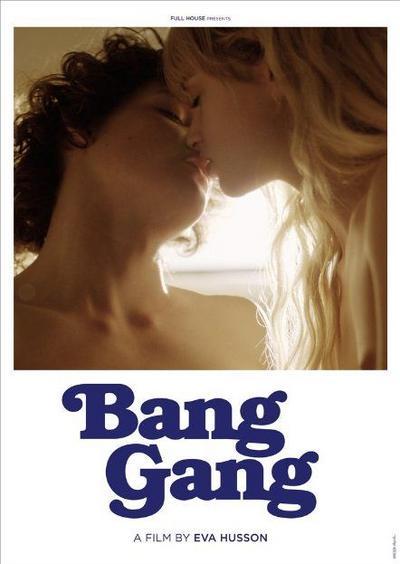
Eva Husson – Bang Gang (une histoire d’amour moderne) AKA Bang Gang (A Modern Love Story) (2015)
2011-2020DramaEva HussonFranceQuote:
The bold feature debut by French filmmaker Eva Husson explores the sexual exploits and awakenings of a group of teenagers on the beaches (and in the beds) of Biarritz.Read More » -
Bernard Queysanne – Un homme qui dort AKA The Man Asleep (1974)
1971-1980ArthouseBernard QueysanneFantasyFranceQuote:
In this French tour-de-force a young student (Jacques Speisser) decides to have no more interaction with the world than is needed to minimally sustain life. His increasingly automaton-like behavior is coupled with a strange clarity of insight about the world around him. His inner musings as he wanders the luminous streets of Paris are narrated in the form of an unwritten diary by Ludmila Mikael.Read More » -
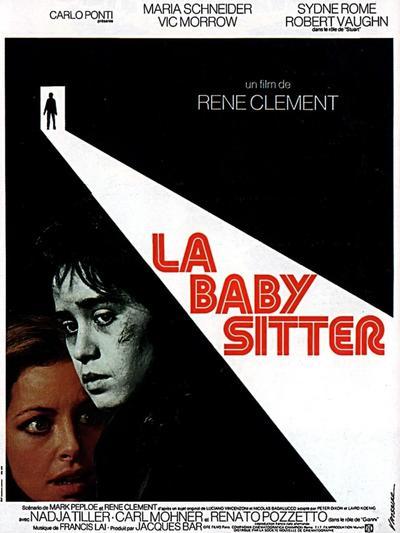
René Clément – La baby-sitter aka Jeune fille libre le soir (1975)
1971-1980CrimeFranceMysteryRené ClémentQuote:
Whatever one says about the plot of this film is going to be a spoiler. Let’s just say that a girl takes a baby-sitting job for one night and in the morning finds that things are not what they seemed and she is in a big load of trouble.The film has been trashed by just about everybody who ever bothered to write about it, and that’s unfair. At least among Clément’s thrillers – Les felins, Le passager de la pluie, La course du lièvre à travers les champs, etc – it can stand its ground, sharing their dreamlike ambiguity and opaque plot structure. It may not be a masterpiece, but it’s certainly a worthwhile couple of hours.Read More »