A strange duo, Minko and Hiroto, who believe themselves to be angels, throw out fashion massage leaflets called “Angel Dispatch” from the roof of a building on Christmas Day in order to save unfortunate people. The flyers were blown by the wind and fell into the city.Read More »
A young man neglects the ritual offerings to the voodoo deities and invokes their anger. His family suffers the consequences: house burned, crops destroyed. He leaves for the city to try to help them, but finds himself caught up in drugs. He ends up meeting a young girl who encourages him to return to the village. They marry in the voodoo tradition and the curse is lifted.Read More »
The strongest man on Earth … in a super-adventure odyssey.
The incredible Lou Ferrigno steps into the sandals of the most durable demigod in myth and motion pictures: Hercules!
With the strength of an army, our hero battles the forces of darkness in one unbelievable exploit after another. From bloodthirsty bears and loathsome reptiles to giant robots and laser beams, he stands tall against all who oppose him in his battle against the nefarious Minos (William Berger). But even the mighty Hercules himself may not be impervious to the bewitching charms of Sybil Danning in the role of the seductive and sultry Adriana (and can you blame him?).Read More »
Quote: A happily-married woman wishes she had met her second husband earlier, so that she could avoid many mistakes of the past. When suddenly moved back in time to 1980s she realizes she has one goal: find her future love.Read More »
The movie is based on a novel called The Circus of Dr. Lao by Charles G. Finney about a mysterious, elderly Chinese gentleman who brings a rather unusual circus to a small Western town at the turn of the 20th century. The film opens as Dr. Lao (Tony Randall) rides into the town of Abalone on a donkey, pausing just long enough to light his pipe with a flame that sprouts from his thumb. He ignores the initial mockery of the locals and visits the newspaper office to place an advertisement about his circus coming to town. While there he overhears a conversation between the profiteering town bully, Clint Stark (Arthur O’Connell), and the plucky newspaper editor Edward Cunningham (John Ericson). Stark plans to buy out everyone in town for sinister (and capitalistic) purposes, and Ed is determined to prevent just that from happening. While the power struggle is established over the next 30 minutes, we are introduced to the rest of the cast including the widowed librarian, Angela Benedict (Barbara Eden), and a bevy of colorful town characters. Meanwhile, Dr. Lao has set up his circus just outside of town, where he will change the lives of the townsfolk forever.Read More »
The story follows an underground weapons manufacturer in Belgrade during WWII and evolves into fairly surreal situations. A black marketeer who smuggles the weapons to partisans doesn’t mention to the workers that the war is over, and they keep producing. Years later, they break out of their underground “shelter” — only to convince themselves that the war is still going on.Read More »
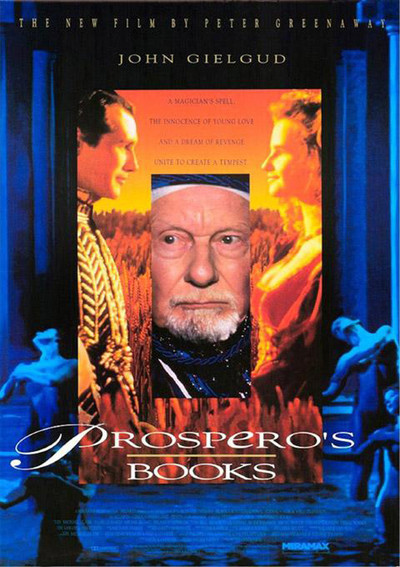
Quote: Peter Greenaway’s “Prospero’s Books” is not a movie in the sense that we usually employ the word. It’s an experiment in form and content. It is likely to bore most audiences, but will enchant others — especially those able to free themselves from the notion that movies must tell stories. This film should be approached like a record album or an art book. Each “page” is there to be studied in its complexity and richness, while on the soundtrack we hear one of the great voices in theater history, John Gielgud’s.Read More »
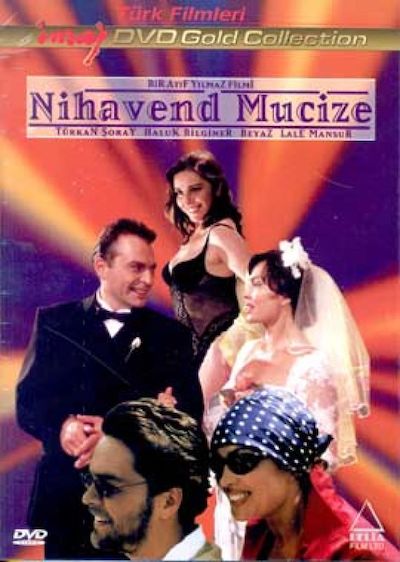
Synopsis Suzan died 25 years ago. But after seeing his son’s loneliness and despair in the world, he had to return to the world at the end of these 25 years. The world he left is completely different from the world he finds. Suzan suffers from a deep adaptation to this change. After a while, he realizes that he must adopt such a fit. The goal is clear: to regulate the life of his son. This goal will have other benefits.Read More »
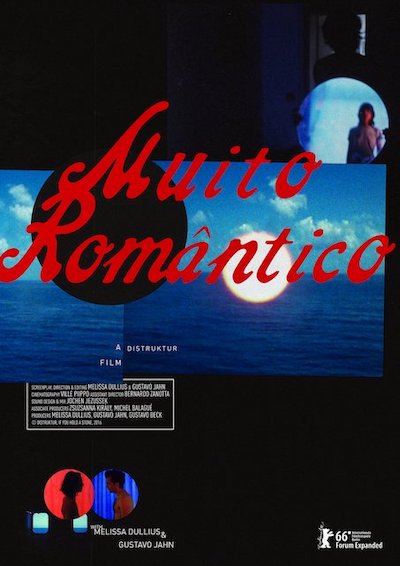
Synopsis The adventure of Melissa and Gustavo starts aboard a red cargo ship crossing the Atlantic Ocean. It takes them to Berlin, a city of constant movement, where the old has to give space to the new. The couple finds a home and transforms it into the center of their own universe. As time passes and seasons change, life and cinema become one and their room becomes an ever-changing stage, where friends are invited to play their own roles. In this state of transition Melissa and Gustavo lose sight of their path and their world starts to tremble. Until one day a cosmic portal appears in their home opening connections between the past, the present and the future, confronting the two travelers with extraordinary discoveries. MUITO ROMÂNTICO is a stream that carries along hearts and minds. A playful rearrangement of experiences, memories and fantasies into a journey transcending space and time.Read More »