

The erotic odyssey of Justine Jones through the sex-splattered rooms of Hell where she witnesses totally bizarre, hilarious, and shocking moments.Read More »
The erotic odyssey of Justine Jones through the sex-splattered rooms of Hell where she witnesses totally bizarre, hilarious, and shocking moments.Read More »
Quote:
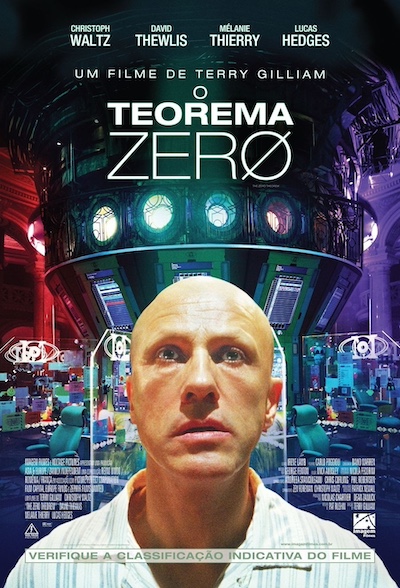
The Zero Theorem casts Christoph Waltz as Qohen Leth, an egghead data processor who is given a mission to make order out of chaos. This being a production by Terry Gilliam – the rambling mad uncle of British cinema – Qohen Leth is clearly screwed from the outset. The Zero Theorem is a sagging bag of half-cooked ideas, a dystopian thriller with runaway dysentery, a film that wears its metaphorical trousers around its metaphorical ankles. In fits and starts, I quite enjoyed it.Read More »

Two children, Jenny and David, meet a leprechaun like creature called Fritz in the woods, however his gold dust is being stolen by a wicked hunter. Only Mimmick the Indian knows that the creature is in our world. As the hunter becomes mad with power, he attempts to capture Fritz and the children. With Mimmick’s help, they escape to the Land of Small, a mystical, magical land.Read More »

Dick Powell plays a murdered dog reincarnated as a rumpled gumshoe–nuff said! (well, not quite, because a lead role for Peggy Dow is always worth a mention! What a shame that she retired so early–she and Powell make an excellent pair…Read More »

Quote:
Yumeji is the final film in youth-gone-berserk auteur Seijun Suzuki’s acclaimed Taisho Trilogy. Sensual and absurdist, it spins a ghost story around the character and work of real-life painter and poet Yumeji Takehisa (1884-1934). The eponymous character — conjured by Suzuki as a chronic philanderer and dreamer played by former rock star Kenji Sawada — is plagued with ideals of perfect beauty and the terror of his own demise. He falls in love with women, but can never capture their hearts. He is constantly escaping his rivals, but can never face them down.Read More »

A young man falls in love with a beautiful woman being chased by sinister masked figures at night. He tries to track her down, and learns she’s being held captive by his father and colleagues who believe she’s a vampire.Read More »

A man rehearses a lecture he is planning to give, analyzing serial killers. He claims that a woman is soon to be murdered in the city. It is inevitable, he explains, as some people are born victims while others are born to kill. He plans to identify the future victim through a series of photographs of violent acts.
Fashion model Gim, played by iconic Spanish actress Teresa Gimpera, finds herself alone in a Barcelona that seems almost deserted. She seeks out her lover, Alvaro, for help. On her way to meet him she is harassed by a series of men and followed by a huge and menacing silver truck with blacked out windows. Through a loud speaker on the truck a mechanical voice orders all persons to leave the city immediately.
Gim finds that Alvaro’s former girlfriend, Miriam, is staying in his house having just returned from London where a terrible but unexplained event occurred. In Alvaro’s “art chamber”, an obviously disturbed Miriam finds a large knife disguised as a metallic silver fish.Read More »

The all-female Heroic Trio are Tung (Wonder Woman), Chat (Thief Catcher), a mercenary, and Ching (Invisible Woman). Initially, they’re on opposing sides – the invisible Ching is kidnapping newborn male babies for her evil master, Tung is trying to solve the crime (rather more effectively than her policeman husband, who is unaware of her secret identity), and Chat, who was formerly employed by Ching’s evil master, is trying to sell her services and inside knowledge to the police. But all three have something in common buried deep in their past…Read More »

A gang of pirates rape the two sole survivors of a ship wreck. The violated girls are rescued by the strange inhabitants of a supposedly haunted island, where they are granted supernatural powers to strike revenge against the pirates.Read More »