“A living saint projected onto the silver screen. Why did I make this film? I wanted to help my friend find a job in Berkeley. It was one of my first attempts to create film as both utilitarian and Art. Cinema must be meaningful and wonderful in a single stroke of camera and mind. Mr. Hayashi was my own, simple example, derived from an experience in a Zagreb city well, where water and daily gossip flowed freely.” – Bruce BaillieRead More »
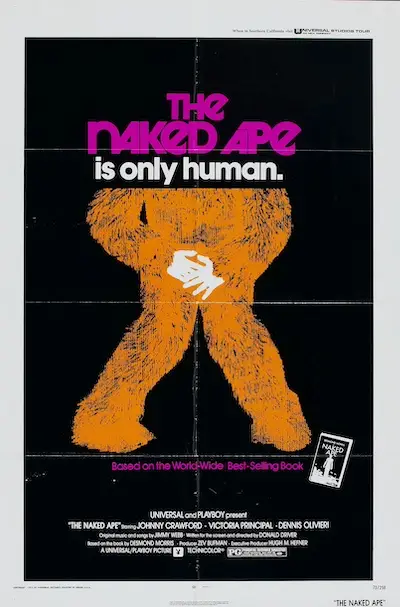
In a series of live action and animated vignettes, the evolution of humanity is depicted and explored, primarily through the experiences of Cathy, a tour guide in a natural history museum, and Lee, a college student infatuated with her.Read More »
A box of stunning family photos awakens grief and lost memories as they are viewed for the first time on camera. Filmmaker Sophy Romvari documents her first-hand experience as an exploration into cinema as therapy in this nonfiction short.Read More »
Poems have the power to uplift. They deal with a certain sense of magical enthusiasm and truth. Poem is a film that lets the viewer experience this power.
A collection of nineteen poems from German-speaking authors, like Heiner Müller, Hermann Hesse, Heinrich Heine, Friedrich Schiller, Paul Celan and many others are performed and recited, taking us on a trip through life: its precious experiences and possibilities, expressions of love and friendship, the suffering of change, and the fear of aging, disease, loneliness and death.Read More »
In an intriguing long take static shot of the oppressively barren Siberian frontier, a converted tank (turned off-road passenger utility vehicle) traverses a rugged terrain that seemingly bisects a rural, indigenous village, disappears in a spray of displaced mud as it sinks partially out of frame into a trench, then momentarily re-emerges to continue on its plodding journey, only to become imperceptible from the horizon once again as it descends into a series of depressions on the gravel road. Watching this sequence (and film) again within the added context of having also seen Twentynine Palms, I couldn’t help but think that Bruno Dumont must somehow have been influenced by this unstructured and glacially paced, yet lucidly pure, challenging, and entrancingly reductive film by Lithuanian filmmaker Sharunas Bartas, a feature that he developed from his earlier diploma film, Tolofaria on the nomadic, indigenous tribe.Read More »