A film set in the front room of a Berlin commune with a large shop window leading to the street outside. The film uses an actor and an actress, a pianist (visible playing the film’s incidental music in the room next door) and occasional people on the street. Scripted action is located inside the room, unscripted on the pavement outside where passers-by occasionally stop and watch the actors in the same way that the audience is watching them on screen from a cinema or the comfort of home. The ‘intellectual/ aesthetic’ rationale for the film (in the director’s words at the time) was to: “signify the similarity of social codes in East and West; to cement – seal with a kiss (there is a central scene where the actor and actress kiss in the traditional Hollywood manner) – two systems that, despite surface differences, seduce and cajole their citizens into obedience and passivity; to emphasise the common bond of bourgeois family values and traditional role-playing prevalent in consumer capitalist and state socialist countries.” An ambitious agenda for a short film, but the serious (immaculately delivered) speeches and exchanges on personal/social positions and solutions are lightened by Woolley’s tongue-in-cheek filmic observations and the comedic role of a pianist, who provides live musical comment and life-support in the room next door. The ending, where the inmates escape from their intellectual prison to the reality of the street outside, is a simple but effective critique of the obsessive search for theoretical answers to everything that hallmarked the early 70’s. [richardwoolley.com]Read More »
Experimental
-
Richard Woolley – Drinnen und Draussen AKA Inside and Outside (1974)
1971-1980ExperimentalGermanyRichard WoolleyShort Film -
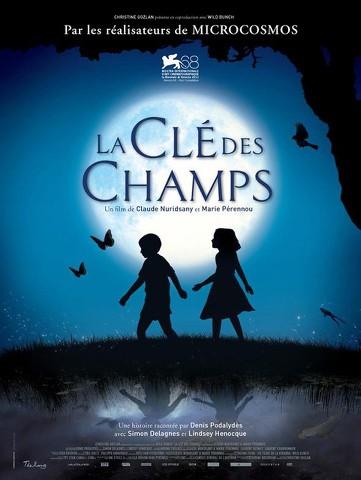
Claude Nuridsany & Marie Pérennou – La clé des champs (2011)
2011-2020Claude NuridsanyExperimentalFranceMarie PérennouRemember childhood holidays frolicking in the countryside? When time is gone, or when grown-ups are gone, will there be no more rolling meadows with fields of poppies, trees to climb and hide in or playful butterflies? What is this secret life all about? At the center of the film, made by the directors of Microcosmos, is a pond, where two lonely children are silently prowling around this small kingdom, seeing, dreaming and playing. Through cameras and microscopes, the filmmakers depict their passion for nature by closely observing plant and animal life and then adding a charming story with human characters. Subtle sound effects and music add a dramatic dimension to their humorous and fantastic observations which are sure to stimulate the imagination of young and old.Read More »
-
Luis Buñuel – Le Fantôme de la liberté aka The Phantom of Liberty (1974)
1971-1980ArthouseExperimentalItalyLuis Buñuel

Quote:
Bourgeois convention is demolished in Luis Buñuel’s surrealist gem The Phantom of Liberty. Featuring an elegant soiree with guests seated at toilet bowls, poker-playing monks using religious medals as chips, and police officers looking for a missing girl who is right under their noses, this perverse, playfully absurd comedy of non sequiturs deftly compiles many of the themes that preoccupied Buñuel throughout his career—from the hypocrisy of conventional morality to the arbitrariness of social arrangements.Read More » -
Artavazd Peleshian – Zemlja Ljudelj aka The Land of the People (1966)
1961-1970Artavazd PeleshianExperimentalUSSR

1966 : La Terre des hommes (Zemlja ljudej)
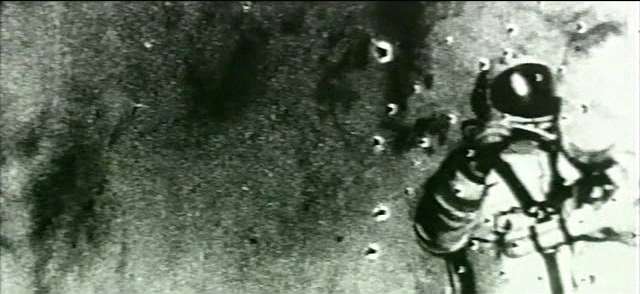
“C’est le thème de la découverte permanente de la beauté du monde, que l’homme réalise dans sa vie et dans son travail, qui est développé dans le cadre d’une grande ville, présentée au cours d’une journée de labeur. Ce film démarre et se termine sur l’image de la sculpture de Rodin : le Penseur, qui tourne sur elle-même. Cette sculpture célèbre est devenue depuis longtemps le symbole de l’expression inaltérable de la pensée humaine. ” (Artavazd Pelechian, Mon cinéma¸Erevan : 1988).Read More »
-
Bruce Baillie – Castro Street / Mr. Hayashi / All My Life (1961 – 1966)
1961-1970ArthouseBruce BaillieExperimentalShort FilmUSA
Three short movies by Bruce Baillie.
1. Castro Street (1966)
Quote:
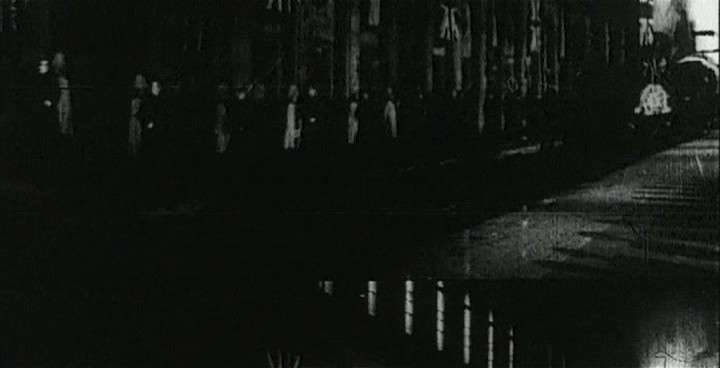
Inspired by a lesson from Erik Satie; a film in the form of a street – Castro Street running by the Standard Oil Refinery in Richmond, California … switch engines on one side and refinery tanks, stacks and buildings on the other – the street and film, ending at a red lumber company. All visual and sound elements from the street, progressing from the beginning to the end of the street, one side is black-and-white (secondary), and one side is colour – like male and female elements. The emergence of a long switch-engine shot (black-and-white solo) is to the filmmaker the essential of consciousness.Read More » -
Peter Tscherkassky – Instructions for a Light & Sound Machine (2005)
2001-2010AustriaExperimentalPeter Tscherkassky

The hero of Instructions for a Light and Sound Machine is easy to identify. Walking down the street unknowingly, he suddenly realizes that he is not only subject to the gruesome moods of several spectators but also at the mercy of the filmmaker. He defends himself heroically, but is condemned to the gallows, where he dies a filmic death through a tearing of the film itself.Read More »
-
Peter Tscherkassky – Cinemascope Trilogy (1997 – 2001)
1991-2000AustriaExperimentalPeter Tscherkassky
_L’Arrivée_
L’Arrivée is Tscherkassky’s second hommage to the Lumiére-brothers. First you see the arrival of the film itself, which shows the arrival of a train at a station. But that train collides with a second train, causing a violent crash, which leads us to an unexpected third arrival, the arrival of a beautiful woman – the happy-end.
Reduced to two minutes L’Arrivée gives a brief, but exact summary of what cinematography (after its arrival with Lumiéres train) has made into an enduring presence of our visual enviroment: violence, emotions. Or, as an anonymous american housewife (cited by T. W. Adorno) used to describe Hollywood’s version of life: “Getting into trouble and out of it again.”(Peter Tscherkassky)Read More »
-
Bruce Baillie – Valentin de las Sierras (1971)
1971-1980Bruce BaillieExperimentalShort FilmUSA
Quote:
Song of revolutionary hero, Valentin, sung by Jose Santollo Nasido en Santa Cruz de la Soledad; Chapala, Jalisco, Mexico.Read More » -
Hans Richter & Jean Cocteau – 8 X 8: A Chess Sonata in 8 Movements (1957)
1951-1960ArthouseExperimentalHans RichterJean CocteauQueer Cinema(s)USAQuote:
A masterpiece of experimental film and a projection of the surrealist vision into cinema by its outstanding artists. Described by Richter as “part Freud, part Lewis Carroll,” it is a fairy tale for the subconscious based on the game of chess. This chess-sonata is played by a host of artists including Paul Bowles, Jean Cocteau, Julian Levy, Jacqueline Matisse, Jose Sert, Yves Tanguy, Marcel Duchamp, Max Ernst and Alexander Calder. “What interested me is the poetry of images, the melody and rhythm of forms and colors” (Hans Richter).Read More »