Experimental

  • Igor Alejnikov & Gleb Alejnikov – Tractors and other shorts (1984 – 1987)

    1981-1990ExperimentalGleb AlejnikovIgor AlejnikovUSSR

    Free Image Hosting at www.ImageShack.us

    From an article by Natasha Drucbek-Meyer:

    Quote:
    Russian Parallel Cinema is a unique tradition. It appeared in the Soviet Union in the beginning of the 80s and existed as if there were no strong system of official film. It appeared when world experimental film had 50 years history, but never gave a glance at it.

    In the end of the 80s, Parallel Cinema came into fashion, as a part of underground culture. The next decade started with strong desire to bury it, as a part of perestroika fashion. Today the third generation of Parallel Cinema is active. <…>

    Social identification of the Parallel Cinema group of film and video makers started in underground and close to CINE FANTOM (historically incorrect name) magazine, the first and only Russian independent selfprinted magazine devoted to cinema. It was founded in Moscow in 1986 by Igor Aleinikov and existed until 1991.

    In 1987 the first CINE FANTOM festival was held in Moscow. Since 1995 the CINE FANTOM club exists. If you type you”ll find the CINE FANTOM site. If you type in net search “Russian film”, you”ll find the CINE FANTOM site again.
    Read More »
  • Peter Gidal – Collected HD Works (1968-1983)

    Short FilmExperimentalPeter GidalUnited Kingdom

    29f7c043f76a2bde437fd0d52a185152

    Peter Gidal’s cinema is anti-narrative, against representation, and fiercely materialist.

    Founded in 1966, the London Film-Makers’ Co-operative started life at Better Books, a counter-culture bookshop on Charing Cross Road, where a group led by poet Bob Cobbing and filmmakers Stephen Dwoskin and Jeff Keen met to screen films. Initially inspired by the activities of the New American Cinema Group in New York, the London Co-op grew into a pioneering organisation that incorporated a film workshop, cinema space and distribution office. During its four-decade history, the Co-op played a crucial role in establishing film as an art form in the UK and participated in a vibrant international film scene. This BFI Player collection brings together new scans of films distributed by and/or produced at the London Co-op.Read More »

  • Vjekoslav Nakic – Kompozicija (1970)

    1961-1970ArthouseExperimentalVjekoslav NakicYugoslaviaYugoslavian Cinema under Tito

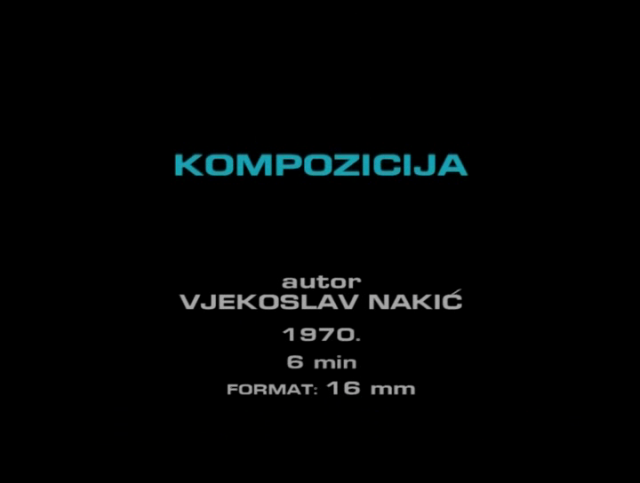
    An experimental film with no plot. Consists mostly of static shots portraying train wagons. The word COMPOSITION in Serbian has a triple meaning here – a train composition, composition of a shot, and music composition. Regarding the third meaning, the “soundtrack” of the film is a 5 second loop that keeps repeating itself over and over again.Read More »

  • Nicky Hamlyn – Not to See Again / Guesswork (1979-1980)

    1971-1980ExperimentalNicky HamlynShort FilmUnited Kingdom

    29f7c043f76a2bde437fd0d52a185152

    Details, fragments, transformations and shadows of a confined space: the toilets of the London Filmmakers’ Co-op in Gloucester Avenue, Primrose Hill, London. This film is neither abstract, nor firmly resolved in terms of what is depicted. Saturated colors and snatches of images are punctuated by darkness, whilst silence is punctuated by mysterious sounds, which are confined to moments when the image is extremely low key. The haunting use of sound and silence and the enigmatic juxtapositions and fragmentation contribute to the film’s overall abstract quality.Read More »

  • Mike Dunford – Collected HD Works (1969-1971)

    1961-1970ExperimentalMike DunfordShort FilmUnited Kingdom

    Mike Dunford’s 8mm films were made within a short period of time between 1968 and 1971 whilst he was a sculpture student at Goldsmiths College. Using offcuts, junk footage banality, politics, performance, pastiche, escalators, flowers, aeroplanes and motor cycles, Dunford experimented with film as a medium which he approached as a materialist sculptor. For Dunford, “the reality of a filmstrip running through the gate, and all its previous incarnations as a representational record of a social reality, an object to be worked on, physically scarred, in its existence and evidence in and of time, its evanescent fragility as modulated light, this was the true subject matter of these films. Four Films includes a ‘walking piece’ with Sally Potter.Read More »

  • Masao Adachi – Gingakei AKA Galaxy (1967)

    1961-1970ArthouseExperimentalJapanMasao AdachiThe Films of May '68

    29f7c043f76a2bde437fd0d52a185152

    Galaxy (Gingakei), in many ways, embodies a transitional point in Adachi’s direction as a filmmaker. Many of his fellow society members offered production support, and in a sense the film could be construed as a continuation of the activities of the Nihon University Film Studies Club. Although at this point Adachi was already involved with Wakamatsu, the film was produced as the inaugural title for the Theatre Scorpio, where people began to take pink cinema seriously. Yet, Galaxy is quite unlike anything else Adachi has been involved in before or since, a substantial piece of art cinema that reveals the singularity of the filmmaker’s vision.Read More »

  • George Kuchar – Symphony for a Sinner (1979)

    USA1971-1980CampExperimentalGeorge KucharQueer Cinema(s)

    29f7c043f76a2bde437fd0d52a185152

    Quote:
    Symphony for a Sinner (1979) was a long, lavishly photographed color film generally considered the magnum opus of the class productions. New York critic and coauthor of Midnight Movies J. Hoberman would rank it as one of the ten best films of the year, while Stan Brakhage would call it “the ultimate class picture.” John Waters, who now visited George regularly whenever he passed through San Francisco, envied the lurid color photography and wanted George to shoot his next picture (which would have been Polyester and didn’t happen). Symphony, Waters said, had the look he craved for Desperate Living (1977).Read More »

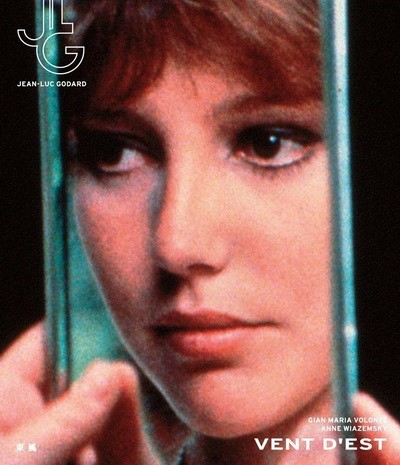
  • Jean-Luc Godard, Jean-Pierre Gorin – Le vent d’est AKA Wind From the East (1970) (HD)

    1961-1970ExperimentalFranceJean-Luc GodardJean-Luc Godard and Jean-Pierre GorinJean-Pierre GorinPolitics

    29f7c043f76a2bde437fd0d52a185152

    “Wind From the East” (“Le Vent D’Est”) is a very deep and highly political discussion about communism, capitalism, art, revolution, intellectualism, Maoism, USSR, tradition, paradigms, poetry… It’s hard to put it in terms of “it’s about…”, since the sequence of images is not based in any form of traditional narrative. In fact, it’s the very opposite of it, its essence sprouting from the need of subversion, a need directly connected to the social/historical/political/artistic context of the 60’s and 70’s: to show things in a different way leads the viewer to see differently, therefore to think differently. A experimental cut, poetic even, given the metaphorical quality of the images. The frontiers of film language fades and encounters those of other art forms, not to weaken the film unity nor its message, but to strengthen them both.Read More »

  • Marta Grimalt – Desierto en tu mente AKA Desert in Your Mind (2017)

    2011-2020ComedyExperimentalMarta GrimaltSpain

    29f7c043f76a2bde437fd0d52a185152

    Desert in your mind is the first feature movie directed, written and produced by Marta Grimalt Canals. This surrealistic road movie is filmed in super 8 bw around California, Barcelona and Mallorca.

    Through his frustrations, an obsessed novelist connects with a dimension where a walking girl encounters weird characters in a mysterious urban world, slowly driving to the peaceful nature of the desert. In this trip between light and shadow, hope for finding an inner mental peace will prevail.

    This movie is characterized for an experimental language, with purposed technical and performing imperfections, wrapped in an organic fantasy effect.Read More »

Back to top button