Experimental

  • Oskar Fischinger – R-1 (Ein Formspiel) (1927)

    Experimental1921-1930GermanyOskar FischingerWeimar Republic cinema


    Quote:
    R-1 (Ein Formspiel)

    “The title R-1, EIN FORMSPIEL VON OSKAR FISCHINGER survives on two different films, one composed entirely of STAFFS … and one composed of small fragments of many different experiments – wax, model planets, atoms, etc. – including a great deal of STAFFS footage. For convenience, I will use the title R-1 to refer to this second, mixed film which appears to be a revised version of the first ….Read More »

  • Jan Peters – Aber der Sinn des Lebens (1990 – 1996)

    1991-2000ExperimentalGermanyJan PetersShort Film

    Aber den Sinn des Lebens hab’ ich immer noch nicht rausgefunden / … but I Still Haven’t Figured Out the Meaning of Life (OmeU)

    Every year on his birthday, Jan Peters filmed one reel of Super-8 material; later on he turned to video. In these few minutes of film he reveals something from and about himself. Maybe it is exhibitionism – the way he chatters on, until the blotches on the film indicate the end of the reel. Enthusiastic, sometimes tired, often doubtful, he, like everyone else, quarrels with what has come about from his own actions. On top of this, Peters, the filmmaker, blurs the individual of the same name with his dense texts and images to create something quite different: Jan Peters, the fictional character.Read More »

  • Jon Wang – From Its Mouth Came a River of High-End Residential Appliances (2018)

    2011-2020ExperimentalHong KongJon WangShort Film

    A drone’s-eye-view recording leads the audience through Hong Kong’s dragon gates, a series of gaps in high-rises that allow dragons to fly from the mountains to the sea while a character relates their relationship with geomancy, remote-selves and therianthropy (the mythical ability to shift shapes).Read More »

  • Oskar Fischinger – Oskar Fischinger: Ten Films (1926-1947)

    USA1921-19301931-19401941-1950AnimationExperimentalOskar Fischinger

    Spirals (1926)
    Study no. 6 (1930)
    Study no. 7 (1931)
    Kreise (1933)
    Allegretto (1936-43)
    Radio Dynamics (1942)
    Motion Painting No. 1 (1947)

    and 3 Early Films:

    Wax Experiments (1921-26)
    Spiritual Constructions (1927)
    Walking from Munich to Berlin (1927)

    Special Features
    * Never-released early experiments, animation drawings and tests
    * Home movies of Oskar, Elfriede and Hans Fischinger in the Berlin Studio, c. 1931
    * Biographical Photographs
    * A Selection of Paintings by Fischinger
    * Film notes by Fischinger and others
    * Biography
    * Preserved films, high definition digital transfers and digitally remastered audio

    Decades before computer graphics, before music videos, even before “Fantasia” (the 1940 version), there were the abstract animated films of Oskar Fischinger (1900-1967), master of “absolute” or nonobjective filmmaking. He was cinema’s Kandinsky, an animator who, beginning in the 1920’s in Germany, created exquisite “visual music” using geometric patterns and shapes choreographed tightly to classical music and jazz. (John Canemaker, New York Times)Read More »

  • Harmony Korine – Trash Humpers (2009)

    2001-2010ExperimentalHarmony KorineHorrorQueer Cinema(s)USA

    29f7c043f76a2bde437fd0d52a185152

    A film unearthed from the buried landscape of the American nightmare, TRASH HUMPERS follows a small group of elderly Peeping Toms through the shadows and margins of an unfamiliar world. Crudely documented by the participants themselves, we follow the debased and shocking actions of a group of true sociopaths the likes of which have never been seen before.Read More »

  • Robert Breer – Fist Fight (1964)

    1961-1970AnimationExperimentalRobert BreerUSA

    29f7c043f76a2bde437fd0d52a185152

    Breer’s extraordinary autobiographical film combines personal and family photos with intense colors, textures and geometric abstractions. Originally presented as part of Karlheinz Sotckhausen’s 1964 premiere of Originale. – Harvard Film ArchiveRead More »

  • Mary Ellen Bute – Finnegans Wake (1966)

    1961-1970ArthouseExperimentalMary Ellen ButeUSA


    29f7c043f76a2bde437fd0d52a185152

    Quote:
    A half-forgotten, half-legendary pioneer in American abstract and animated filmmaking, Mary Ellen Bute, late in her career as an artist, created this adaptation of James Joyce, her only feature. In the transformation from Joyce’s polyglot prose to the necessarily concrete imagery of actors and sets, Passages discovers a truly oneiric film style, a weirdly post-New Wave rediscovery of Surrealism, and in her panoply of allusion – 1950s dance crazes, atomic weaponry, ICBMs, and television all make appearances – she finds a cinematic approximation of the novel’s nearly impenetrable vertically compressed structure.Read More »

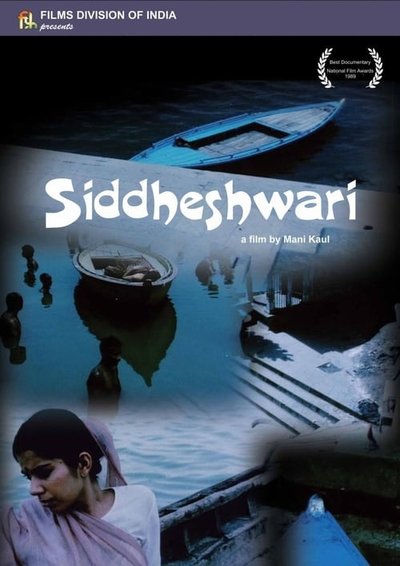
  • Mani Kaul – Siddeshwari (1990)

    1981-1990DocumentaryExperimentalIndiaMani Kaul

    29f7c043f76a2bde437fd0d52a185152

    Summary from The Hindu:
    On paper, Siddheshwari, like so many films commissioned by the Films Division, is a cine-profile, of the Hindustani singer Siddheshwari Devi. However, Kaul turns the genre inside out, and amalgamates literary, theatrical, musical and cinematic forms together to construct an experience of music, instead of simply presenting biographical details or passively documenting the singer’s artistry. The sprawling film blends multiple timelines, realities and geographies to sketch a unique portrait of the artist.Read More »

  • Danièle Huillet & Jean-Marie Straub – Quei loro incontri AKA These Encounters of Theirs (2006)

    2001-2010Danièle Huillet and Jean-Marie StraubExperimentalItalyPhilosophy

    In the last feature-length collaboration between Straub and Huillet before Huillet’s death in 2006, villagers from across the length of Italy — a peasant, a postmaster, a theater director, a mayor, a rope maker — gather in the Tuscan countryside to recite the five final scenes of Cesare Pavese’s Dialogues with Leucò.

    Published in 1947, just two years after the Holocaust and the Second World War and two years before Pavese’s suicide, the Dialogues offer a series of meditations on human destiny, both comical and tragic, between ancient Greek mythological figures. Desperate in their hunger for immortality, mortals are blind to the gift of being human — of their ability to experience joy and suffering; to feel a passing breeze or the touch of another body; to name, remember, and act.Read More »

Back to top button