When a man known as Oroslan dies, the news quickly spreads through a little village, causing grief and emotion. Later on, actions become words and words become stories. In order to overcome the sorrow and restore the natural flow of life, the villagers start sharing their memories about Oroslan, re-creating his image through their tales.Read More »
Quote: Made immediately following the end of the war, Blasetti’s Un giorno nella vita follows the trend of many other Italian films from this moment in history, and investigates the situation of Italian people locked in mortal conflicts on native soil. In this case, the setting is a secluded Convent of Nuns, the inhabitants of which appear to have lived through the war years relatively oblivious and unaffected by the events of the outside world. However, the peace of the Convent is upset, when a group of Italian partisans led by Amedeo Nazzari takes shelter on the grounds of the convent. The Germans are in close pursuit, and one of the partisans is in dire need of medical attention. Elisa Cegani and Mariella Lotti are featured in the cast of nuns, who decide to aid the wounded partisan, and slowly also come to sympathize with the battle weary men.Read More »
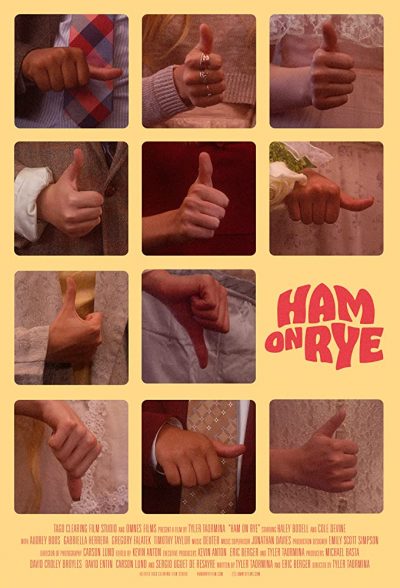
A bizarre rite of passage at the local deli determines the fate of a generation of teenagers, leading some to escape their suburban town and dooming others to remain.Read More »
Mona, a well off widow and working mother, is struggling to raise her six children of different ages ranging from elementary school to university graduating students and all with names beginning in ‘M.’ When she decides to bring home a new husband, she faces a number of challenges. One of the best loved Egyptian classics, on the surface ‘Empire of M’ is a family drama but beneath this story is a call for political liberalism and women’s rights during the Sadat era. The film is based on a novel by Ihsan Abd al-Qudus (‘The Belly Dancer and the Politician’), adapted for the screen by the Egyptian Nobel Laureate Naguib Mahfouz, and features Hussein Kamal (‘The Virgin and the White Hair’) directing a cast led by ‘the First Lady of Arab Cinema’ Faten Hamama (‘The Nightingale’s Prayer’) in an award winning role.Read More »
Proud of his Javanese heritage, Kakang is trying to bring up his children in Malaysia and instill in them his own traditional values and beliefs. Seeing clearly the social inequalities that allow him to be exploited his defiance results in profound consequences for his youngest son, a boy who shares his father’s uncompromising integrity.Read More »
Synopsis: This ensemble piece recounts the lives of a family of farmers by interweaving several different storylines. Holding these stories together is the central figure of a young war widow torn between maintaining her independence and the necessity of remarrying. This is a familiar predicament for Naruse’s heroines, but the film represents a change of pace for the director in many other ways. For one thing, it is his first widescreen color film. Also, while the typical Naruse film takes place in the city, even if its characters often journey into the countryside, here the setting is resolutely rural. The result traces change in postwar Japan (another typical Naruse concern) from the point of view of the farming peasantry, as land reform and economic growth exacerbate the generation gap between restless youngsters and their tradition-bound elders.Read More »
Quote: Beijing, 1988. On the cusp of middle-age, Chen Handong has known little but success all his life. The eldest son of a senior government bureaucrat, he heads a fast-growing trading company and plays as hard as he works. Few know that Handong’s tastes run more to boys than girls. Lan Yu is a country boy, newly arrived in Beijing to study architecture. More than most students, he is short of money and willing to try anything to earn some. He has run into Liu Zheng, who pragmatically suggests that he could prostitute himself for one night to a gay pool-hall and bar owner.Read More »
Peasant Riem loves Kwan but the love is not reprocical. He loves singing Likay. Traditional peasant way of life, watching over buffalo, rice planting, getting fish from rice fields, ceremonies where young men invite girls they like to dance, Songkran ceremony with small pagoda made of sand are gracefully shown. They finally love each other with a promise in front of the local deities tree. But Riem family refuses this love story. Choi, local gangster, injures Kwan with his sword making a scar. This scar is the symbol of their love that nothing can break…Read More »
Directors Hu, Li Hsing and Pai Ching-jui jointly produced “In Four Moods”, with Hu directing the second dazzling episode, “Anger” (1970). Thirteen years later, the three directed the trilogy “The Wheel of Life” (1983), focusing on three lives and three love affairs occurring at different times. Hu’s first episode, though short, was riveting. “Zen and Sense in King Hu’s Films”Read More »