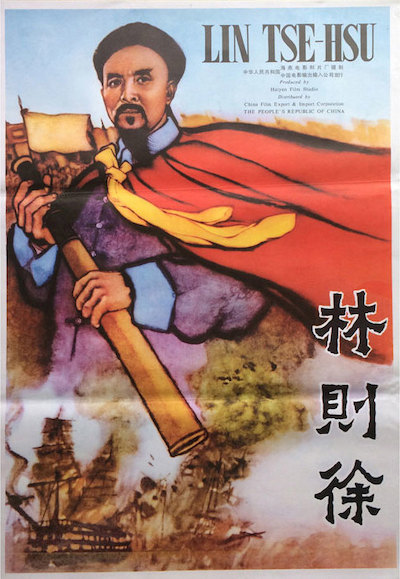

China 1839. Because the British imports of opium into Southern China are creating such widespread medical and economic problems, the weak Manchu emperor Tao Kuang is forced to take action that precipitates the ‘Opium War’.Read More »
China 1839. Because the British imports of opium into Southern China are creating such widespread medical and economic problems, the weak Manchu emperor Tao Kuang is forced to take action that precipitates the ‘Opium War’.Read More »

Synopsis
The mesmeric story of a nine-year-old aboriginal Australian orphan boy who arrives in the dead of night at a remote monastery run by a renegade nun.Read More »
Quote:
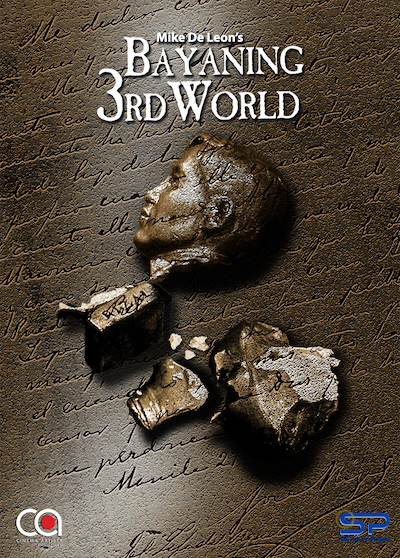
Part-investigative documentary, part-satire and shot entirely in black-and-white, the film tackles the mystery that surrounds the life and death of the Filipino hero, Jose Rizal.Read More »

Voted among the Greatest Egyptian Films at the 1996 Cairo Film Festival
It shows the incredulity of exaggerated hardships a young man has to go through to get married in Egypt, with lower than average incomes, and inability to find a decent job in an ever more competitive world. Basic needs like shelter are even hard to sustain.
The young man and the girl cannot pay the bill, going through a myriad network of all sorts of shady people to help them, to no avail.
In the end, only the walls of the ancient pyramids provide shelter for the homeless lovers.Read More »
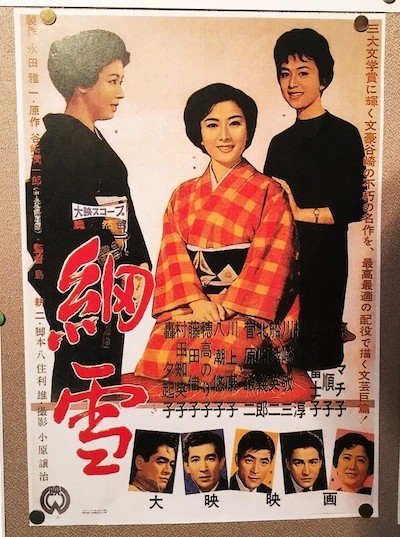
This is the second of three major film adaptation of Junichiro Tanizaki’s famous novel from the 1940s, the first one being the 1950 version directed by Yutaka Abe, the latter one being Kon Ichikawa’s The Makioka Sisters from 1983. Shima’s version stars Machiko Kyo, Fujiko Yamamoto, Junko Kano and Yukiko Todoroki in the roles of the sisters. The novel (and the films) follow the lives of the wealthy Makioka family of Osaka from the autumn of 1936 to April 1941, focusing on the family’s attempts to find a husband for the third sister, Yukiko. It depicts the decline of the family’s upper-middle-class, suburban lifestyle as the specter of World War II and Allied Occupation hangs over the novel.Read More »

hypersquared wrote:
You know you’re in for a ride with this picture from the opening moments. Roehler drops us smack in the middle of a blowout argument between a young couple whose sex life is on the skids. The fight is at that fever pitch where the woman is crying almost convulsively, and where each of them is beginning to lose their grip on saying sensible things and are on the verge of cheap shots and unhelpful attempts at humor. The scene is tangible and familiar to anyone who’s ever grappled with a fraying relationship, and, with a shocking abruptness, we’re immediately in the reality of Robert and Marie.Read More »

PLOT: A classical tragic romance transposed to a World War II setting, Clouzot’s film follows the travails of Manon (Cécile Aubry), a village girl accused of collaborating with the Nazis who is rescued from imminent execution by a former French Resistance fighter (Michel Auclair). The couple move to Paris, but their relationship turns stormy as they struggle to survive, resorting to profiteering, prostitution and even murder. Eventually escaping to Palestine, the pair attempt a treacherous desert crossing in search of the happiness which seems to forever elude them…Read More »

A director of a television series on the history of cinema, who has been grappling with the screenplay of his first feature film, receives an assignment to oversee the installation of a television relay station in a remote region of Zahedan province, near the Afghanistan border. He has already hired Turkoman tribespeople for his film and selected his filming location. Meanwhile his wife, who is working on her Ph.D. dissertation about the Mongol invasion of Iran, attempts to dissuade him from accepting the assignment. One night, while working on his history of the cinema series, the director fantasizes a diagetic world that consists of clever juxtapositions of his different worlds: the history of cinema, the history of the mongol invasion, his own film idea and his imminent assignment to the desert.Read More »

Considered to be one of the best Japanese films of the ‘70s, Tatsumi Kumashiro’s The World of Geisha is a keen examination of the swirling nexus that attracts sex to money and money to power. Set in a geisha house just before the Russo-Japanese War, a beautiful Geisha spends the night with a first-time customer who is about to be married. As an experienced geisha, she is not supposed to become personally involved (or sexually excited), but does anyway. Her fellow geishas, both young and old, become involved with a variety of relationships as Kumashiro boldly analyzes the politics of the period using images of rice riots, Korean uprisings, and the eventual Japanese invasion of Siberia.Read More »