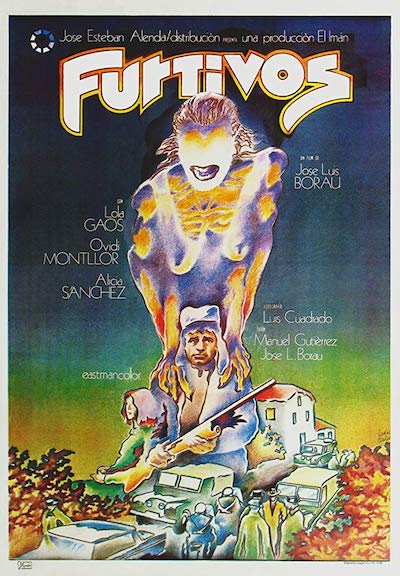
Quote: In 1975 Borau made the film for which he is best remembered Furtivos (Poachers) (1975). The plot, set in the woodlands of Segovia, is a stark story of violence incest and matricide. Co-scripted with Gutierrez Aragon, Borau took the role of the regional governor in the film. He fought the Francoist censorship to have his film released the way he intended. Furtivos was a great commercial and critical success, it won best film, Golden Shell, at the San Sebastián International Film Festival becoming one of the key film of the political transition in Spain.Read More »
Fábri linked two József Balázs novels. The Bálint Fábián story depicts the bitter peasant existence of the father of the protagonist of Hungarians with a profundity and power similar to sociographic literature of the 1930s.
Bálint Fábián is killing people on the Italian front in 1918. At home, his sons strangle the priest who is the lover of their mother. On returning from the front, instead of discovering a robust wife Bálint finds a deranged woman. He is to be the carriage driver for the baron but during the ‘white terror’ he showed solidarity with his fellow labourers, and he returns to his sons as a shepherd. His wife dies, his sons abandon him…Read More »
Quote: Harry Baer plays a newly released ex-convict who slowly but surely finds his way back into the Munich criminal underworld. Meanwhile, his attentions are torn between two women (Hanna Schygulla and Margarethe von Trotta) and the friend (Günther Kaufmann) who shot his brother. This sensual, artfully composed film by Rainer Werner Fassbinder is a study of romantic and professional futility.Read More »
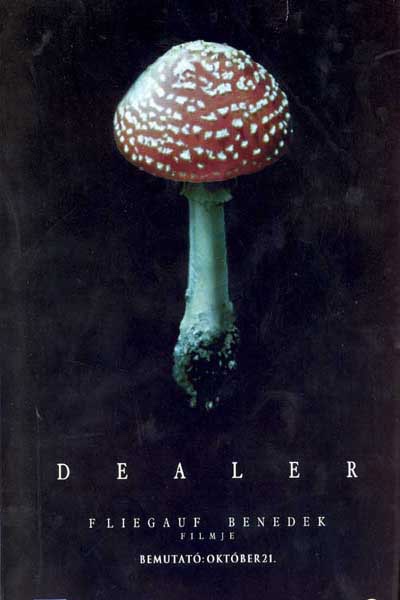
Quote: In an impressive follow up to his debut film Forest, Benedek Fliegauf tells the uncompromising story of a day in the life of a drug dealer. His clients include the leader of a religious sect, a friend who needs a final fix, a former lover who has had his child, a student, and a black marketeer. Fliegauf’s film recreates life in a city that resembles a ghost town, an alienated world with its own priorities and realities. It is, he says ‘. an imaginary city with a strongly spiritualist atmosphere. This necropolis is the film’s real protagonist’. His subject is depression (‘a state of consciousness that saturates the life of .too many of us’) and the film provides a deeply felt testament to the realities of a painful and still little understood world. An admirer of Béla Tarr, Fliegauf similarly allows his characters to exist in extended (or real) time, with a minimalist style in which every sound or line of dialogue becomes privileged. The framing, camera movement, and sound design combine to create hypnotic film-making of a high order. It is a demanding and essential film and no mere exercise in miserabilism.Read More »
May 1960. Mount Everest, the second step under the cliff. The four members of the China Everest Climbing Commando are attacking the most difficult and most difficult “second step”. This is their fifth assault. The first four failures have cost them too much physical strength – …finally, the wind and snow stop the gap.Read More »
Quote: João and Jaime are joyful taxi drivers. The two fall in love with various women. Meanwhile the company they work for is managed by the widow Alexandrina. Her son, Raul, steals the business safe to pay a game debt. When the disappearance of the money is noticed, Raul puts the blame on João. Jaime does all he can to save his friend’s honor, forcing Raul to admit his fault.Read More »
A rare blaxploitation classic starring Vonette McGee & Max Julien, Thomasine & Bushrod was intended as a counterpart to Bonnie and Clyde. This pair of thieves, who operate in the American south between 1911 and 1915, pattern themselves after Robin Hood and hold the White Establishment as (a ‘modern-day’) Sheriff of Nottingham. Thomasine and Bushrod steal from rich, white capitalists, then give to Mexicans, Native Americans and poor whites.Read More »
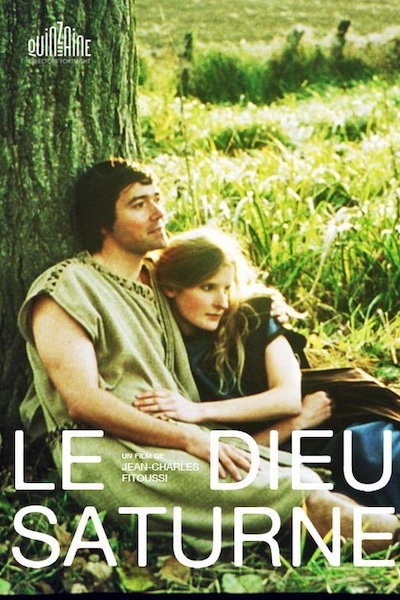
Synopsis (EN) : Laurent comes to visit his father not far from Bethune. But his father, who lives a hermit’s life deep in the woods, has only one thing on his mind: to do away with his six children in order to relieve them of the miseries of life. Welcomed at the Caboche farm where his brother Frederic works (Frederic advises him not to try to see their father), Laurent is delighted to see hardy 81 year old Alfred again. The gods are not far off, and, despite all, the pleasures of existence too.Read More »
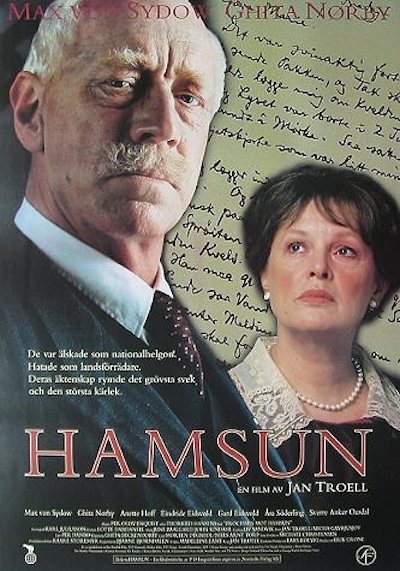
Norwegian Nobel Laureate Knut Hamsun’s controversial support for the Nazi regime during WW2 and its consequences for the Hamsun family after the war.Read More »