In a poor village by the Manila Bay breakwater, brothers Buboy and Basilio come to the city to escape from the violence at home. They meet a prostitute named Pakita and become close with her when Basilio treats her wounds. All they want is to lead normal lives, but the town’s leader Dave has knavish interruptions that await them.Read More »
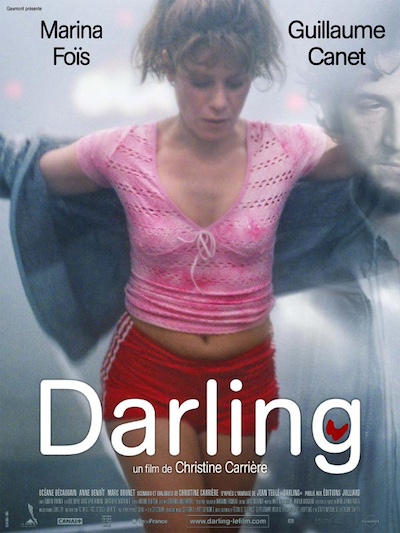
On a farm in the West of France, Catherine a plump little girl, dreams of escaping her joyless life. Her parents do not seem to know what a heart is and her father can get violent occasionally. Her only hope lies in those big trucks that drive zooming along the main road under her bedroom window.Read More »
‘In NOTRE DAME DE LA CROISETTE’ Schmid turns his abundant eye on that loved and despised Mecca of European film life, the Cannes International Film Festival. Bulle Ogier stars as a woman who goes to Cannes and, lost in its chaos and unable to obtain tickets, ends up watching it on television from her hotel room. But the spectacle-in-the-box brings her much more of the world than she bargained for, and she finds refuge in her dreams of Cannes as it was thirty years ago, when living myths walked the earth: Picasso, Henri Langlois, Maria Callas, Cary Grant, Elizabeth Taylor, Arletty, and Jean Cocteau.
Le Festival International du Film de Cannes, 1981. Une jeune femme, de passage, peine à voir un seul des films du festival. De guerre lasse, repliée dans sa chambre d’hôtel, elle le regarde à la télévision.Read More »
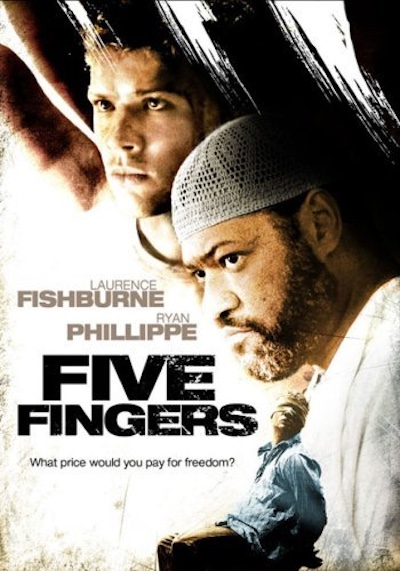
Martijn (Ryan Phillippe) is a Jazz pianist living in Holland who says goodbye to his girlfriend (Touriya Haoud) so he can travel to Morocco for a presentation to a food charity. He is being accompanied by professional bodyguard, Gavin (Colm Meaney), who is hired to protect him but they are kidnapped shortly after their arrival. The gang of kidnappers are led by Ahmet (Laurence Fishburne) and they begin to torture Martijn, hoping to find the true motives of his arrival.Read More »
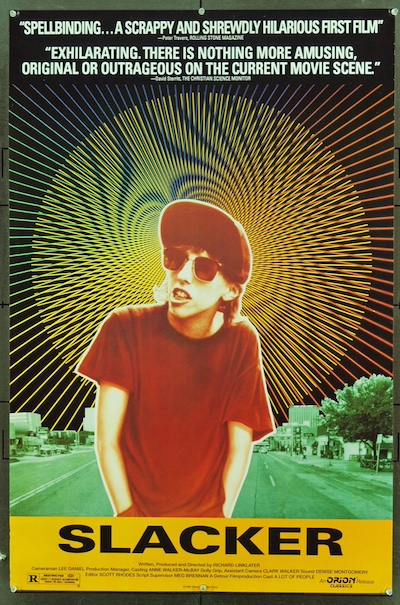
Quote: “Slacker” is a movie with an appeal almost impossible to describe, although the method of the director, Richard Linklater, is as clear as day. He wants to show us a certain strata of campus life at the present time — a group of people he calls “slackers,” although anyone who has ever lived in a campus town will also recognize them under such older names as beatniks, hippies, bohemians, longhairs, peaceniks, weirdos or the Union Regulars (for surely every campus with a student union also has a seemingly permanent body of current and former students who hang around all day drinking free coffee refills and wondering whether life as they know it exists outside the union).Read More »
Quote: With an ensemble cast of both Israeli and Palestinian actors, “Laila in Haifa” explores the interweaving stories of five women set over one night in a club in the port town of Haifa. Laced with wry humor, Amos Gitai presents a candid snapshot of contemporary life in one of the last remaining spaces where Israelis and Palestinians come together to engage in face‐to‐face relationships.Read More »
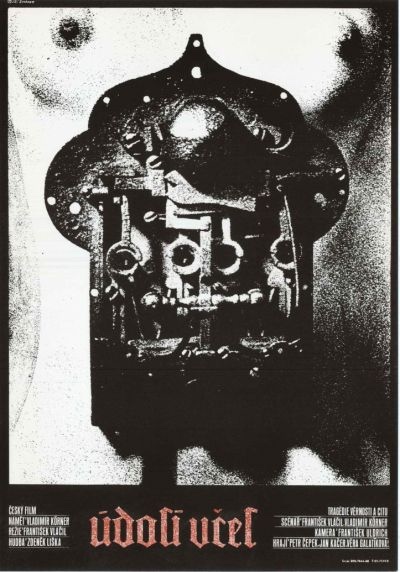
The partnership between director František Vláčil and screenwriter Vladimír Körner yielded films including Adelheid (Adelheid, 1969), Pověst o stříbrné jedli (The Legend of the Silver Fir, 1973) and Stín kapradiny (The Shadow of a Ferns, 1984). But it is the historical drama Údolí včel (The Valley of the Bees, 1967) that is widely regarded as the pair’s greatest collaborative achievement. Released in cinemas shortly after Vláčil’s highly acclaimed Marketa Lazarová (Marketa Lazarová, 1967), The Valley of the Bees came about as a result of efforts to reuse the props and costumes from the director’s previous opus – hitherto the most expensive Czechoslovak film of all time. Körner’s compact concept is very different from the ambitious, expansive adaptation of author Vladislav Vančura’s historical novel Marketa Lazarová. While the former film told the story of Christianity’s battle with paganism, The Valley of the Bees is more of a timeless picture representing a battle between asceticism and freedom. Read More »
Quote: With the aforementioned anti-biography, 39-year-old Damien Odoul, author of the film L’Histoire de Richard O., brings in something of his own nature into the main character Richard O (Mathieu Amalric), who, together with his best friend (Stéphane Terpereau) lives an anarchical life, filled up with crazy sex which proves fatal. His love partners are women selected by video tapes who are needed for future erotic films and that is the starting inspiration for Richard O. to involve us in his sex-video anarchy. This courageous film shows us a totally different Amalric who is simply perfect as Richard O. In one typical sequence, being on the bank of the river Sena with a girl, after having mad-sex, Richard O. with all the anarchy in himself yells at the passing boat with tourists: “Hey tourists! Paris doesn’t give a shit for you!”Read More »