Drama

  • Harpreet Dehal – Oceania (2008)

    2001-2010ArthouseDramaHarpreet DehalUSA

    29f7c043f76a2bde437fd0d52a185152

    Quote:
    What does a 17 year old know about film making? Watch and see.

    Quote:
    Two teenagers deal with their shattered family-life in a small California coastal town. Through a series of fragmented memories, one encounters sexuality and abuse, murder and suicide, truth and lies. Their lives so suddenly connect without anyone ever realizing the shared desire in their search for fulfillment. Written by Harpreet DehalRead More »

  • Dinos Dimopoulos – Kontserto gia polyvola (1967)

    Drama1961-1970Dinos DimopoulosGreece

    29f7c043f76a2bde437fd0d52a185152

    Athens, right before the beginning of WW2. Niki, an employee of the General Army HQ, is
    accused of giving classified documents to an Italian agent. She is blackmailed with threats about her brother’s life who is studying in Italy. She makes no effort to defend herself and doesn’t care if she gets convicted to death sentence, but she accepts the cooperation of General Dareios, to keep giving army documents to the Italians only these documents are falsified to deceive the enemy. A Greek captain, named Theodorou, gets involved in the case. He is in love with Niki. He gets arrested and accused for stealing the documents and is sent to martial court, where he is sentenced to death penalty….Read More »

  • Dino Risi – Fantasma d’amore (1981)

    1981-1990Dino RisiDramaItaly

    Quote:
    After witnessing the brutal murder of an elderly lady, a man has an encounter with a bizarre woman who claims to an old lover of his… A lover who apparently committed suicide years ago.Read More »

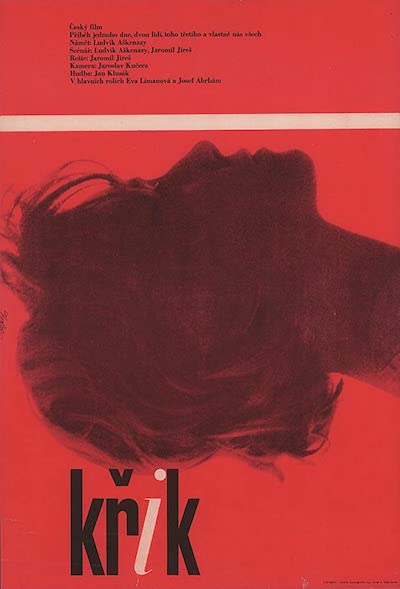
  • Jaromil Jires – Krik AKA The Cry (1963)

    Drama1961-1970Czech RepublicJaromil Jires

    Quote:
    Czechoslovak cinema was reinforced in 1963 by the emergence of Jaromil Jireš. He made his directing debut with a simple narrative based on a book by Ludvík Aškenazy (who also wrote the screenplay). Similarly to contemporaries at Prague’s FAMU film academy, this talented young filmmaker was influenced by the documentary approach to making feature films. The protagonists in Křik (The Cry), husband and wife Slávek and Ivana, experience a rather important day in their lives during which they are separated from each other. Ivana lies in the delivery room giving birth to their first child, while Slávek is repairing televisions at work. The spouses dwell on themselves and the life they have up until now experienced with each other. Jireš and cameraman Jaroslav Kučera use a hidden camera perspective, something that was quite unusual at the time. The director also uses non-actors to add authenticity to the narrative. Slávek is, however, played by the experienced Josef Abrhám.Read More »

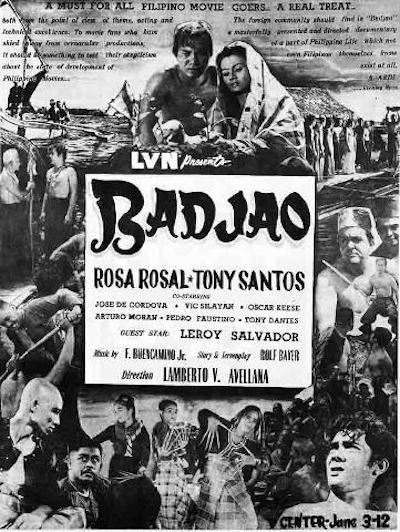
  • Lamberto V. Avellana – Badjao AKA Badjao, the Sea Gypsies (1957)

    1951-1960ClassicsDramaLamberto V. AvellanaPhilippines

    Plot:
    An classic film by film studio LVN, largely because of shining performances by Rosa Rosal and Tony Santos. It won the award for best direction (Lamberto V. Avellana, National Artist for Theater and Film in 1976), best story (Rolf Bayer), best editing (Gregorio Carballo), and best cinematography (Mike Accion) at the 1957 Southeast Asia Film Festival held in Tokyo.
    A story about the Badjaos and the Tausogs, rival tribes for centuries. The Badjaos, a group of sea gypsies, ply the sea for food and for pearls.Read More »

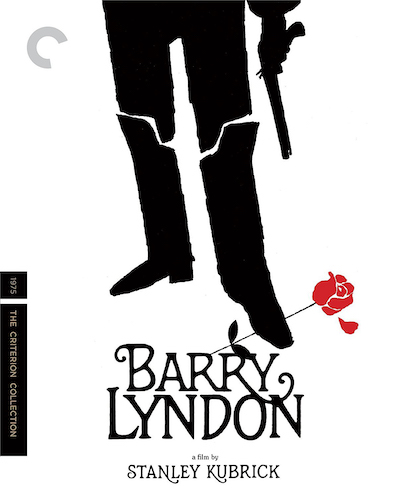
  • Stanley Kubrick – Barry Lyndon (1975)

    1971-1980DramaEpicStanley KubrickUnited Kingdom

    Quote:
    Stanley Kubrick bent the conventions of the historical drama to his own will in this dazzling vision of a pitiless aristocracy, adapted from a novel by William Makepeace Thackeray. In picaresque detail, Barry Lyndon chronicles the adventures of an incorrigible trickster (Ryan O’Neal) whose opportunism takes him from an Irish farm to the battlefields of the Seven Years’ War and the parlors of high society. For the most sumptuously crafted film of his career, Kubrick recreated the decadent surfaces and intricate social codes of the period, evoking the light and texture of eighteenth-century painting with the help of pioneering cinematographic techniques and lavish costume and production design, all of which earned Academy Awards. The result is a masterpiece—a sardonic, devastating portrait of a vanishing world whose opulence conceals the moral vacancy at its heart.Read More »

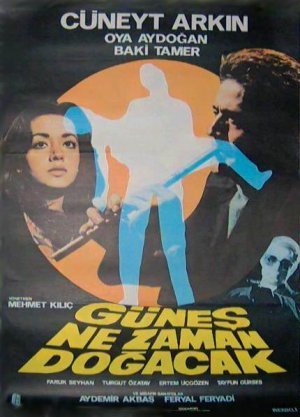
  • Mehmet Kilic – Gunes ne zaman dogacak AKA When the Sun Rises (1978)

    1971-1980DramaMehmet KilicTurkey

    29f7c043f76a2bde437fd0d52a185152

    Yavuz Mehmedov Crimean Turks (cüneyt arkin) against the religious activities that are prohibited by the regime for years because of the village mosque minaret had been shot out of the door lock reads the morning prayer call to prayer.

    Because of this movement were arrested and tortured by soldiers and a secret headquarters in order to brain wash yavuz imprisoned, for years, hoping to escape to Turkey one day self-identity by hiding in the elevated Alpgiray Nuriyev kgb (baki tamer) in the support cells are removed. asylum in Angola, the two friends are moving to Turkey on a ship.Read More »

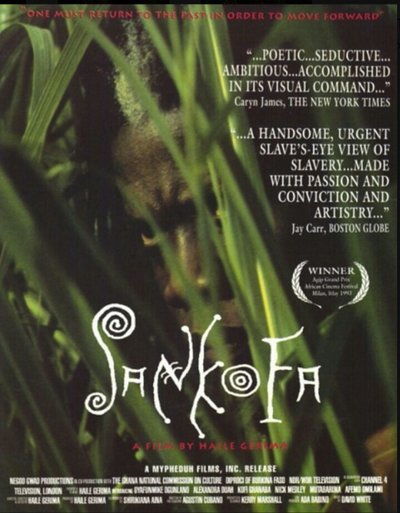
  • Haile Gerima – Sankofa (1993)

    1991-2000ArthouseBurkina FasoDramaHaile Gerima

    29f7c043f76a2bde437fd0d52a185152

    From the New York Times review:
    “In “Sankofa,” a contemporary African-American woman travels back in time and experiences slavery. Haile Gerima’s poetic and precisely detailed film takes its audience into its heroine’s life and mind as her moral sense is challenged and changed. No viewer can avoid the discomforting questions the film so eloquently raises.

    The opening sequences, set and filmed in Ghana, are alternately seductive and off-putting. Among drums and chants, a voice invokes ancestral ghosts. “Spirit of the dead, rise up,” the voice says, “and claim your story.” The film’s title is a West African term meaning to reclaim the past in order to go forward, and “Sankofa” stumbles only in its depiction of the present.Read More »

  • D.W. Griffith – Lady of the Pavements (1929)

    Drama1921-1930D.W. GriffithUSA

    29f7c043f76a2bde437fd0d52a185152

    Art Cinema Corporation production; distributed by United Artists Corporation. / Produced by Joseph M. Schenck. Screenplay by Sam Taylor, with dialogue by George Scarborough, from the short story “La Paiva” by Karl Gustav Vollmoeller. Set design by William Cameron Menzies. Costume design by Alice O’Neill. Theme song “Where Is the Song of Songs for Me?” by Irving Berlin. Cinematography by Karl Struss. Assistant cameraman, G.W. Bitzer. Intertitles by Gerrit Lloyd. Edited by James Smith. Music arrangement by Hugo Riesenfeld. Presented by Joseph M. Schenck. / © 4 February 1929 [LP79]. Premiered 22 January 1929 at the United Artists Theatre in Los Angeles, California. General release, 16 February 1929. / Standard 35mm spherical 1.37:1 format. Movietone sound-on-film sound system. / A silent version of the film was also released in eight reels at 7495 feet. / Silent film, with talking sequences, synchronized music and sound effects.Read More »

Back to top button