Description: While it rolled in and out of theaters quickly during its brief release in 1978 and hasn’t gained much of a reputation since, Straight Time was one of Dustin Hoffman’s best films of the 1970s, and seen today it still stacks up as one of the finest performances he’s ever given onscreen. Hoffman is a fascinating bundle of misdirected energy and guy-wire tension as Max Dembo, an ex-con whose efforts to go straight seem doomed to fail, though his own impulses hardly keep him on the straight and narrow. Hoffman is perfectly natural and compelling as a blue-collar criminal, and he’s lucky to have a superb supporting cast. M. Emmet Walsh has never been better as Earl Frank, a duplicitous parole officer, and Theresa Russell delivers an absorbing and ultimately heart-breaking turn as Jenny, a girl who falls in love with Dembo; Gary Busey, Harry Dean Stanton, and Sandy Baron are similarly at the top of their form here. Ulu Grosbard’s direction (he took over from Hoffman, who began the project but changed his mind about directing after a few days of shooting) is lean, intelligent, and atmospheric, and the screenplay (by Jeffrey Boam and Edward Bunker, based on Bunker’s novel No Beast So Fierce) manages to make Dembo’s story tragic and believable without ever asking the audience to forgive or forget his complicity in his crimes. Straight Time is an overlooked and understated masterwork, and well worth searching out on home video.Read More »
Drama
-
Ulu Grosbard – Straight Time (1978)
1961-1970CrimeDramaUlu GrosbardUSA -
Jafar Panahi – Offside (2006)
2001-2010ComedyDramaIranJafar PanahiSince women are banned from soccer matches, Iranian females masquerade as males so they can slip into Tehran’s stadium to see the game between Iran and Bahrain. The ones who are caught and arrested are taken to a holding area and guarded by soldiers. One sympathetic soldier agrees to watch the game through a peephole and recount the action to the impatient fans.Read More »
-
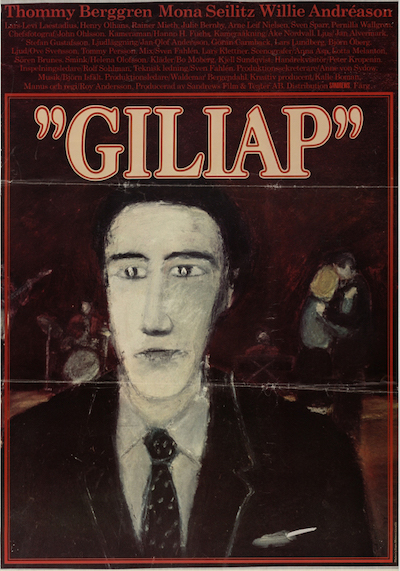
Roy Andersson – Giliap (1975)
1971-1980CrimeDramaRoy AnderssonSweden

Quote:
Roy Andersson premiered his second feature-length film, “Giliap”, in 1975. The film is a marked departure from “A Swedish Love Story”, and that is no accident. Success brought pressure onto Andersson to make “A Swedish Love Story II”. But he didn’t want to be someone who churned out yet another film in the same spirit, and then one more… So he changed style drastically in “Giliap”. Andersson had great hopes for the film, but it found neither a public nor positive reviews. “Giliap” did, however, win a larger reception abroad, especially in France. Yet despite its meagre successes in Sweden, the film is interesting, not least aesthetically. For here one finds the first seeds of Andersson’s distinctive film style.
In “Giliap”, actor Thommy Berggren plays a wandering day-labourer who takes employment at the fading Hotel Busarewski. The hotel is run by a wheelchair-bound misanthrope who harshly deals out orders to his staff as he reminisces about Busarewski’s former golden days.Read More » -
Sidney Lumet – Prince of the City (1981)
Drama1981-1990CrimeSidney LumetUSA

A New York City narcotics detective reluctantly agrees to cooperate with a special commission investigating police corruption, and soon realises he’s in over his head, and nobody can be trusted.Read More »
-
Barry Jenkins – Little Brown Boy (2003)
2001-2010Barry JenkinsDramaMumblecoreShort FilmUSABarry’s BFA thesis film.
Barry Jenkins is a filmmaker born and raised in the inner-city of Miami. After completing a bachelor’s degrees in film and creative writing, he relocated to Los Angeles where he worked as a director’s assistant and development associate for Harpo Films. Barry currently resides in San Francisco, working for the rent check by day and writing, writing and writing by night. He is the writer-director of the short films My Josephine and Little Brown Boy. Medicine For Melancholy is his first feature film.Read More »
-
Dia Sokol Savage – Sorry, Thanks (2009)
2001-2010ComedyDia Sokol SavageDramaMumblecoreUSAPlot: Reeling from a brutal break-up, Kira sleeps with Max, a charming but disheveled wreck already committed to long-term girlfriend Sara. Max (no emotional sophisticate) becomes obsessed, mostly with Kira, but vaguely with his curious lack of conscience as well. Kira, fighting to win a job she hates and running aimless romantic loops, faces the precarious double challenge of choosing a next step and charting a course back to sanity. Good luck leading with your heart, when your heart is an utter emotional idiot.Read More »
-
Boris Frumin – Viva Castro! (1994)
1991-2000ArthouseBoris FruminDramaRussia
David Robinson, The Times of London wrote:
Frumin has [a] gift for discovering the unexpected in every shot and character, and a lifelike way of inextricably mingling farce and tragedy.-oOo-
One of the best Russian films of the 1990s, Viva Castro! is set in a small Russian town in 1965. “At this time Fidel Castro was as important for the Russian people as Elvis Presley was for the Americans,” says the director, Boris Frumin, who returned to Russia after sixteen years of exile in America to make this film.
Young Kolya is in love with his singing teacher, but his life isn’t easy. His father skips town after stealing some coins from a museum and his mother is sent to a labor camp as punishment. When the father returns a year later, Kolya becomes involved with the pretty young woman hired to nurse him.Read More »
-
Márta Mészáros – Szabad lélegzet AKA Riddance (1973)
1971-1980ArthouseDramaHungaryMárta Mészáros
Jutka, a young woman who works in a factory, falls in love with Andras, a university student. She pretends to be a student, to him and to his parents, and begins to live a lie. Finally she rebels against Andras and his demands and the social conventions that forced her to live a lie.Read More »
-
Mikio Naruse – Ukigumo AKA Floating Clouds (1955)
Drama1951-1960JapanMikio NaruseRomanceQuote:
“The elegance and indisputable hard punch of Naruse’s storytelling become immediately clear the moment the lovers kiss and the director cuts, midclinch, to an almost identical shot of them kissing in the past, an edit that suggests this is a passion that transcends even time and space.”
– Manohla Dargis, New York Times (October 28, 2005)Read More »