Drama

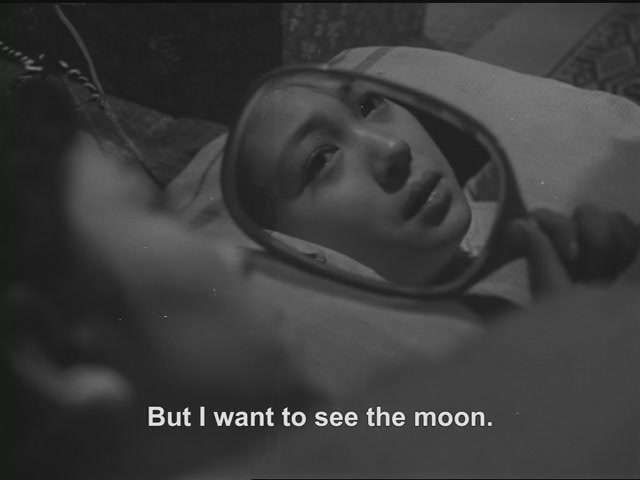
  • Bernardo Bertolucci – Prima della rivoluzione AKA Before the Revolution (1964)

    Drama1961-1970ArthouseBernardo BertolucciItaly

    Quote:
    The study of a youth on the edge of adulthood and his aunt, ten years older. Fabrizio is passionate, idealistic, influenced by Cesare, a teacher and Marxist, engaged to the lovely but bourgeois Clelia, and stung by the drowning of his mercurial friend Agostino, a possible suicide. Gina is herself a bundle of nervous energy, alternately sweet, seductive, poetic, distracted, and unhinged. They begin a love affair after Agostino’s funeral, then Gina confuses Fabrizio by sleeping with a stranger. Their visits to Cesare and then to Puck, one of Gina’s older friends, a landowner losing his land, dramatize contrasting images of Italy’s future. Their own futures are bleak.Read More »

  • Alexandre Astruc – Albert Savarus (1993)

    Drama1991-2000Alexandre AstrucFrance


    29f7c043f76a2bde437fd0d52a185152

    Based on the 1836 novel by Balzac (wiki)

    Quote:
    Script-writers who adapt Balzac or Dostoievsky excuse the idiotic transformations they impose on the works from which they construct their scenarios by pleading that the cinema is incapable of rendering every psychological or metaphysical overtone. In their hands, Balzac becomes a collection of engravings in which fashion has the most important place, and Dostoievsky suddenly begins to resemble the novels of Joseph Kessel, with Russian-style drinking-bouts in night-clubs and troika races in the snow. Well, the only cause of these compressions is laziness and lack of imagination. The cinema of today is capable of expressing any kind of reality. What interests us is the creation of this new language. (…) The fundamental problem of the cinema is how to express thought.
    Alexandre Astruc, The Birth of a New Avant-Barde: La Camera-Stylo (1948)Read More »

  • Rafi Bukai – Avanti Popolo (1986)

    1981-1990ComedyDramaIsraelRafi Bukai

    June 11th 1967, the Six-Day War is over and the cease fire has just begun. We follow the journey of Gassan and Haled, two Egyptian soldiers whose only wish is to make their way through the Sinai desert and safely reach the Suez Canal. Thus begins a comical, almost surrealistic saga during which they meet various groups of people across the desert, including Israeli soldiers on patrol and a pushy news reporter.Read More »

  • Paul Schrader – Auto Focus (2002)

    2001-2010DramaPaul SchraderUSA

    29f7c043f76a2bde437fd0d52a185152

    Review by Michael Hastings (Allmovie)

    Quote:
    Though Paul Schrader isn’t often tapped to direct scripts other than his own, his touch proves essential to Auto Focus, a true-life tale of sex, celebrity, and videotape that seems tailor-made to the man who dreamed up Taxi Driver and American Gigolo. Schrader’s clinical, detached directorial style proves well-matched to the genial, humorous tone of Michael Gerbosi’s script; it’s like Hardcore without all the proselytizing (and without the sight of George C. Scott in a campy porn-producer costume). What Auto Focus is most interested in is not the narcotizing effects of anonymous sex — though that’s undeniably a big part of it — but the latent homosexuality lurking behind Bob Crane and John Carpenter’s buddy-buddy sexcapades. Finally cast in a role that successfully sends up and subverts his All-American charm, Greg Kinnear perfectly captures Crane’s kid-in-a-candy-store sexual awakening; meanwhile, Willem Dafoe underlines the desperation at the heart of the swinging lifestyle. Schrader overplays his hand in the film’s “downward spiral” sequences, switching to hand-held camera and bleached-out film stock, but even those minor technical miscalculations don’t detract from the film’s portrait of Crane as a man whose determination to lead the unobserved life ultimately led to his death.Read More »

  • Paul Schrader – Mishima: A Life in Four Chapters (1985)

    Drama1981-1990AsianPaul SchraderQueer Cinema(s)USA

    29f7c043f76a2bde437fd0d52a185152

    Quote:
    A fictional account of the life of Japanese author Yukio Mishima, combining dramatizations of three of his novels and a depiction of the events of November 25th, 1970.Read More »

  • Masaki Kobayashi – Magokoro AKA Sincere Heart (1953)

    1951-1960DramaJapanMasaki Kobayashi

    Image Hosted by ImageShack.us

    29f7c043f76a2bde437fd0d52a185152

    Quote:
    A young student falls into a hopeless romantic attraction to an invalid girl whom he can only see from afar.

    Description: SINCERE HEART (1953, aka MAGOKORO) was Masaki Kobayashi’s second film as a director — but as with his first, YOUTH OF THE SON, it is something of a hybrid work, influenced heavily by his longtime mentor Keisuke Kinoshita, who wrote the screenplay. The resulting film is a deeply passionate and sentimental drama about a young student (Akira Inshihama) who falls into a hopeless romantic attraction to an invalid girl (Keiko Awaji) whom he can only see from afar.Read More »

  • Atom Egoyan – The Sweet Hereafter [+Extras] (1997)

    1991-2000ArthouseAtom EgoyanDramaUSA

    Quote:
    The Sweet Hereafter deals with the effects of a tragic school bus crash on a ravishingly beautiful small town set amid the scenic mountains of British Columbia. Outsider Ian Holm arrives, much like the Pied Piper, a lawyer trying to lure the citizens of the town into a class-action suit that would allow the mourning parents to try to sate their immense loss with the small solace of cash. Where Egoyan has dealt with emotional traumas of different sorts of outsiders and marginal characters in the past, with this adaptation, he has made a stirring portrait of the effects of loss within a community. –Ray PrideRead More »

  • Jacques Rivette – La Belle noiseuse AKA The Beautiful Troublemaker (1991)

    1991-2000ArthouseDramaFranceJacques Rivette

    29f7c043f76a2bde437fd0d52a185152

    synopsis
    In this fascinating and unconventional examination of the creative process, an artist near the end of his career finds new inspiration in a young model. Edouard Frenhofer (Michel Piccoli) is a famous and well-respected artist who lives in a comfortable estate in the French countryside. At the age of 60, Frenhofer considers his career as a painter to be over; he says he no longer feels any inspiration to create, and his last attempt at a major work, a nude study of his wife Liz (Jane Birkin) called “La Belle Noiseuse” (The Beautiful Nuisance), has sat unfinished for ten years. Just as Frenhofer has lost his enthusiasm for his art, he has also lost his passion for Liz; their relationship is polite and friendly, but without enthusiasm. When Frenhofer tells Nicolas (David Bursztein), his young protégé, that he no longer feels the desire to paint, Nicolas suggests that he needs a more inspiring subject, and he offers his girlfriend Marianne (Emmanuelle Béart) as a model. Frenhofer is taken with Marianne’s beauty, and, with Liz’s cool approval, he and Marianne spend several arduous sessions together, exchanging ideas and opinions as Frenhofer methodically attempts to create a final masterpiece. While La Belle Noiseuse runs 240 minutes, director Jacques Rivette also prepared an alternate version, La Belle Noiseuse – Divertimento, which runs 120 minutes, features a different framing sequence, and incorporates takes unused in the original cut.Read More »

  • Luis Trenker – Der verlorene Sohn AKA The Prodigal Son (1934)

    1931-1940ClassicsDramaGermanyLuis TrenkerThird Reich Cinema


    29f7c043f76a2bde437fd0d52a185152

    PLOT: “Mountain-film” specialist Luis Trenker plies his trade with his usual expertise in the Austrian Velorene Sohn (Prodigal Son). Trenker himself plays the leading role of Tonia Feuersinger, a Tyrolean mountaineer bound and determined to scale the American Rockies. He also wants to journey to the States to court pretty American tourist Lillian Williams (played by pretty American actress Marian Marsh). Leaving his broken-hearted local girlfriend (Maria Andergast) behind, Tonio treks to New York, but never quite makes it to the Rockies; instead, he gets a welding job on a skyscraper, then achieves success as a prizefighter. In the end, however, he realizes that his heart is still in the Tyrol and thus returns to the arms of his hometown sweetheart. Though aimed at the German-speaking clientele, Verlorene Sohn was financed in Hollywood by Universal Pictures.
    -allmovie.comRead More »

Back to top button