Bettina Rheims and Serge Bramly’s Rose, c’est Paris is both a photographic monograph and a feature-length film on DVD. This extraordinary work of art, in two different but interlocking and complementary formats, defies easy categorization. For in this multi-layered opus of poetic symbolism, photographer Bettina Rheims and writer Serge Bramly evoke the City of Light in a completely novel way: this is a Paris of surrealist visions, confused identities, artistic phantoms, unseen manipulation, obsession, fetish, and seething desire.Read More »
Drama
-
Serge Bramly – Rose, c’est Paris (2010)
2001-2010DramaEroticaFranceSerge Bramly -
Margarethe von Trotta – Das Zweite Erwachen der Christa Klages AKA The Second Awakening of Christa Klages (1978)
1981-1990ArthouseDramaGermanyMargarethe von TrottaFrom timeout.com:
Few film-makers wear their hearts as openly on their sleeves as Margarethe von Trotta, and her fascination with women (their relationships with each other and their definition – often redefinition – of themselves) is as apparent in this, her first solo feature, as it was in the later The German Sisters or Friends and Husbands. Christa Klages (Engel) is a young mother who turns terrorist and bank robber to prevent the closure of a crêche which she helps to run and her daughter attends. On the run with her friend and sometime lover, Christa is pursued by the police, and more mysteriously by a young woman (Thalbach) who was her hostage in the bank raid. What von Trotta has to say about her women is compelling, and she remains one of the few film-makers to portray terrorists convincingly. But the enigma of the hostage runs through the film as elusively as a character in a dream – vitally important at any given moment, but irritatingly meaningless when taken as a whole – and undermines the conviction of this feminist thriller which is otherwise so gloriously rooted in West Germany’s present.Read More » -
Margarethe von Trotta – Schwestern oder Die Balance des Glücks AKA Sisters,or the Balance of Happiness (1979)
1971-1980ArthouseDramaGermanyMargarethe von TrottaSisters Maria and Anna live together. Maria is a most proficient executive secretary, encouraging Anna to finish her studies and start a career…Read More »
-
Philip Gröning – L’Amour, l’argent, l’amour AKA Love, Money, Love [+Extras] (2000)
1991-2000ArthouseDramaGermanyPhilip GröningL’Amour, L’Argent, L’Amour (2000) was a hit in Germany this year, with the press praising everything from the actors to the director and plot. The titles were initially alluring, red and intercut with time-lapse firework flashes of a city on New Year’s Eve. Helped by a restless camera, the viewer soon realises that it isn’t going to be a “sit down and relax” type of experience.
David, an unemployed scrap metal wimp with his arm in plaster (Florian Stetter) and Marie, an impish, cutsie prostitute, (Sabine Timoteo) meet and spontaneously decide to leave town together. Normally couples elope romantically into the sunset or run adventurously away together, but Philip Groening’s L’Amour, L’Argent, L’Amour (2000) this couple drive off into the snowy, bleak landscape. Copious shots of roads at night ensue (for this is a “road movie”).Read More »
-
Sharunas Bartas – A Casa aka The House (1997)
1991-2000ArthouseDramaFranceSharunas BartasQuote:
The House was reviewed a little less favorably than Bartas’ earlier films (regular cinemagoers having given up long ago), but personally I found it his most beautiful film yet.Bartas does tend to repeat himself, it’s true. Reviewers love his grim shadowscapes, shot in B/W, of anonymous, more or less lonely, drunk or disheveled men and women stumbling through a haze of cold forests, smoky houses and city wastelands in seemingly arbitrarily fashion – but even they get, I assume, weary of it.
(Contrary to what you might think based on the above, there is nothing gothic about Bartas’ depressed realities; and he himself insists, whenever somebody dares suggest a socio-political interpretation, there’s nothing Soviet about it either. It’s existential. No matter, to me his ‘The Corridor’ still serves as a brilliant visual summary of the comfortless, hopeless human condition of the former Soviet Union).
Read More » -
Zbynek Brynych & Jerzy Skolimowski & Peter Solan – Dialóg 20-40-60 (1968)
1961-1970ArthouseDramaJerzy SkolimowskiPeter SolanSlovakiaZbynek BrynychSYNOPSIS:
This film is an experiment. One dialogue, three filmmakers, three stories. Jerzy Skolimowski (Polish), Peter Solan (Slovak), and Zbynek Brynych (Czech) created their variations of the same conversation. Focusing on couples in their twenties, forties, and sixties, these three inventive sketches illustrate the emotional interaction between a man and a woman.Read More » -
Václav Matejka – Nahota AKA Nudity (1970)
1961-1970ArthouseCzech RepublicDramaVáclav Matejka
A young convict gets a few days off after a suicide attempt, so that he may regain his strength. He heads back to places closely linked to his youth, during which he gets acquainted with a lonely village teacher…. This film with the lead star Petr Čepek could not be shown in cinemas before the revolution due to the participation of Kristýna Hanzalové, the Czechoslovak Miss of 1969, who emigrated before the film’s premier. (official distributor’s text)Read More »
-
Zeki Demirkubuz – Yeralti AKA Inside (2012)
2011-2020ArthouseDramaTurkeyZeki DemirkubuzQuote:
Turkish filmmaker Zeki Demirkubuz is adapting “Notes from Underground,” Fyodor Dostoevsky’s groundbreaking 19th century novel, for his newest directorial effort, which he is currently shooting in the Turkish capital.Filming for the movie, called “Yeraltý” (Underground), has been under way for four weeks now, with actor Engin Günaydýn, praised for his portrayal of a small-town man in the Taylan Brothers’ critically acclaimed 2009 dark comedy “Vavien,” in the leading role.
Demirkubuz, the director of such acclaimed movies as “Kader” (Destiny) and “Kýskanmak” (Envy), said the long screenplay for the new film was a loose adaptation of Dostoevsky’s existential novella.Read More »
-
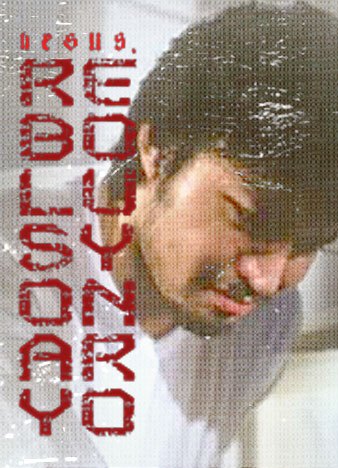
Lav Diaz – Hesus rebolusyonaryo AKA Hesus the Revolutionary (2002)
Drama2001-2010Lav DiazPhilippinesSci-FiQuote:
A military junta has taken power on the Philippines. Their takeover is fought by Moslem separatists, communists and rival military. In the middle of the chaos there is Hesus Mariano: academic, musician, poet and sniper. Politically tinted science-fiction action drama with an attitude.It’s the year 2011 and the Philippines has been taken over by a military junta; the leader, a General Racellos, wields tight control over the country’s single TV station, radio station and newspaper. Racellos’ power is being challenged by Muslim secessionists, by the Communist movement and by a rival military group. In the middle of this turmoil stands Hesus Mariano (a quietly volatile Mark Anthony Fernandez) – scholar, musician, sharpshooter, poet, warrior. Jesus the Revolutionary was made on a shoestring budget (around five million pesos / 75,000 euro) and shot in roughly twenty days, but the ideas teeming in it are enough to fill a half-dozen lesser films. Except for the deserted streets and spray-painted graffiti, you won’t see any evidence of progress, of advanced technology, any sign at all that it’s almost a decade into tomorrow; if anything, things appear to have gotten worse… which is probably precisely Diaz’s point. It’s an action flick with an attitude, a political satire with a philosophical bent, a science-fiction drama with a committed political stance. The film mixes the influences of George Orwell, Jose Rizal and video games, using the future as a prismatic lens to focus on the follies of the present. (NV)Read More »


