Drama

  • David Hugh Jones – The Merry Wives of Windsor (1982)

    1981-1990BBCDavid Hugh JonesDramaTVUnited KingdomWilliam Shakespeare

    29f7c043f76a2bde437fd0d52a185152

    Making its debut with Romeo and Juliet on 3 December 1978, and concluding nearly seven years later with Titus Andronicus on 27 April 1985, the BBC Television Shakespeare project was the single most ambitious attempt at bringing the Bard of Avon to the small screen, both at the time and to date.

    Producer Cedric Messina was already an experienced producer of one-off television Shakespeare presentations, and was thus ideally qualified to present the BBC with a daunting but nonetheless enticingly simple proposition: a series of adaptations, staged specifically for television, of all 36 First Folio plays, plus Pericles (The Two Noble Kinsmen was considered primarily John Fletcher’s work, and the legitimacy of Edward III was still being debated).

    The scale of Messina’s proposal, far greater than that of previous multi-part Shakespeare series such as An Age of Kings (BBC, 1960) and Spread of the Eagle (BBC, 1963), required an American partner in order to guarantee access to the US market, deemed essential for the series to recoup its costs. Time-Life Television agreed to participate, but under certain controversial conditions – that the productions be traditional interpretations of the plays in appropriately Shakespearean period costumes and sets, designed to fit a two-and-a-half-hour time slot.Read More »
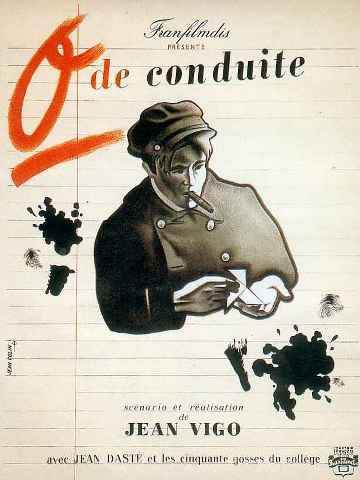
  • Jean Vigo – Zéro de conduite AKA Zero for conduct (1933)

    1931-1940ArthouseDramaFranceJean VigoQueer Cinema(s)

    29f7c043f76a2bde437fd0d52a185152

    from allmovie guide.com

    The shortest of French filmmaker Jean Vigo’s two feature-length films, Zero for Conduct (Zero de Conduite) is also arguably his most influential. The overtly autobiographical plotline takes place at a painfully strict boys’ boarding school, presided over by such petit-bourgeous tyrants as a discipline-dispensing dwarf. The students revolt against the monotony of their daily routine by erupting into a outsized pillow fight. Their final assault occurs during a prim-and-proper school ceremony, wherein the headmasters are bombarded with fruit. Like all of Vigo’s works, Zero for Conduct was greeted with outrage by the “right” people. Thanks to pressure from civic and educational groups, this exhilaratingly anarchistic film was banned from public exhibition until 1945. Among the future filmmakers influenced by Zero for Conduct was Lindsay Anderson, who unabashedly used the Vigo film as blueprint for his own anti-establishment exercise If…. Read More »

  • Theodoros Angelopoulos – Trilogia I: To Livadi pou dakryzei AKA Trilogy: The Weeping Meadow (2004)

    2001-2010DramaEpicGreeceTheodoros Angelopoulos

    This is the first film of Theo Angelopoulos’ trilogy. The story starts in 1919 with some greek refugees from Odessa arriving somewhere near Thessaloniki. Among these people are two small kids, Alexis and Eleni. Eleni is an orphan and she is also taken care by Alexis’ family. The refugees build a small village somewhere near a river and we watch as the kids grow up and fall in love. But difficult times of dictatorship and war are coming…Read More »

  • Theodoros Angelopoulos – Mia aioniotita kai mia mera AKA Eternity and a Day (1998)

    1991-2000DramaGreeceTheodoros Angelopoulos

    Quote:
    “Eternity and a Day” won an overdue Palme d’Or at last year’s Cannes International Film Festival for the Greek director Theo Angelopoulos, whose style of drifting metaphysical reverie is at its most accessible here. All things being relative, this is a dreamy, lulling film but also a more concise and straightforward one than the magnificently grandiose “Ulysses’s Gaze”, the Angelopoulos opus that directly preceded it. “Eternity and a Day” is simpler, the haunting poetic valedictory of an artist whose memory leads him across the landscape of his life during his last day on earth.Read More »

  • Giorgos Lanthimos – Kinetta (2005)

    2001-2010ArthouseDramaGiorgos LanthimosGreece

    29f7c043f76a2bde437fd0d52a185152

    Synopsis

    filmfestival.gr wrote:
    Kinetta. A defunct Greek resort town, inhabited during the off-season by migrant workers. A plain-clothes cop, with a passion for automobiles, tape recorders and Russian women, investigates a series of recent murders in the area. He enlists the help of a photo-store clerk, a loner type who is a part-time videographer, and a young hotel maid, who will be performing the role of the female victims. This oddball trio engages in a succession of murder re-enactments, directed by the cop with exhaustive attention to detail but questionable scientific purpose.

    filmref.com wrote:
    “Something of a hybrid between Tsai Ming-liang’s eccentric, temp morts snapshots of human idiosyncrasy crossed with the glacially paced visual abstraction of Sharunas Bartas by way of Philippe Grandrieux’s murky, destabilized, and defocused gaze”
    Read More »

  • Theodoros Angelopoulos – Topio stin omichli aka Landscape in the Mist (1988)

    Drama1981-1990ArthouseGreeceTheodoros Angelopoulos

    Synopsis:
    The movie portrays the journey of two children in search of their father, whom they believe lives in Germany. On the way they meet many people, including a troupe of actors (a reference to Angelopoulos’ early movie The Travelling Players), and encounter dangers.Read More »

  • Federico Fellini – I vitelloni (1953)

    1951-1960ArthouseDramaFederico FelliniItalian Neo-RealismItaly

    Free Image Hosting at www.ImageShack.us

    29f7c043f76a2bde437fd0d52a185152

    Quote:
    Federico Fellini’s second feature, *I Vitelloni* (literal trans.: “fatted veal calves”; figurative trans.: “the guys”), is an honest, unpretentious work from the Master before he became besotted with his own self-indulgence.

    It’s autobiographical in several indirect ways. The depictions here of young men who are not quite so young anymore, living with their mothers, settling for dead-end jobs or simply not working, and generally languishing their lives away, are based on Fellini’s own observations of such fellows in his boyhood home of Rimini. Autobiographical too in its sense of style: the movie is inescapably stamped by the Neo-Realism of Fellini’s apprenticeship. The grimy faces of working-class people, crumbling tenements, and weed-choked rail-yards are all here. But with a difference: Fellini casts a critical eye on this scene, eschewing the usual Neo-Realist appeal to our presumed socialist sympathies. *I Vitelloni* is not a political film in the usual mid-century Italian manner. Fellini gives us a quintet of heroes who, for the most part, aspire to be bourgeois big-shots of their shabby seacoast town. Not content with that, he makes them lazy, as well . . . and then he asks us to root for them, to actually like them! Needless to say, the intelligentsia of the period didn’t warm to this film, even as the film-going public in Europe loved it, recognizing themselves and their friends and their own hometowns in it.Read More »

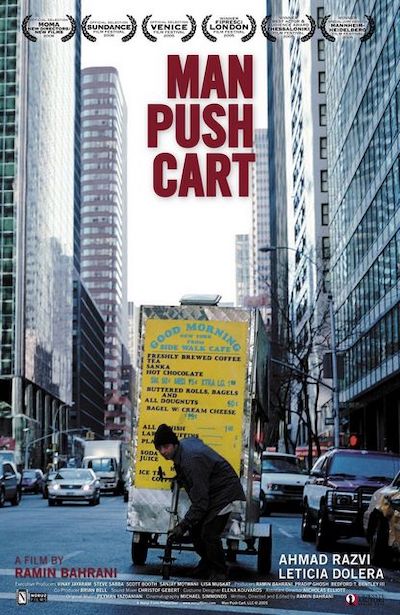
  • Ramin Bahrani – Man Push Cart (2005)

    Drama2001-2010Ramin BahraniUSA

    Every night while the city sleeps, Ahmad, a Pakistani immigrant, struggles to drag his heavy cart along the streets of New York to his corner in Midtown Manhattan. And every morning, from inside his cart he sells coffee and donuts to a city he cannot call his own. He is the worker found on every street corner in every city. He is a man who wonders if he will ever escape his fate.Read More »

  • Souleymane Cissé – Den Muso AKA The Young Girl (1975)

    1971-1980African CinemaDramaMaliSouleymane Cissé
    Den muso (1975) Souleymane Cissé

    Synopsis
    A young mute woman is raped and becomes pregnant, with disastrous consequences within her family. The film also sketches the social/economic situation in urban Mali in the 1970s, particularly in relation to the treatment of women.
    imdb.comRead More »

Back to top button