
Quote:
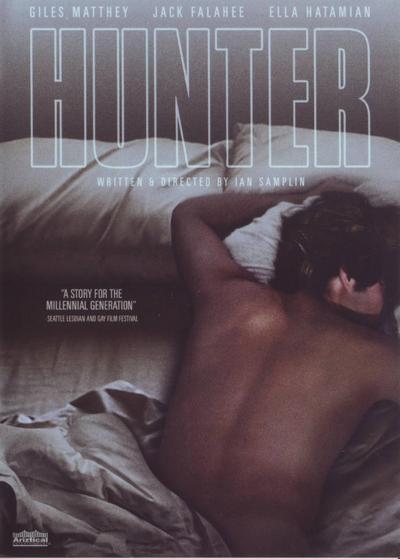
Two friends return to their apartment after a night out to find a stranger passed out on their stoop. Intrigued, they vie for his attention over the rest of the weekend.Read More »
Quote:
Two friends return to their apartment after a night out to find a stranger passed out on their stoop. Intrigued, they vie for his attention over the rest of the weekend.Read More »
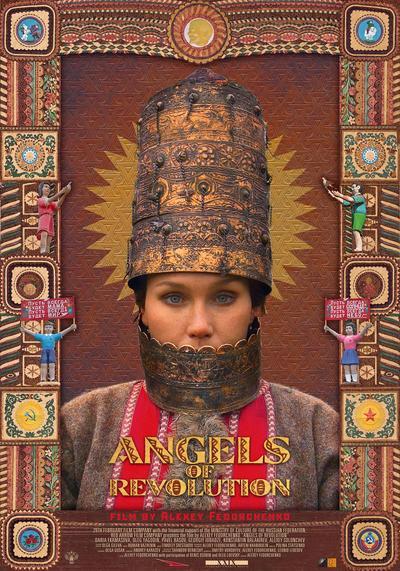
Five friends – a poet, an actor, a painter, an architect and a primitivist film director – are five red avant-garde artists who try to find the embodiment of their hopes and dreams in the young Soviet state. The Revolution is boiling up like a bottle with apple cider: winged service dogs and heart-shaped potatoes, dead Semashko, the People’s Commissar for Health, and cheerful angels, love for the Tsar and love for the young secretary Annushka, executions and pregnancies – everything is interlaced and inseparable!Read More »
Quote:
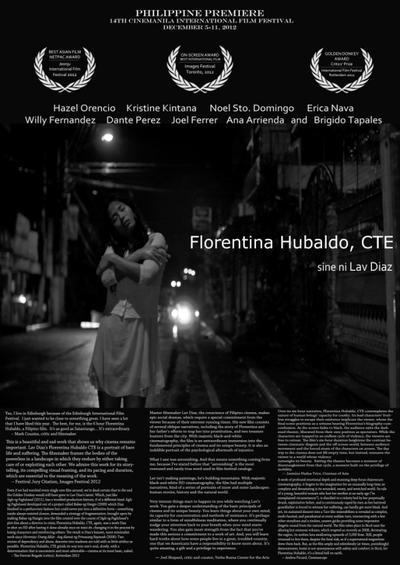
With its depiction of cruelty and woe, Florentina Hubaldo, CTE is one of Diaz’s darkest films, the third of a trilogy about trauma and its aftermath (after Death in the Land of Encantos and Melancholia).The title character is a woman held captive by her father who has forced her into a life of prostitution. Her story is intertwined with that of a couple of fortune hunters digging for buried treasure in a narrative scheme that is revealed only gradually. With chronic traumatic encephalopathy (CTE) a progressive degenerative disease found in individuals who have received multiple head injuries, the film’s title becomes a diagnosis of the physiological reasons for Florentina’s mental decline. She herself is clearly an allegorical stand-in for the long-suffering Filipino people. The film’s brutality is a cry of anger at 300 years of colonial plunder and misrule.Read More »

Synopsis:
A barber, murderer because of jealousy, spends twenty years in jail. He cannot, however adjust himself to a changed world and to the hypocracy of his own relatives and decides to return behind bars.
— IMDb.Read More »

Synopsis:
The story takes place in Yugoslavia at the end of the 19th century, in an isolated village near the Adriatic sea. Because of the extreme patriarchal culture there is a superstition that families without male heirs are cursed. When the wife of a farmer gives birth to their fourth daughter, father decides that the child will be brought up to become a so-called “Virgina” and that she will live as a man, so that she can work and be the family heir. This heartbreaking story of Virginas life is told with strong words, augmented with harsh inviroment.Read More »

Quote:
Tam, a timid loner, is bullied regularly by his fellow pupils at school. He is met with similar rejection and suspicion within the narrow confines of his parents’ dingy home, where his father beats him. One day Tam arranges online to meet Phum at a derelict swimming pool. They are both looking for sex, but their encounter leaves them with a feeling of comfort and security. A close bond develops between the two boys and, before long, they are roaming the rubbish heaps and dark corners of the city together, day and night. Phum opens a door for Tam, revealing a fantastical parallel universe full of spirits and dangerous encounters. Although he feels safe and loved for the first time in his life, Tam can no longer differentiate between dream and reality and finds himself increasingly drawn into a spiral of paranoia and violence. In his feature debut Boonyawatana leads his protagonist into an ambiguous microcosm full of chasms, at the same time cleverly toying with the conventions of different genres.Read More »

Quote:
Wajda’s remarkable sequel to Man of Marble welds newsreel footage of the Solidarity strike to fiction in a strong investigative drama. A disillusioned, vodka-sodden radio producer is bundled off to Gdansk in a black limousine. His mission: to smear one of the main activists – who also happens to be the son of the hapless ‘Marble’ worker-hero. But, tempered by bitter experience of the failed reforms of ’68 and ’70, these new men of iron are more durable than their fathers, not as easily smashed. Media cynicism, censorship and corruption are again dominant themes, this time anchored through the TV coverage of the strike, though the conclusion hints with guarded optimism at a possible rapprochement between workers and intelligentsia. An urgent, nervy narrative conveys all the exhilaration and bewilderment of finding oneself on the very crestline of crucial historical change; and for the viewer, all the retrospective melancholy of knowing that euphoria shattered by subsequent events.Read More »

Quote:
Apart from the conscience provoking “A Short Film About Killing” I have always found Western European audiences’ adulation of the Polish director, Krzysztof Kieslowski, rather excessive, all the more so when compared to the comparative neglect of Zanussi, that other, to my mind , infinitely greater Krzysztof. During the late ’70’s and early ’80’s he produced a remarkable body of work that, although dealing with rigorous intellectual concepts, perfectly balanced head with heart. In “Night Paths” he examines a contemporary generation’s indifference to history; in “The Contract” he uses the stag as a metaphor for the nobility and strength that, in his view, Polish society fails to aspire to, while in “The Constant Factor” he makes use of mathematics in an attempt to shed light on the awesome possibilty of being in the wrong place at the wrong time. This latter is a multi-layered work, on the one hand dealing with the consequencies of maintaining integrity within a corrupt employment situation and at a deeper level attempting to understand the randomness of fate that mankind is exposed to regardless of political dogmas or individual standards of morality. Witold, the main protagonist of the film, is a young man whose father, a famous mountaineer, has been killed in a climbing accident. He has one objective, to follow in his footsteps by joining a Himalayan expedition. However his failure to come to terms with the corrupt working practises of his colleagues leads to their thwarting his ambition. “The Constant Factor” is without doubt one of the most deeply pessimistic films I know. When I first saw it I could hardly believe the ghastliness of its ending. Even though I consider it to be one of the most profound masterworks of cinema I have to steel myself beforehand whenever I bring myself to sharing it with anyone, let alone seeing it by myself.Read More »
Quote:
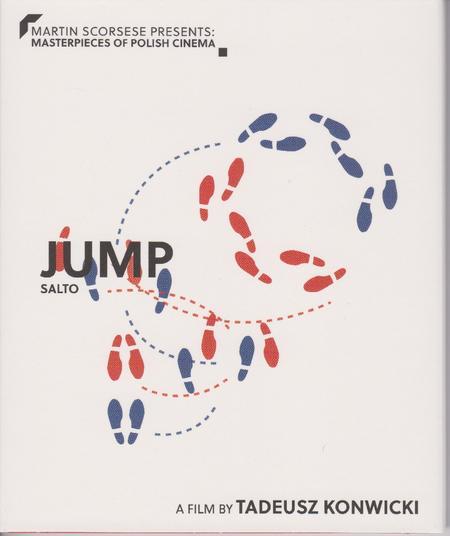
In this rich and subtle dream-play, a man arrives in a small country town and demands sanctuary from an unspecified threat. But who is he, why do people remember him differently, and can he really perform miracles? Many Poles consider this Cybulski’s greatest performance and he’s certainly on riveting form, especially when performing a ‘salto’ folk dance towards the end.Read More »