Synopsis:
The drawbacks and difficulties of military life are explored in this film. Paolo Passeri (Michele Placido) is a college graduate, somewhat spoiled, somewhat effete, who finds himself in an officer training program under the stern martinet, Captain Asciutto (Franco Nero). He gradually becomes acclimated to the military mind-set, and when the Captain’s wife (Miou-Miou) decides to take a romantic interest in him, he does not report her dangerous peculiarities to anyone.Read More »
Drama
-
Marco Bellocchio – Marcia trionfale AKA Victory March (1976)
1971-1980DramaItalyMarco BellocchioPolitics -
Nacer Khemir – Les baliseurs du desert AKA The Wanderers (1986)
1981-1990African CinemaDramaFantasyMoroccoNacer KhemirSynopsis:
A teacher is assigned to a remote desert village that is obsessed with a mysterious buried treasure and whose children are cursed to wander the desert.Read More » -
Johannes Schmid – Agnes (2016)
2011-2020DramaGermanyJohannes SchmidThe non-fiction author Walter falls for the physics student Agnes. He is fascinated by her extreme attitude towards life and her reserved appearance, which is quite the opposite of his quiet and regular life. When Agnes encourages him to follow his passion for writing fiction, he starts to work on a book, a portrait of how he sees her.Read More »
-
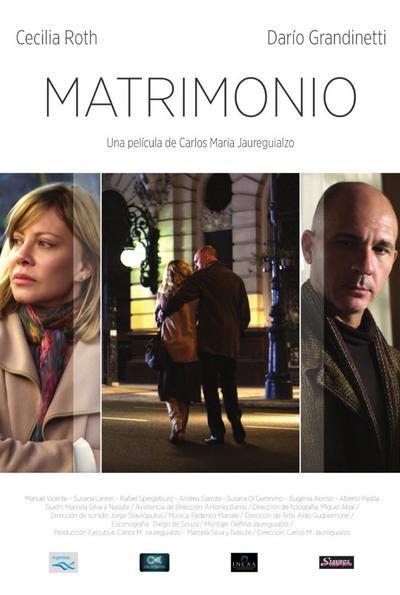
Carlos Jaureguialzo – Matrimonio AKA Marriage (2013)
2011-2020ArgentinaCarlos JaureguialzoDramaQuote:
Argentine director Carlos Jaureguialzo offers a fine take on the challenge with Matrimonio (Marriage), which will have its world premiere at the Miami International Film Festival this Sunday. By focusing on a day in the life of one weary couple he and screenwriter Marcela Silva y Nasute reveal a sometimes grim, often humorous, and ultimately affirming observation of aged love.Esteban (Darío Grandinetti) and Molly (Cecilia Roth) have been married for over 20 years, and they clearly seem worn out. The film opens with a montage covering the detritus of this couple’s Buenos Aires apartment and, by extension, their life together. Everything is shown in super close-up: details of photos in picture frames, the water-stains on the edges of drying glasses in the kitchen, the top of a perfume bottle and the face of Esteban, staring up at the ceiling, waiting to get up in the morning to face the day.Read More »
-
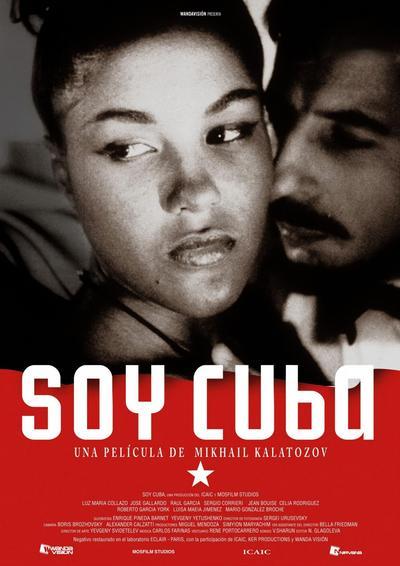
Mikhail Kalatozov – Soy Cuba (1964) (HD)
1951-1960ClassicsDramaMikhail KalatozovUSSRFour vignettes in Batista’s Cuba dramatize the need for revolution; long, mobile shots tell almost wordless stories. In Havana, Maria faces shame when a man who fancies her discovers how she earns her living. Pedro, an aging peasant, is summarily told that the land he farms has been sold to United Fruit. A university student faces down a crowd of swaggering U.S. sailors and then watches friends shot by police when they try to distribute a pro-Castro leaflet. The war arrives on the doorstep of peasants Mariano, Amelia, and their four children when Batista’s forces bomb the hills. Mariano wants peace, so he seeks out the guerrillas to join the fight.Read More »
-
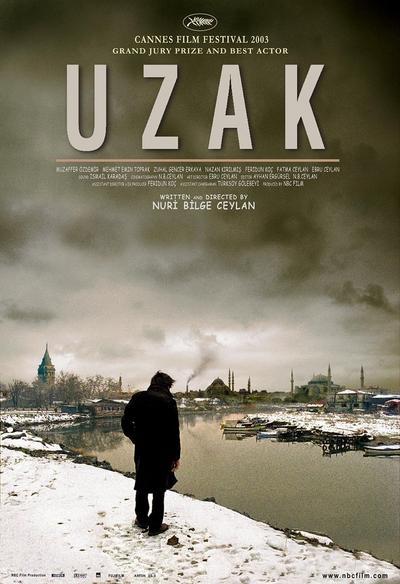
Nuri Bilge Ceylan – Uzak AKA Distant (2002) (HD)
2001-2010ArthouseDramaNuri Bilge CeylanTurkeySynopsis wrote:
Uzak/Distant chronicles the numbing loneliness, longing, and isolation in the lives of two men who are consumed by their own problems. Istanbul photographer Mahmut reluctantly receives his relative Yusuf, but the mingling of their lives does little to alleviate their detachment.Roger Ebert wrote:
How is it that the same movie can seem tedious on first viewing and absorbing on the second? Why doesn’t it grow even more tedious? In the case of “Distant,” which I first saw at Cannes in 2003, perhaps it helped that I knew what the story offered and what it did not offer, and was able to see it again without expecting what would not come.Read More » -
Bertrand Tavernier – Des enfants gâtés AKA Spoiled Children (1977)
1971-1980Bertrand TavernierDramaFranceQuote:
Some films cry out to be made. Others whisper, and some just offer the tiniest, weariest shrug. ”Spoiled Children,” which opened yesterday at the Public Theater, is one of the latter. Its main character is a film director who rents an apartment in which he plans to create his latest screenplay. While living in the apartment, he joins the tenants’ committee, has a desultory affair with a woman much younger than he, pays visits to his wife that are even more desultory, and otherwise whiles away time.This director, Bernard (Michel Piccoli), appears to be assembling material for his film with an arty randomness, selecting occasional snippets of his own experience and shaping his screenplay around them. He even has a collaborator, who chimes in ”It’s strange how the cemeteries in Berlin are colder than elsewhere.” The collaborator then proclaims the remark ”Great!” and wonders how he can wedge it into the film. Bertrand Tavernier, the film’s director, may have worked in much the same way.Read More »
-
Stina Werenfels – Dora oder Die sexuellen Neurosen unserer Eltern AKA Dora or The Sexual Neuroses of Our Parents (2015)
2011-2020DramaStina WerenfelsSwitzerlandQuote:
At the age of 18, Dora is just beginning to blossom. Her mother Kristin has recently decided that Dora’s psychotherapeutic medication is no longer necessary. As the mentally disabled young woman rushes headlong into life, a man takes a liking to her. The two soon become sexually involved – much to Kristin’s dismay. Unbeknownst to her parents, Dora continues meeting the dubious man, who is obviously taken with her unrestrained sensuality. Whilst her mother’s attempts to have a second child have thus far been of no avail, Dora becomes pregnant…Read More » -
Werner Herzog – Herz aus Glas AKA Heart of Glass (1976)
1971-1980DramaGermanyWerner HerzogQuote:
If Werner Herzog’s The Enigma of Kaspar Hauser is, as I contend, an exegesis on the human tendency to contextualize life through custom – not to mention, of course, the inculcative parallels through which both we and less domesticated species glean long-term behavioral patterns – then his 1976 work, Heart of Glass, is an admonishment on holding such traditions in too high of sentiment. Despite revolving ostensibly about an 18th century Bavarian village, the director appears to be simply employing this milieu as but a microcosm for any culture that’s extinction draws nigh, painting progress and evolution as more reliable entities than ritual and superstition. Heart of Glass’s diaphanous narrative is laden with hints to such contemplations, though in the end, none reads as poetically oblique as the opening sequence: A formal and spoken manifestation of death.Read More »