Synopsis:
Tanya, a Russian refugee, is hiding in Rangoon, Burma under the protection of her lover, Tony Evans, a gunrunner working for a weathly underworld leader named Nick. Nick wants to add Tanya to his stable of women in a decadent Rangoon club and intimidates Tony into turning her over to settle a debt. At first the abandoned Tanya refuses to cooperate with Nick, but eventually decides to beat him at his own game and uses sex to gain power. She becomes notorious for her affairs, is re-named “Spot White,” and by blackmailing a British officer, gets passage money out of Rangoon. On the boat to Mandalay, she meets formerly prestigious surgeon Gergory Burton who is now exiled in Burma because of his alcoholism, and they fall in love. Unfortunately, Tony has followed her, and in an attempt to escape the authorities, he frames her for what appears to be his murder. She is arrested, but before the boat docks, Tony comes to Tanya’s cabin and proposes that they open a club like Nick’s, with Tanya as “hostess.” Tanya, desperate to sever her past, poisons Tony, who falls overboard to his death. When they dock in Mandalay, the captain reports that stowaways saw Tony in the hold and it is presumed he escaped in a small boat. Tanya is freed, she confesses her crime to Gregory, and they pledge to start a new life togetherRead More »
Drama
-
Michael Curtiz – Mandalay (1934)
1931-1940ClassicsDramaMichael CurtizUSA -
Lothar Mendes – Jew Süss aka Power (1934)
1931-1940DramaLothar MendesPoliticsUnited KingdomQuote:
Unlike the horrifically antisemitic 1940 Nazi propaganda film, Lothar Mendes’ adaptation of Lion Feuchtwanger’s book offers a fairly sympathetic depiction of a Jew (Conrad Veidt) who seeks political power in order to improve the plight of Germany’s Jewry. Despite some unpleasant stereotypes – Suss is scheming and ruthless – the film is ultimately on his side, and the ending is deeply moving.While films about the rise of fascism in Europe were hindered by censorship, producer Michael Balcon hoped that the scenes of racism would draw attention to the Nazi persecution of Jews, despite the 18th century setting. The scene in which a Jew is falsely accused of killing a Christian woman, to use her blood for Passover rituals (the notorious ‘blood libel’), is particularly disturbing. The film was a box-office success, although Observer critic CA Lejeune suggested that the money should have been spent on a feature about British industry rather than “a film about a little German municipality of 200 years ago”.Read More »
-
Matías Piñeiro – Hermia & Helena (2016)
2011-2020ArgentinaComedyDramaMatías PiñeiroQuote:
Camila, a young Argentine theater director, travels from Buenos Aires to New York to attend an artistic residency to develop a Spanish translation of Shakespeare’s “A Midsummer Night’s Dream.” Upon her arrival, she begins to receive a series of mysterious postcards which set her down a winding path through her past and towards her future.Read More » -
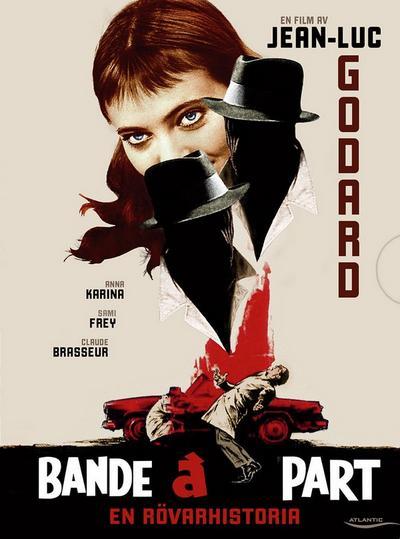
Jean-Luc Godard – Bande à part aka Band of Outsiders (1964)
1961-1970ClassicsDramaFranceJean-Luc GodardJonathan Rosenbaum wrote:
To gauge the historical significance of Jean-Luc Godard’s Band of Outsiders (1964) — getting a week’s run in a lovely new print at the Music Box — it helps to know that it was made four years after François Truffaut’s Shoot the Piano Player and three years before Arthur Penn’s Bonnie and Clyde. Both Band of Outsiders and Shoot the Piano Player are low-budget black-and-white French thrillers adapted from American crime novels translated into French for the celebrated Serie Noire collection, and they were abject box-office flops on both sides of the Atlantic — though today they embody the glories of the French New Wave in a good many people’s minds. By contrast, Bonnie and Clyde, a Hollywood movie in color that was profoundly influenced by these two films, was a huge success, and its lyrical depictions of violence changed the direction of American cinema.Read More » -
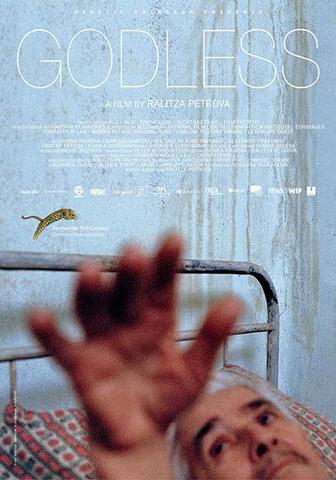
Ralitza Petrova – Bezbog AKA Godless (2016)
2011-2020BulgariaDramaRalitza PetrovaA nurse traffics the ID cards of demented patients on the black market of identity theft. Driven by easy cash, and an addiction to morphine, she struggles to keep tabs on her emotional void, and a growing fear of punishment.Read More »
-
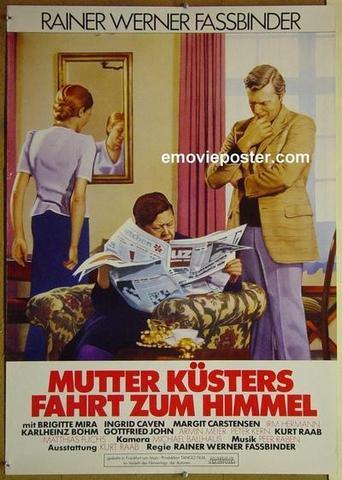
Rainer Werner Fassbinder – Mutter Küsters’ Fahrt zum Himmel (1975)
1971-1980DramaGermanyPoliticsRainer Werner FassbinderQuote:
Like all of Fassbinder’s best films, Mother Küsters Goes to Heaven is many things at once. It is simultaneously a deeply compassionate portrait of a working-class woman and a scathing satire of her exploitation; emotionally rich but politically and intellectually dense, filled with arguments and counter-arguments galore; psychologically astute yet highly stylized and visually lush. It is a comedy, a drama, and much more. It is also an excellent example of how Fassbinder uses image and sound, often in subtle ways, to develop – and play with – his themes.Read More » -
Philippe Garrel – L’amant d’un jour AKA Lover for a Day (2017)
2011-2020DramaFrancePhilippe GarrelQuote:
A young woman returns home after the breakdown of a relationship to discover her father is dating a woman her age.Read More » -
Yonggang Wu – Shen nu AKA The Goddess (1934)
1931-1940ChinaClassicsDramaYonggang WuQuote:
Ruan Lingyu, one of the most famous stars of early Chinese cinema, gives a devastating performance as an unnamed goddess an ironic euphemism for a prostitute in this profoundly moving but rarely seen classic of world cinema. A tragic tale of shame and maternal sacrifice, Ruan stars as a mother desperate to provide for her young son and forced to take brutal vengeance on her pimp. It is a profoundly moving drama, all the poignant by the fact that its star committed suicide at the age of 24, a year after the film’s release.Read More » -
Berthold Viertel – The Passing of the Third Floor Back (1935)
1951-1960Berthold ViertelDramaFantasyUSADavid Cairns wrote:
I’ve now seen the film, and I thought it was excellent. Imperfect, yes, but fascinating and unique. The closest comparison I can come up with is Strange Cargo, Frank Borzage’s weird religious allegory which deals with a gang of convicts escaping from a tropical prison island, finding salvation along the way. But The Passing of the Third Floor Left brings its rogues’ gallery into contact with the numinous in a modern London hotel.What both films have in common is Jesus, encorpsified (to use Flann O’Brien’s word) as a convict in the Borzage and as a myseterious tenant in Berthold Viertel’s film. More to the point, embodied by the august personage of Conrad Veidt, whose presence makes Viertel’s expressionist touches seem wholly legitimate and rooted in the old world of Caligari.Read More »